S’pore corals may come under threat in 2027 if El Nino turns strong as predicted; NParks monitoring
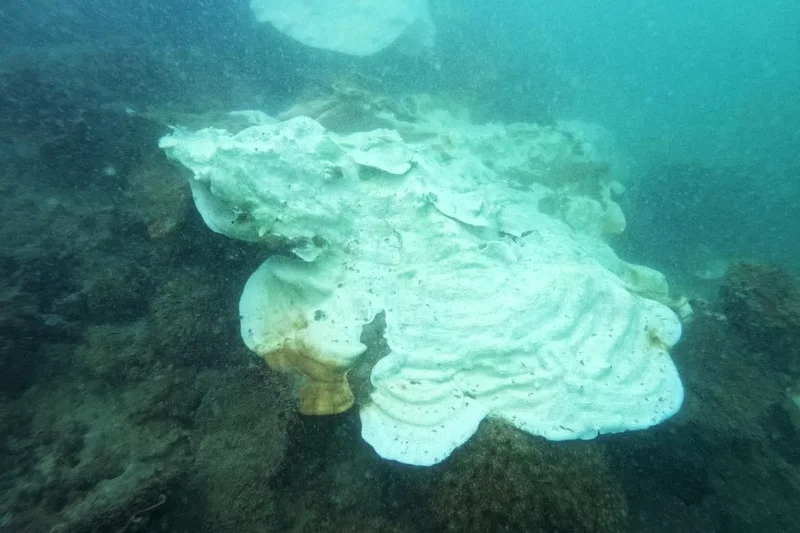
SINGAPORE – If a super El Nino develops as predicted, it could turn Singapore’s reefs white again in 2027, just three years after the country’s coral reefs suffered widespread bleaching.
This is likely to take place between March and May 2027, during the expected tail end of the current El Nino event, as its impact on temperatures is highest when it weakens.
While this is not a certainty, El Nino conditions are already present and are likely to become strong during August and September, according to the Meteorological Service Singapore’s May 29 update.
The National Parks Board said that if El Nino proceeds as predicted, impacts on coral reefs may intensify in 2027, adding that it is monitoring the situation.
Marine biologist Huang Danwei, deputy head of NUS’ Lee Kong Chian Natural History Museum, said that if El Nino picks up rapidly and extends through the middle of 2027, there is a “good chance” that higher sea temperatures will cause severe coral bleaching.
Corals get their vibrant colours from microscopic algae that live in their tissues. When they are stressed by rising sea temperatures, the corals expel the algae and turn ashen white in a phenomenon known as coral bleaching.
These algae supply the corals with nutrients, so when bleaching occurs, the corals become vulnerable to disease and may eventually die.
Global coral bleaching events occurred in 1998, 2010, 2016 and 2024, with Singapore also experiencing mass bleaching during those years.
All four global bleaching events followed El Nino – a climate phenomenon that warms sea surface temperatures and lifts global temperatures.
Severe bleaching during strong El Nino events can cause extensive coral mortality, reduce their structural complexity and lead to long-term declines in reef fish diversity and abundance, said Karenne Tun, group director of NParks’ National Biodiversity Centre.
While recent studies show that repeated bleaching in Singapore has caused relatively low immediate coral death – usually under 10 per cent, and about 5 per cent in the 2024 bleaching event – the reefs are changing and have “flattened” over time, she said.
Studies also indicate that a combination of factors, including heat stress, chronic turbidity, sedimentation and coastal development, has, over recent decades, shifted reefs from branching, structurally complex corals to more stress-tolerant, massive and dome-shaped forms, said Tun.
Repeated bleaching and such shifts to simpler reefs may affect coral spawning and potentially reduce reproductive output, limiting coral reefs’ long-term resilience even if they appear to recover, she added.
“Even when coral mortality is relatively low and coral cover remains moderate, research indicates that the loss of structurally important coral species can reduce habitat availability, biodiversity, ecosystem resilience, carbonate production and coastal protection functions,” she said.
Huang noted that the increased frequency of coral bleaching events also means that coral reefs will have less time to recover between them.
When corals do not recover, the flora and fauna that depend on reef habitats also decline in abundance and diversity.
Declines in reef fish – which are critically important for the food security and livelihoods of millions in South-east Asia – could endanger the lives of the most vulnerable communities, he added.
This comes as coral reefs have been under siege.
The third World Ocean Assessment, published on June 8, found that global coral cover continues to decline due to increasing ocean temperatures associated with climate change, continued coastal development, pollution, sedimentation, diseases, and marine resource destruction and over-extraction.
The frequency and severity of disturbances caused by heatwaves, disease outbreaks and tropical storms have also increased, it wrote, curtailing the recovery time between such disturbances.
This pattern is projected to continue on its current trajectory or accelerate, it added.
Written by more than 650 experts from 86 countries, the assessment provides the latest insights into the health of the oceans, providing a vital evidence base to help make better decisions for a sustainable future.
It is also the only global integrated assessment of the state of the marine environment that explores the environmental, economic and social dimensions of the ocean.
Tun said the report, unlike most global reports, does not prescribe policy. Instead, it brings together hundreds of national and regional assessments into an authoritative “health check” of the ocean that is policy-neutral but policy-relevant.
Documenting how climate change, pollution and overfishing, among other factors, put ocean systems under severe strain, the report calls for stronger multilateral cooperation and is designed to help policymakers sustainably manage the ocean.
The paper also found that ocean acidification – which refers to rising carbon dioxide levels in seawater – adds further stress to corals.
Ocean acidification makes it harder for corals to build their structures and weakens the reef foundation, making it difficult for reefs to keep growing upwards, said marine biogeochemist Patrick Martin from NTU’s Asian School of the Environment.
While Martin – who contributed to the report – noted that studies have shown that excessive acidification can harm corals, he said corals also show tolerance to acidification to a certain extent, though more research is needed.
He added that while ocean acidification is currently not the most pressing threat to coral reefs and has not reached extreme levels, it is steadily increasing alongside other threats that damage coral reefs.
Tun, who also contributed to the report, said that ocean acidification is already contributing to reduced skeletal density, slower growth and greater erosion risk in South-east Asian reefs, although these effects are harder to detect than bleaching and are often masked by co-occurring local stressors.
She said that the report also highlights that South-east Asia as a hot spot where warming, ocean acidification, nutrient pollution and land run-off coalesce, with reefs also experiencing low carbonate levels, which worsen the effects of acidification.
Under high-emissions scenarios, modelling and observational work in South-east Asia suggest that many reefs will become “marginal” for net reef growth between 2020 and 2050, said Tun.
This means that the rate of coral growth could barely keep pace with physical and biological erosion, even if live coral cover persists, she added.
The paper also noted that while efforts to conserve, restore and regenerate corals are under way, few initiatives are carried out sustainably. It said that the approaches and tools – often designed to mitigate or halt reef decline – are usually restricted to local reef-wide projects and could be difficult to scale up.
It also emphasised that global efforts are needed to support the survival and continued functioning of reef ecosystems by reducing greenhouse gas emissions and addressing climate change.
“The reefs of today will not be the reefs of tomorrow, and shifting baselines need to be considered when setting objectives, with respect to conservation, restoration and regeneration,” it wrote.
Huang, who contributed to the paper, said that measures like active restoration of degraded ecosystems, management of local stressors and the introduction of more temperature-resilient corals into reef systems need to be explored and scaled up.
However, restoration – such as coral gardening – alone cannot prevent coral reefs from degrading as climate change intensifies, said Huang, as the sheer logistical scale required for restoration to outpace climate change is staggering.
“Ultimately, climate change needs to be halted and reversed for coral reefs to have a reasonable chance to retain the functions that human communities have found useful and utilised for their sustenance and development,” he said.
Current efforts include NParks’ 100k Corals Initiative, which was launched in December 2024 with the aim of planting 100,000 corals in Singapore waters over the next decade and beyond. It is the most extensive coral restoration effort in Singapore to date.
However, Jani Tanzil, facility director of the St John’s Island National Marine Laboratory, noted that reef restoration should be seen as a last resort because it is not realistic in many parts of the region, given its high costs and limited impact.
But in Singapore’s case, where only about 10 sq km of reefs remain, she said there is no choice but to turn to this last resort to combat their decline.
To help conserve coral ecosystems globally, Huang said people can reduce their carbon footprint by opting for more energy-efficient choices.
They can also support local coastal conservation projects, choose sustainable seafood and advocate for stronger environmental policies, he added.
“Reefs as we know them may not persist through business-as-usual trajectories, but meaningful recovery remains achievable if climate action and restoration efforts advance together urgently,” he said.