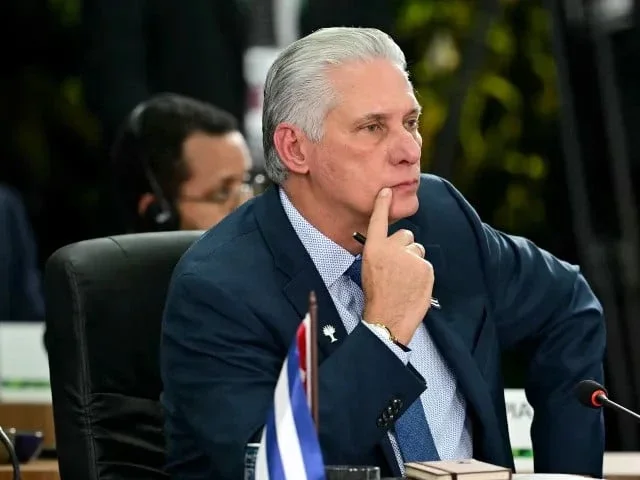
Cuban president accuses US of 'political genocide'
.
CUBA:
Cuban President Miguel Diaz-Canel issued a sharp condemnation of Washington's oil embargo and hardened sanctions in a speech on Sunday, calling the policy of U.S. President Donald Trump's administration "political genocide."
Diaz-Canel criticized a recent U.S. State Department report, which accused Cuba of infiltrating ?the U.S. government and of backing an "unprecedented wave of leftwing terrorism on American soil."
The Trump administration has escalated its attacks on left-leaning groups inside the United States.
"By accusing Cuba, they are not only looking for a scapegoat, an external agent. They are looking for someone to blame for the protests of the sectors hardest hit by an economy that makes the rich richer and the poor poorer," said Diaz-Canel.
"They are looking for a new excuse to sustain their political genocide against Cuba."
The speech underscored growing tensions between Havana and Washington as the Trump administration's oil embargo and expanded sanctions have deepened Cuba's worst economic crisis in decades, triggering rolling blackouts and fuel shortages across the island.
Diaz-Canel's speech at dawn was part of government celebrations to mark the 73rd anniversary of the first offensive by Fidel Castro's guerrillas against the army of U.S.-backed leader Fulgencio Batista in 1953, starting a rebellion that brought down Batista more than five years later.
The most important holiday on Cuba's revolutionary calendar, ?Sunday's event also featured artistic performances before thousands of government supporters.
The island's unprecedented economic crisis has driven various international companies, particularly in the tourism and financial sectors, to end operations in Cuba. In addition to the rolling blackouts, the depleted fuel supply has triggered multiple national-level grid collapses. The country's public transportation has also been crippled and the school year was cut short for lack of fuel.
Washington blames the Cuban government for economic mismanagement and a lack of investment in its aging infrastructure. Reuters