Props to Elizabeth Meriwether. The creator of New Girl and Dying for Sex had me hooked with the opening sequence of her latest, *Furious. *
Set in New York City, a quaint but posh block of brownstones is peopled by trick-or-treaters in costumes. On one stone stoop sits a redheaded woman, wearing a plastic cat mask. It'd be a cozy scene, except the opening shot has shown us what lies behind the door she's sitting in front of. There, a white man wheezes in a bathroom spattered with blood and bile. Using one arm, he desperately pulls himself into a hardwood-floored hallway decorated with crown moulding. All around him are silent indicators of wealth, but he is covered in the squalid fluids of sweat, vomit, and blood.
The woman will come inside to find him falling down the stairs in a pathetic attempt to escape her. She'll kill him swiftly, getting close and taunting him as death rattles creep from his dehydrated lips.
You May Also Like
"I don't really like listening to you," she says softly, curling up close, like a lover might on a soft bed. "I don't like the sounds you're making. But I love your smile."
And just like that, I was hooked.
While Hulu subscribers will get to watch the first three episodes of Furious when it premieres on July 27, critics were given the whole first season, which is eight episodes long. And I watched them all in one day.
Be warned: This show is a brutal binge-watch. But also a deeply satisfying one.
What's Furious about?
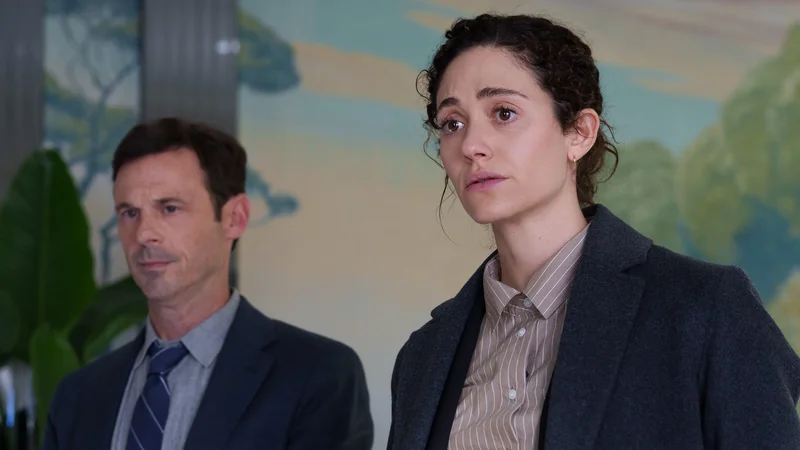
Furious centers on former Brooklyn detective-turned-FBI agent Alice Black (Emmy Rossum). She's a new recruit to the New York office, but has her eye on a spot in the sex crimes unit, run by tough-talking veteran agent Nora (Quincy Tyler Bernstine). She and Nora team up once Alice spots a strange connection between the aforementioned crime scene and the supposed overdose death of a suspected child trafficker.
Turns out the guy in the opening is the son of a billionaire philanthropist. So both the FBI and the Brooklyn PD are on the case. This tosses Alice back into her old squad, where she's made enemies over a domestic violence allegation against another detective. Still loyal to her is detective Danny Kelly (Scoot McNairy), who's eager to follow her on what she believes is a serial killer case. And with a female suspect, it's an unusual case indeed.
Meanwhile, the unnamed killer (Lola Petticrew) drifts from one identity to another. Over the first three episodes, she changes her hair, speech, affect, and name to move from the brownstone to a domestic violence shelter to a catering gig that gets her close to her next target.
Meriwether found inspiration for the series in the 1987 neo-noir Black Widow, which centered on the cat-and-mouse dynamic of a female investigator and a female serial killer. The chaotic chemistry of that setup blossoms in Furious. But in place of the gold digger turned black widow narrative, Meriwether's murderess is soon revealed to be a former sex worker, seeking vengeance against those who exploited her as a child.
Furious tackles horrid realities with a shrewd sensitivity.
While this series deals in child exploitation and sexual assault, Meriwether and her team of sharp directors won't make a spectacle of rape. Rather than flashbacks of the killer's past, Meriwether uses other storytelling devices to land the horrors of what happened without showing them.
Some things are subtle, like when Alice and Nora speak to a 15-year-old fast food employee, urging her to testify against other traffickers. The girl's playful attitude reflects her youth, and when she's later found beaten nearly to death, her stillness on a hospital bed expresses the potential consequences of trying to escape a sex-trafficking ring. Likewise, in episode 2, the killer, whose name is eventually revealed to be Catherine, unexpectedly encounters Mira (Riley Vinson), the baby-faced daughter of her current victim.
Rather than attacking her, they bond over food, boy talk, and hairstyling. And in these moments of girlhood, Catherine tells Mira about her past. Specifically, Catherine reveals how she was this child's age when men had sex with her and hurt her, over and over. We don't need to see a flashback of Catherine's life to understand that. We need only to see her fury and the shock in Mira's face.
As the title suggests, fury motivates more than just Catherine. Alice and Nora are also urged on by ire. Meriwether pulls inspiration from Greek mythology, with Nora delivering powerful speeches about the Furies — deities of vengeance — as well as Medusa, and the culture's belief that all forms of anger might lead to madness.
This poetry enhances the complexities in Furious, where both hero and villain have trauma over violence committed against them, and a capacity for violence in response. Who is seeking payback, and who is seeking justice? As corruption creeps into the plot, playing by the book feels certain to fail in terms of catching the show's biggest bads. So, Alice begins to take risks and break rules, making for sequences that are breath-stoppingly tense.
Rossum and Petticrew lead a knock-out cast.
For her part, Rossum, who also serves a producer, shoulders the series. As Alice, she carries a hardened exterior as a shield. But she swaps it for a smile when appealing to young victims. Then, with Nora, her eyes grow wide, eager to drink up her wisdom and any motherly guidance. With Danny, she's playful, but in the way of an older sister, always with an edge of "Don't fuck with me" menace. Faced with her abuser (Jake Lacy), she transforms again — to say how would be a spoiler. So, who will she be when she finally meets Catherine? All I'll say is that that episode is absolutely electrifying.
Like Rossum, Petticrew is playing a role of many sides. Catherine is practically a shapeshifter, a survival mechanism that allows her to slide into anonymity or stand out as suits her needs. One moment, she's a sneering murderess. The next, she's a flirty cater waiter with a submission kink. Then, she's a sultry cam girl or a committed nurse's aid. In each incarnation, Petticrew keeps us guessing, trying to understand who the real Catherine is.
Along the way to this discovery, Furious introduces an array of characters who, like the leads, are morally complex and fascinating. McNairy is heartbreaking as the earnest Danny, who'd die for Alice — and just might. With a hang-dog countenance and sparkling eyes, his yearning is so palpable you can practically grab onto it and feel a heartbeat within.
As Nora, Bernstine is a consistent scene-stealer. She delivers hard-hitting monologues about the shortcomings of the justice system with a profound world-weariness. But in moments of seeming victory, she has a childlike glee with a mature sense of righteousness. She sings — a bit inexplicably — throughout the series, and it's always a delight. And even in the darkest moments, she's wickedly funny. Nora is perhaps the clearest distillation of the curious concoction Meriwether has made with Furious. She is not easily defined as good or bad, hopeful or cynical, kind or cruel. And this is true for many of the show's "good guys," and even some of its "bad guys."
At her side, Rob Yang is hilarious as an ambitious but easily riled agent, whose brown-nosing practically becomes physical comedy. Rob Delaney, who also appeared in Meriwether's Dying for Sex, is likewise a crack-up, but also sleazy as a pricey lawyer with a creepy hypocrisy at his core. Then, the biggest surprise in the supporting case is Steve Way.
Ramy fans will recognize Way, but he was new to me. In episode three, he's introduced as Alden, who Catherine cares for as a nurse's aide. As the season goes along, their relationship becomes crucial to understanding Catherine. Together, they laugh, flirt, and talk in a way that's bracingly honest and accepting. When someone challenges him about her potential for violence, he alludes to a classic closing line from Some Like It Hot, saying, "No one's perfect." But Way's delivery is perfect. He's brilliantly funny, bringing a welcomed levity and defiance to Furious's grim content.
Altogether, this collision of talent, richness, and humanity in front of and behind the camera makes Furious an absolute stunner. Meriwether has built a slow-burn thriller, where the cop and the killer share a complicated relationship with violence. The murder scenes of men are brutal, but this provides a strange balance to the flood of media where the rape of women is treated like a naughty spectacle. The exploration of trauma and the messiness of healing is thoughtful and thought-provoking. The humor is dark yet humane. And the finale will have you cheering, gasping, and craving more.
Without spoilers, I will promise this: Furious answers the biggest questions its first season raises. Then, it gives a glimpse of where it could go next. And — to quote another TV heroine who's complex and funny — I want to go to there.
Kristy Puchko is the Entertainment Editor at Mashable. Based in New York City, she's an established film critic and entertainment reporter who has traveled the world on assignment, covered a variety of film festivals, co-hosted movie-focused podcasts, and interviewed a wide array of performers and filmmakers.