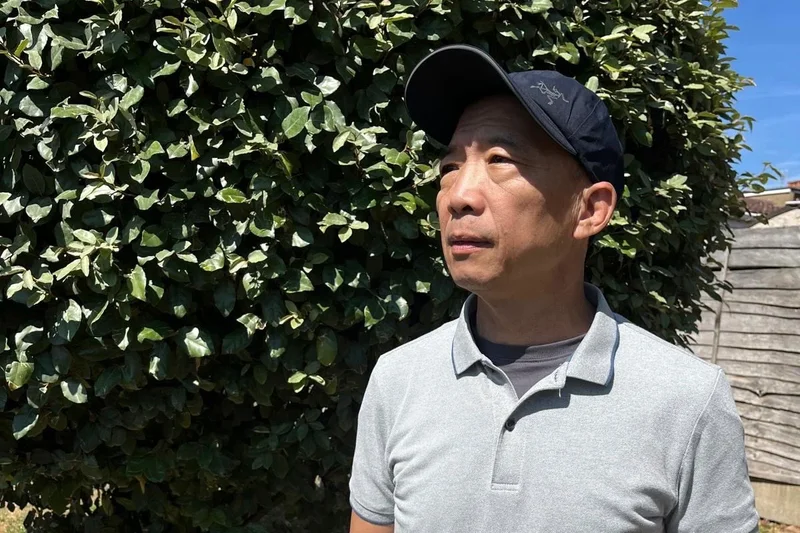
The British government is re-examining an immigration order issued to a former Hong Kong political opposition leader, which initially limited his visit to just one week.
Wu Chi-Wai, previously a leader of the now-disbanded Democratic Party, arrived in Britain last week with the intention of reuniting with his wife and son in London.
His arrival follows his release in June from a prison sentence served under China's national security law.
The decision to review the order comes amid concerns it appears to contradict the UK's established policy regarding its former colony.
Upon his arrival at Heathrow Airport, Mr Wu's lawyer stated that he was stopped by authorities and informed he would only be permitted to stay for seven days.
His passport was also confiscated.
This incident stands in contrast to the UK's broader stance since the imposition of the sweeping national security law in Hong Kong in 2020, which saw the British government ease residency requirements for British National (Overseas) passport holders, facilitating resettlement for many Hong Kong residents.
But lawyer Paul Harris said Wu was told on Monday that Border Force officials were now "revisiting the case".
Britain's interior ministry declined to comment on individual cases, beyond saying it remains fully committed to members of the Hong Kong community in Britain.
Wu's treatment has sparked alarm among members of Hong Kong's community in Britain.
Hong Kong's history as a British colony means that many families have close ties to relatives in Britain who settled in the decades before 1997, when control of Hong Kong switched from Britain to China.
In February, the British government estimated that the easing of passport rules meant 170,000 Hong Kongers had moved since 2021, with a further 26,000 expected in five years under further easing.
Why Wu Chi-Wai was given a deportation order
A prominent Hong Kong democracy activist, recently freed from prison, faces potential removal from the UK this week after only a seven-day immigration bail. Wu, former chairman of Hong Kong’s once-largest opposition party, was one of 47 activists charged in 2021 under Beijing’s national security law, which crushed the city’s democracy movement.
Sentenced in 2024 to four years and five months for conspiracy to commit subversion over an unofficial primary election, Wu was released last month, seeking to join his family in the UK.
Despite pre-emptively contacting the British consulate regarding his criminal record, London border authorities last Wednesday suspected he sought long-term residency.
Wu was eventually allowed entry, but the seven-day bail means he could be removed by Wednesday, he said, jeopardising months with his family.