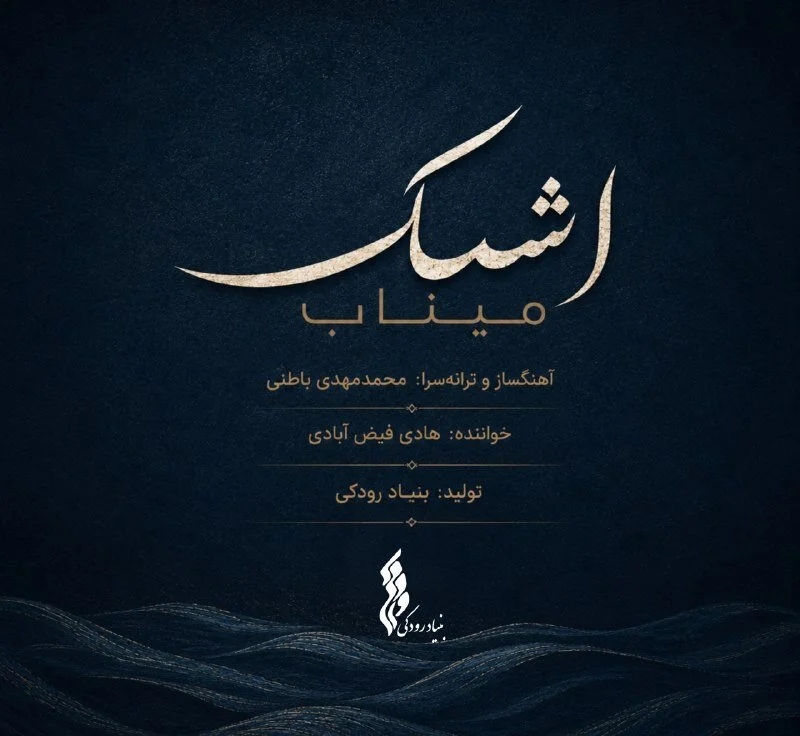
“Tears of Minab” musical tribute released to honor child martyrs
TEHRAN- The Rudaki Foundation has released "Tears of Minab", a single dedicated to the memory of the student martyrs of the Shajareh Tayyebeh elementary school in Minab, Hormozgan province.
The project, which includes both a single and a music video, is part of a broader artistic initiative by the Rudaki Foundation to preserve the memory of the young victims and express solidarity with their bereaved families. The work features composition and songwriting by Mohammad Mehdi Bateni and is performed by vocalist Hadi Feyzabadi.
Through a blend of poetic lyricism and national sentiment, "Tears of Minab" seeks to articulate the grief felt by the families and the Iranian people. The composition transforms the agony of lost dreams into a narrative of national unity, patriotism, and endurance, serving as an emotional bridge for those mourning the tragedy.
Complementing the auditory experience, the accompanying music video utilizes evocative imagery to mirror the themes of longing and resilience, intensifying the emotional impact of the piece.
This release marks the second musical tribute produced by the Rudaki Foundation centering on the Minab tragedy. It follows the earlier production of "The Last Essay", which was released to commemorate the fortieth day of the children's martyrdom.
These artistic endeavors align with the Rudaki Foundation's ongoing mission to uphold human values and create an artistic record of contemporary events that have deeply impacted the national psyche through the universal language of music and art.
On February 28, the Shajareh Tayyebeh girls' elementary school in Minab, Hormozgan province, became the site of a devastating massacre as the United States and Israel initiated their strikes against Iran.
While dozens of girls and boys aged between 7 and 12 were beginning their lessons, the school was targeted by a missile strike that caused the building to collapse, trapping children and teachers beneath the rubble. Iranian authorities confirmed a final death toll of 168 people, with at least 95 others wounded, marking one of the most harrowing incidents of the conflict's opening day.
Despite attempts by US and Israeli authorities to distance themselves from the carnage as images of the tragedy spread across social media, detailed forensic and digital investigations have painted a starkly different picture.
An analysis by Al Jazeera’s digital investigations unit, utilizing over a decade of satellite imagery and recent video clips, revealed that the school was a clearly distinct civilian facility, separated from any adjacent military sites for at least ten years. Furthermore, witness accounts and satellite-based analyses confirmed that the school was triple tapped by three separate, deliberate strikes, leaving no doubt about the nature of the attack.
The international community has faced mounting evidence regarding the responsibility for this atrocity, with investigations from major global outlets including The New York Times, BBC Verify, CBC, and NPR all concluding that the United States was responsible for the strike.
These findings have raised fundamental questions about the intelligence used to justify the bombing, as the patterns of the strike suggest a direct targeting of a civilian educational institution. The Minab school tragedy now stands as a somber testament to the immense human cost of the aggression and a focal point for those demanding international accountability.
SAB/