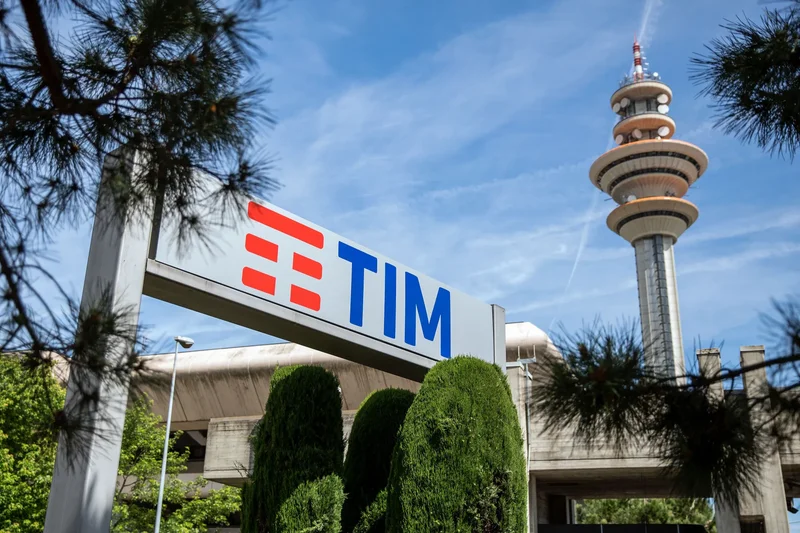
TIM Brasil Second Quarter Profit Hits Record on Fiber Push
Brazil · Business
TIM Brasil second quarter results showed a record adjusted net profit of R$1.036 billion (~US$203 million), the Brazilian telecom operator reported on July 27, 2026. The 6.2% year-over-year jump was fueled by accelerating mobile service revenue and a surge in its fixed-line fiber business.
Revenue Drivers: Postpaid and Fiber Lead the Way
Net revenue for the quarter reached R$6.965 billion (~US$1.37 billion), a 5.5% increase compared to the same period last year. The performance was anchored by the company’s mobile division, where higher-value postpaid plans continued to attract customers seeking reliable data packages.
A standout performer was the fixed-service segment, which saw revenue jump 27% to R$416 million (~US$81.6 million). This growth reflects TIM’s aggressive expansion of its fiber-to-the-home broadband network, a strategy that is reshaping the company from a pure mobile player into a convergent services provider.
Earnings before interest, taxes, depreciation, and amortization (EBITDA) rose 7.0% to R$3.586 billion (~US$703 million). The company achieved a record normalized EBITDA margin of 51.5% for a second quarter, signaling improved operational efficiency alongside its top-line expansion.
Strategic Investments in Infrastructure and Technology
Alongside the earnings release, TIM’s board of directors approved fresh capital allocations totaling up to R$670 million (~US$131 million) for two key subsidiaries. The investments target I-Systems, the group’s neutral network infrastructure arm, and V8 Tech, a legal technology venture known as Enter.
The move to inject capital into I-Systems aligns with a broader industry trend where telecom operators create independent network companies to share infrastructure costs. For foreign investors, this structure allows for more efficient capital deployment and can attract third-party tenants to TIM’s physical network assets.
The funding for V8 Tech, operating under the brand Enter, marks a diversification into the legaltech sector. The platform aims to digitize and streamline legal processes, representing a non-telecom growth avenue that leverages TIM’s technological expertise.
Market Context and Competitive Landscape
TIM Brasil, formally known as TIM S.A. and controlled by the Italian telecom giant Telecom Italia, is one of Brazil’s three major mobile operators. It competes directly with Telefônica Brasil’s Vivo and Claro, owned by Mexican telecommunications group América Móvil.
The record profit comes as the Brazilian telecom market undergoes consolidation in the fiber segment. Providers are racing to secure high-value subscribers in urban areas, making operational efficiency critical. TIM’s margin expansion suggests it is navigating this competitive pressure effectively.
Analysts covering the Brazilian telecom sector have noted that fixed-mobile convergence is becoming a key retention tool. By bundling mobile plans with ultra-fast fiber broadband, TIM is reducing customer churn and increasing average revenue per user.
Financial Health and Shareholder Value
The strong cash generation implied by the EBITDA margin provides TIM with flexibility to fund its investment plans without over-leveraging its balance sheet. The decision to allocate capital to subsidiaries rather than extraordinary dividends suggests a focus on long-term value creation.
For expatriates and international investors following the Brazilian stock market, TIM’s shares trade on the B3 exchange in São Paulo under the ticker TIMS3. The company’s performance is often viewed as a proxy for Brazil’s growing digital economy and consumer spending on connectivity.
The US dollar approximation of the profit figure is based on a BRL/USD exchange rate of 5.1. Currency fluctuations remain a key consideration for foreign investors, as a strengthening Brazilian real would increase the dollar value of future repatriated earnings.
Outlook and Sector Trends
Looking ahead, the expansion of 5G networks across Brazil presents both an opportunity and a cost challenge. TIM is expected to continue its disciplined capital spending, focusing on high-return areas like fiber and postpaid mobile rather than blanket coverage.
The investment in Enter also signals that TIM is exploring digital services beyond traditional connectivity. As the legal industry in Brazil slowly adopts technology, early movers in legaltech could capture a significant market share in a sector known for high paperwork volumes.
For expats and businesses operating in Brazil, TIM’s network expansion means improved connectivity options in previously underserved neighborhoods. The competitive push into fiber is driving faster speeds and more stable connections, essential for remote work and international communication.
Frequently Asked Questions
What was TIM Brasil’s net profit in the second quarter of 2026?
TIM Brasil reported an adjusted net profit of R$1.036 billion (~US$203 million) for the second quarter of 2026, a 6.2% increase compared to the same period in 2025.
How much is TIM investing in its subsidiaries I-Systems and V8 Tech?
The board approved investments of up to R$670 million (~US$131 million) in I-Systems, its neutral network infrastructure unit, and V8 Tech, its legaltech venture operating as Enter.
What drove TIM Brasil’s revenue growth in Q2 2026?
Revenue growth was driven by mobile service revenue, particularly from postpaid plans, and a 27% surge in fixed-service revenue to R$416 million, fueled by the expansion of its fiber broadband network.
Sources & Further Reading
LatAm Markets: Live Signals → — real-time movers, turnover leaders and FX across Latin America.