Bookings for tourist accommodation in Germany through major online platforms have reached a record high.
The figure rose sharply above both last year's level and figures seen before the COVID-19 pandemic.
Why are tourist rental bookings rising in Germany?
Travellers booked 68.3 million overnight stays through Airbnb, Booking.com and Expedia in 2025, the Federal Statistical Office said on Tuesday, citing data from EU statistics agency Eurostat.
That was an increase of 13% compared with 2024 and more than 83% above the level recorded in 2019.
The rise came despite TripAdvisor no longer being included in the data after it left the short-term accommodation booking market.
Strong domestic demand was the main driver of growth. German travellers booked 48.5 million overnight stays, an increase of more than 15% from the previous year.
The number of domestic bookings has more than doubled since 2019.
Foreign visitors booked 19.8 million overnight stays, almost 8% more than in 2024.
Who is visiting Germany's tourist spots?
Travellers from the Netherlands accounted for the largest number of international bookings, with 2.9 million overnight stays, followed by Poland with 2.1 million and the US with 1.3 million.
The figures largely reflect the market for smaller and privately operated accommodation.
Around 94% of booked nights were spent at properties with fewer than 10 beds, which are not included in Germany's official monthly tourism statistics.
The platform data therefore provide a broader picture of the country's short-term accommodation market.
Bavaria recorded the highest number of overnight stays, with 10.6 million. Baden-Württemberg and North Rhine-Westphalia followed with 8.1 million each.
Travel patterns varied considerably between Germany's states.
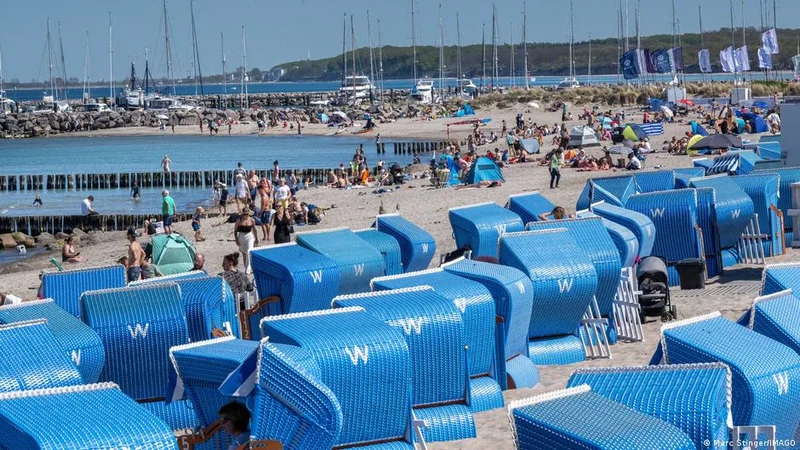
Around 90% of guests in Mecklenburg-Western Pomerania and Schleswig-Holstein came from within Germany, while city-states and western regions attracted a larger share of international visitors.
Foreign guests accounted for more than two-thirds of bookings in Berlin, at 67.7%.
Their share was also above average in North Rhine-Westphalia, at 42.3%, and Baden-Württemberg, at 40.8%.
Edited by: Dmytro Hubenko
Don't let the algorithm hide the news. If you rely on our team for trusted reporting, please take a moment to select us as your Preferred Source on Google by clicking here and hitting the "star" or "preferred" button, so you'll always see our verified news first.