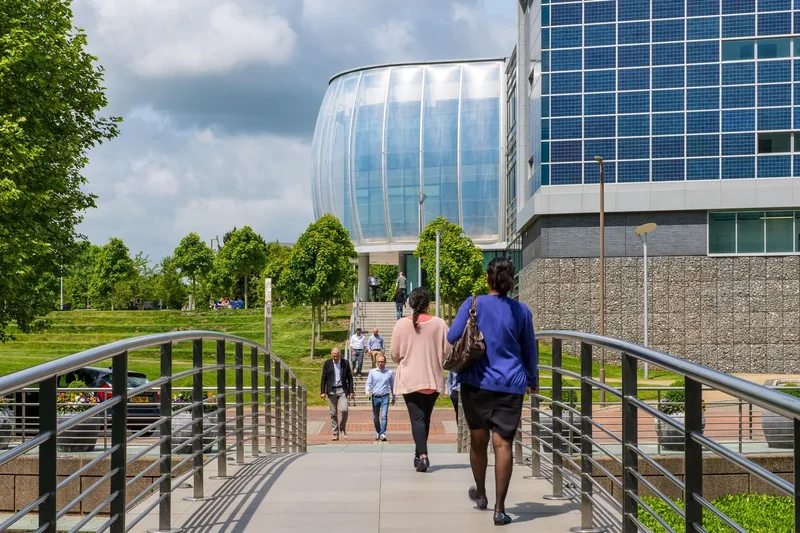
Pharmaceutical giant GSK has announced plans to close its main research and development hub in Stevenage, Hertfordshire, in favour of a new flagship facility in Cambridge.
This strategic move is part of a broader initiative to slash costs by £1.9 billion, freeing up capital for future investment plans.
The Stevenage R&D site currently employs around 1,800 staff. GSK intends for its new 300,000 sq ft Cambridge centre to house more than 1,000 scientists, with a phased relocation of personnel expected to conclude by 2029.
Furthermore, some staff presently based in Stevenage will be transferred to the company's upgraded Ware site, with GSK hoping all Stevenage workers will relocate to either Cambridge or Ware.
The company is committing £400 million over the next three years to facilitate these changes. This investment is supported by a target to reduce annual costs by £1.9 billion over the same period.
These savings are intended to fund increased R&D efforts and help offset the financial impact when dolutegravir, one of its key HIV treatments, loses its patent protection.
It is understood there will be some roles affected, such as in support services, but GSK did not confirm numbers.
Luke Miels, chief executive at GSK, said: “To fund investment in the late-stage portfolio and R&D, we are starting a three-year cost savings programme to simplify the organisation and to reallocate capital and resources.
“Savings will primarily be reinvested, with some used to improve margins and profitability in the dolutegravir patent expiry period.”
The new R&D centre is being developed by Prologis and is within the wider Cambridge Biomedical Campus – one of the largest of its kind in Europe.
Mr Miels said: “This investment will accelerate our R&D and help us deliver new, competitive products.
“It integrates GSK further into one of the world’s leading centres of knowledge and demonstrates the attractiveness of the UK’s life sciences ecosystem.”
Tony Wood, chief scientific officer at GSK, added: “The campus provides exceptional opportunities for collaboration.
“With our existing connections and experience, we see this move as a catalyst for faster, bolder medicines discovery by accelerating the science that matters most for GSK’s next wave of medicines.”
GSK has already been cutting jobs at its Stevenage site as part of an ongoing overhaul of the global R&D division.
In February, it confirmed around 350 R&D jobs were going across the US and UK.
More than 2,500 workers were based at the Stevenage site at the time.
The FTSE 100 firm’s interim figures showed first half underlying core operating profit rose 8% on a constant currency basis to £5.45 billion, with turnover up 5% to £16.04 billion.
On a statutory basis, half-year total earnings fell 31 per cent to £2.77 billion.