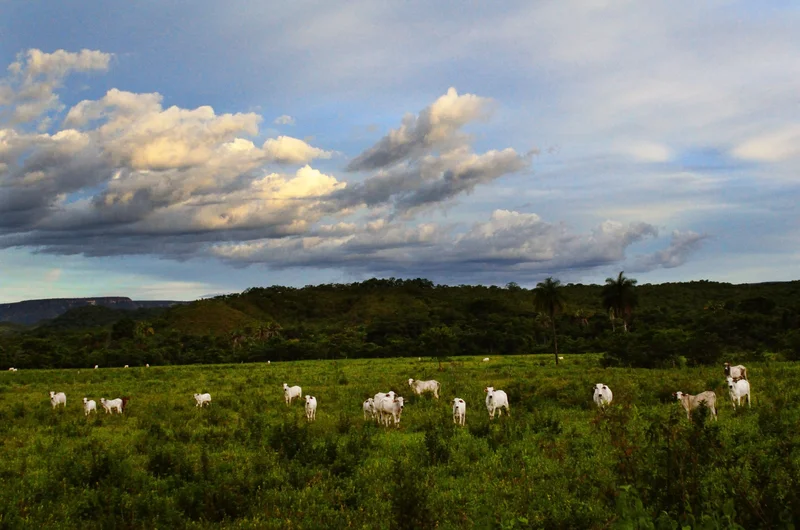
Northeast Brazil Wins New Beef Plants and Shoe Factories
Industrial Expansion
Northeast Brazil investments are surging as a new R$120 million Masterboi beef plant in Pernambuco and three footwear factories in Ceará promise over 3,000 direct jobs and deeper integration into global export chains.
Masterboi brings export-grade beef processing to Pernambuco
Masterboi, a company already operating two industrial units in Brazil’s North region, is building its first Northeast slaughterhouse in Canhotinho, Pernambuco. The R$120 million (US$24 million) facility is designed to be the largest beef plant in the Northeast.
It is also the only plant in the region with Federal Inspection Service (SIF) status, a certification that opens doors to international markets. Initial capacity stands at 700 head of cattle per day, with plans to scale up to 1,400 animals and process 300 tons of meat daily.
The project is expected to create around 800 direct jobs and between 3,000 and 3,500 indirect positions. It also handles sheep, goats and pigs, broadening its production base across the semi-arid livestock belt.
Ceará cements its role as Brazil’s footwear powerhouse
Three new footwear projects in Ceará are adding muscle to a state that already accounts for a dominant share of Brazilian shoe exports. The largest is NKS Vulcanizados, investing R$40 million (US$7.9 million) in a Cariré plant with 10,000 m² of built area; the Ceará government initially projected 1,200 direct jobs, while a more recent state announcement cites 800 formal jobs over three years.
NKS plans to reach 200,000 pairs per month by its third year and employ 1,200 people directly. The investment reflects a deliberate strategy of geographic diversification by a company positioning itself as a national supplier.
In Catunda, MRS Calçados has already started operations after negotiating terms with state and local authorities. The company committed R$7.5 million (US$1.5 million) through 2026 and currently produces 750 pairs daily, with a target of 4,000 pairs and up to 400 direct jobs.
Neorubber and the sandal export engine
A third project, Neorubber Sandals Industry in Crateús, signed a cooperation agreement for an R$8 million (US$1.6 million) plant. It will produce around 30,000 pairs of footwear across three warehouses totalling 7,200 m².
The unit is expected to generate more than 500 job openings. It fits neatly into Ceará’s specialisation in rubber and vulcanised footwear, a segment that has driven export growth of 39.2% in recent years, reaching US$221.4 million in the first nine months of 2022 alone.
Major players like Vulcabras have already poured over R$320 million into modernising Ceará operations, calling the state “the best place for shoe production in Brazil.” The new entrants reinforce that conviction.
Why Northeast Brazil investments are shifting the industrial map
These projects are not random. They reflect a decades-long relocation of Brazil’s beef and footwear industries from the traditional South and Southeast clusters toward the Northeast, drawn by lower labour costs, tax incentives and improving infrastructure.
By 2010, the Northeast already produced about 45% of Brazil’s shoes and 71% of footwear exports. The new Ceará plants deepen that concentration, while the Masterboi facility brings large-scale, export-certified beef processing to a region long seen as a livestock frontier rather than a processing hub.
For investors, the pattern is clear: interior municipalities such as Canhotinho, Cariré, Catunda and Crateús are being wired into national and global supply chains. The combined committed capital across these four projects comfortably exceeds R$175 million (US$34 million).
What this means for markets, exports and expat business
The SIF certification on the Masterboi plant is the strategic prize. It allows direct beef exports from Pernambuco, bypassing the need to ship cattle south for processing and certification, which cuts logistics costs and opens new trade corridors.
Brazil is already the world’s largest beef producer, with giants JBS, Marfrig and Minerva controlling roughly half the domestic market. Masterboi’s Northeast entry adds a competitive independent player into an export-oriented landscape.
On the footwear side, Ceará’s rubber-shoe exports to the United States have been the standout growth driver. For expat entrepreneurs and sourcing professionals, the cluster effect in Ceará means denser supplier networks, trained labour pools and established logistics routes.
The local development dividend
Beyond the export numbers, these projects deliver a direct development impact on small interior towns. The 3,000-plus direct jobs and several thousand indirect positions diversify local economies that have historically depended on subsistence agriculture and government transfers.
State governments in Pernambuco and Ceará have actively courted these investments with tax packages and infrastructure support. The payoff is a more resilient economic fabric in municipalities that previously sat far from industrial value chains.
For policymakers, the lesson is that industrial decentralisation works when paired with sector-specific incentives and export certification. For investors, the signal is that the Northeast is no longer just a cost play but an increasingly capable production platform.
Frequently Asked Questions
Why is Masterboi building its first Northeast plant in Pernambuco?
Masterboi chose Canhotinho, Pernambuco, to tap the semi-arid region’s large cattle herd and gain SIF federal inspection status, which allows direct meat exports. The R$120 million plant fills a gap in large-scale, export-certified beef processing in the Northeast and brings slaughtering capacity closer to livestock producers, reducing transport costs.
How many jobs will the new Ceará shoe factories create?
The three new footwear projects in Ceará—NKS Vulcanizados in Cariré, MRS Calçados in Catunda, and Neorubber in Crateús—are expected to create more than 2,100 direct jobs combined. NKS alone accounts for 1,200 positions, while MRS and Neorubber add up to 400 and over 500 jobs respectively, with additional indirect employment in each municipality.
What makes Ceará a leading footwear exporter in Brazil?
Ceará has attracted major footwear manufacturers through lower labour costs, state tax incentives and a specialised workforce built over decades of industry relocation from Brazil’s South. The state now dominates rubber and vulcanised footwear exports, with shipments growing 39.2% to US$221.4 million in early 2022, driven heavily by demand from the United States market.
LatAm Markets: Live Signals → — real-time movers, turnover leaders and FX across Latin America.