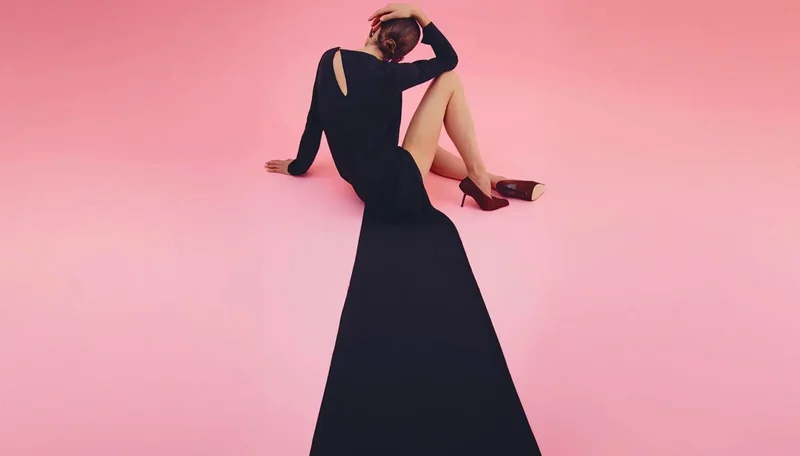
Luxury fashion has spent much of the past few years explaining away a difficult contradiction. Prices have climbed dramatically, yet the customer expected to absorb those increases has become considerably more questioning about what, exactly, they are paying for.
Giorgia Gabriele has a refreshingly uncomplicated response: perhaps some of those prices simply became too high.
The founder of independent Italian luxury label Armarium is building her business around a decidedly different equation, keeping margins deliberately moderate, producing entirely in Italy and resisting the temptation to pursue distribution - or growth—at any cost. While some of the industry’s largest houses have pushed further towards the very top of the wealth pyramid, Gabriele believes confusing exclusivity with inaccessibility risks leaving behind the customers who helped make luxury desirable in the first place. She spoke to me exclusively on her thoughts that fashion has acquired an unexpectedly formidable competitor.
“The number one competitor of the fashion industry today is, without question, hospitality,” she tells me. “No one is willing to give up dinner at their favourite restaurant, let alone a stay at an iconic hotel, just to have one more coat or one more sweater hanging in their wardrobe.”
It is one of several unusually candid observations from a founder who launched Armarium in 2022 and is attempting to grow it at a particularly unforgiving moment for independent fashion.
Gabriele created Armarium after struggling to find the wardrobe she wanted to wear herself: timeless but contemporary, rooted in Italian craftsmanship and built around pieces intended to remain relevant beyond a season. Since then, the independently owned business has developed a growing international footprint, with the US now a particular priority and distribution through some of luxury retail’s best-known names, including Saks Fifth Avenue, Bergdorf Goodman and Galeries Lafayette.
Yet Gabriele is notably unsentimental about the prestige attached to any particular stockist. She would rather turn down distribution than accept economics that don’t make sense, sees founder-led multi-brand boutiques as essential to the survival of emerging luxury, and describes Armarium as a “lifetime project” rather than something to be scaled at speed.
That combination of creative ambition and commercial restraint makes her particularly interesting at this point in luxury’s cycle. I spoke exclusively with Gabriele about the economics of independence, why wholesale isn’t dead, the continuing power of Made in Italy and what fashion needs to learn from the hotels and restaurants currently winning consumers’ discretionary spending.
KH: Luxury demand has slowed across parts of the industry. What are Armarium’s customers buying into beyond the clothes?
GG: Armarium is still a very niche brand, so our financial growth is still relatively modest. What truly satisfies us is seeing how loyal our clients are. They keep coming back, creating a genuine bond not only with the product but with the brand itself.
KH: Much of luxury now runs on constant newness, collaborations and social-media moments. Armarium is built around timeless design. Was that creative or commercial?
GG: Armarium was born from a personal need to create the wardrobe I couldn’t find on the market. Guided by my own instinct and aesthetic, I designed what I consider the perfect wardrobe: timeless, refined and effortless.
We’re very pleased with the brand’s creative evolution. Today, Armarium has developed a stronger fashion identity and more distinctive design codes while remaining true to the essence and values it was built on.
KH: How do you persuade someone to buy fewer, better pieces when inexpensive fashion has never been more accessible?
GG: Consumers today are much more capable of recognising garments that are made to last. The more we communicate our mission of prioritising quality over quantity, while celebrating the excellence of the Italian supply chain, the clearer our message becomes.
Ultimately, we want our clients and future customers to understand that true luxury is about longevity rather than excess.
KH: You have retained a strong wholesale business while many emerging labels prioritise direct-to-consumer. Why?
GG: How can Armarium become meaningful to a customer in Chicago, Antwerp or Bologna without wholesale distribution?
Multi-brand boutiques have always been, and will continue to be, fundamental partners for small and medium-sized brands that don’t have the resources to open 50 or 100 mono-brand stores around the world.
Unlike many department stores, many of these boutiques are still founder-led. They remain the ultimate destination for fashion lovers looking for discovery, new talent and carefully curated assortments. That’s why wholesale is not simply a route to scale for us; it’s an essential part of how we build the brand.
KH: Yet you’re also stocked by Saks Fifth Avenue, Bergdorf Goodman and Galeries Lafayette. How valuable is the department-store badge for an independent label?
GG: It is extremely difficult for brands with a strong aesthetic but limited brand awareness to succeed in department stores. Customers walking through those floors are naturally drawn either to globally recognised brands or to more affordable alternatives.
We respect department stores and are proud to be represented in some of the world’s best retailers. However, we have never been obsessed with being present at any cost or with accepting unreasonable commercial terms simply to secure distribution.
KH: “Made in Italy” appears everywhere in luxury. What does it actually mean at Armarium?
GG: For us, Made in Italy is not a marketing claim; it is a commitment.
Every Armarium garment is 100% designed, developed and manufactured in Italy. We work exclusively with some of the country’s finest manufacturers and artisans, many of whom have decades of expertise and produce for the world’s leading luxury houses.
Every step of our supply chain is closely monitored by our team, from sourcing to the final garment, ensuring the highest standards of quality, craftsmanship and consistency.
We believe true luxury starts with integrity, and for us that means knowing exactly where, how and by whom every piece is made.
KH: Independence brings creative freedom, but considerably less financial insulation. What has that taught you?
GG: Being independent constantly reminds founders how important financial discipline really is.
This approach has allowed us to navigate unexpected challenges, from geopolitical conflicts to import duties that have created significant commercial inefficiencies across the industry. Protecting both the creative vision and the financial health of the company has been one of the most important decisions we’ve made since day one.
KH: You’re now concentrating heavily on America. How do you expand internationally without broadening Armarium until it becomes indistinguishable?
GG: It’s simply a matter of time.
Armarium is a lifetime project, and that long-term perspective allows us to make thoughtful decisions in everything we do, especially in markets where getting it right is essential.
Today, we are concentrating much of our energy on the American market because we’ve recognised its strong potential for the brand. Our objective is to grow internationally without ever compromising the identity that defines Armarium.
KH: How do you decide when adding another category strengthens the business rather than simply creating more product?
GG: For us, growth is never a question of quantity, but of coherence. Expansion strengthens a brand only when each new category speaks to its identity and amplifies its language rather than diluting it.
With this in mind, tailoring and footwear remain an absolute priority for Armarium, a territory we continue to invest in because it represents the heart of our savoir-faire and the direction in which we want to consolidate our identity.
At the same time, to build solid commercial traction, we keep developing categories that have already proven to be real strengths of the brand. These are areas the market has rewarded, and they allow us to sustain the investments in our long-term priorities.
Ultimately, every decision comes down to balancing these two dimensions: on one hand, the vision, which tells us where we want to go; on the other, the customer’s response, which tells us where we have already earned credibility.
KH: You say fashion’s number-one competitor is now hospitality. Why?
GG: The number one competitor of the fashion industry today is, without question, hospitality. No one is willing to give up dinner at their favourite restaurant, let alone a stay at an iconic hotel, just to have one more coat or one more sweater hanging in their wardrobe. The emotional value of an experience has simply overtaken the emotional value of owning another product.
And let’s be honest: fashion brands have actively contributed to this shift. The disproportionate and often irrational increase in prices over recent years has pushed consumers to reconsider where they spend their money, and experiences have consistently won that comparison.
At Armarium, we made a deliberate decision to keep our margins moderate, precisely because we didn’t want to come to market with prices that, in our view, would ultimately be disrespectful to the consumer. We’d rather protect the trust we’ve built with our clients than chase a positioning that has lost touch with genuine value.
That’s how the role of fashion has changed: it can no longer take its place in people’s lives for granted. It has to earn it through meaning, integrity and pricing that feels fair.
KH: If you were launching Armarium today rather than in 2022, what would you change?
GG: If anything, the evolution of consumer expectations has only reinforced the direction we chose from the very beginning: focusing on integrity, thoughtful pricing and building product categories with real substance rather than chasing trends. Those principles feel even more relevant today than they did in 2022.
Rather than saying we would do something fundamentally differently, I’d say the market has moved closer to the values we already believed in.
What remains ahead of us is not a change of direction, but a question of reach: continuing to grow our visibility and tell our story to the right audience on a global scale.
KH: Finally, what will define the next generation of successful independent luxury houses?
GG: Pricing has become a genuine barrier for any brand that doesn’t want to speak exclusively to the wealthiest 1% of consumers.
Too many luxury houses are still making the same mistake: pushing prices to levels that exclude the very people who once built their desirability, confusing exclusivity with inaccessibility. The two are not the same thing.
Independent brands today have more freedom than ever to reshape luxury from a cultural perspective. Without the constraints of large groups or the pressure of quarterly shareholder expectations, they are free to take meaningful positions on pricing, on values and on the kind of relationship they want to build with their clients.
Ultimately, I believe the next generation of successful independent luxury houses will not be defined by their ability to charge higher prices, but by the courage to stand for something and the discipline to remain honest about value while doing so.
An Independent Brand with Vision
Gabriele’s distinction between exclusivity and inaccessibility may ultimately be the most pertinent one. Luxury’s extraordinary pricing power was built on desire, but desire still requires enough people to believe that what sits on the other side of the price tag represents value.
Armarium remains a young, niche independent business and Gabriele makes no attempt to pretend otherwise. Her ambition is measured over decades rather than quarters, with America providing the next significant test of whether that philosophy can travel.
At a time when much of luxury is searching for the next lever to pull, I believe there is something compellingly straightforward about her alternative: make exceptionally good things, know who made them, price them with respect for the person buying them and don’t mistake being everywhere for being valuable.