News analysis
ABSD changes aside, mega en bloc sites must be priced realistically to attract developers
SINGAPORE - The significant extension of a critical sales deadline for developers of large collective sale sites to up to seven years should help reduce their sales and execution risks in undertaking mega redevelopment projects.
But for the collective sales market to gain traction, the sites themselves must also be priced realistically, possess strong redevelopment potential and favourable planning attributes.
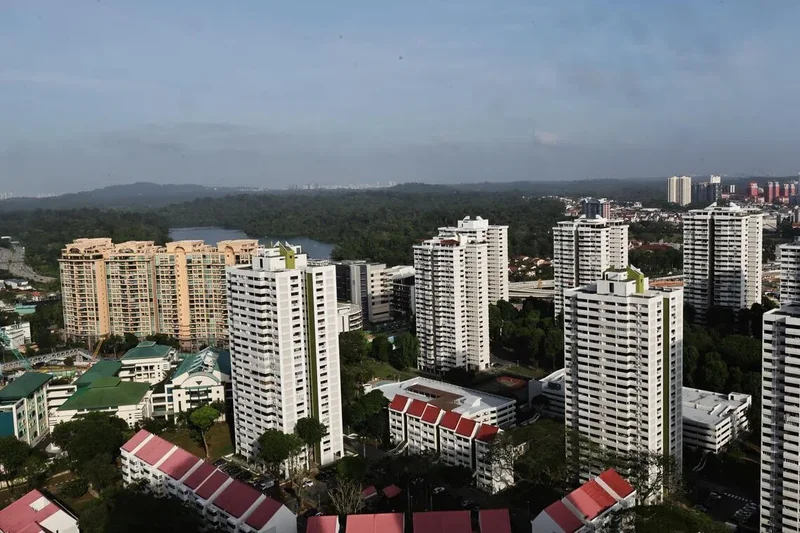
That said, these long-awaited changes to the Additional Buyer’s Stamp Duty (ABSD) regime may be just the catalyst that some of Singapore’s largest and oldest developments - such as the 660-unit Pine Grove and 918-unit Braddell View - need to kickstart their rejuvenation process. Both developments are more than 40 years old each.
Despite the substantial redevelopment potential of these sites, developers have been largely sidelined by previous shorter completion and sales timelines, among other things, resulting in multiple failed collective sale attempts while the condominiums age and their leases decay.
Delasa chief executive Karamjit Singh said the extension of time to complete and sell down large projects could bring new hope to aging massive developments deemed “en bloc-untenable earlier” and “facilitate the recycling of these valuable sites.”
The changes are an acknowledgement that one size does not fit all, he added.
Large to mega redevelopment projects face more complex execution, construction and sales risks compared with smaller residential projects.
“A 2,000-unit development and a 200-unit project are fundamentally different in terms of time, capital, risks and sales absorption. The revised framework makes the timelines more calibrated to the scale of the project,” Singh pointed out.
In March 2025, the Government extended the ABSD remission timelines for developers undertaking complex large-scale urban transformation developments by six months to a year.
But en bloc sales remained largely tepid.
On July 28, National Development Minister Chee Hong Tat announced that starting July 29, large sites – those that yield at least 700 residential units but fewer than 1,400 residential units upon redevelopment – will have their completion and sale timelines extended to six years from 5½ years currently.
Meanwhile, mega sites – those that yield at least 1,400 residential units upon redevelopment – will have a critical sales deadline of seven years, up from the current 5½ years.
In addition, developers of large and mega projects that meet additional criteria will get further six-month extensions, which means they have up to three years to begin construction after they buy the site.
Accordingly, the completion and sale timelines will be 6½ years for large sites and 7½ years for mega sites.
Developers of mega sites will have to sell at least half of the residential units at the end of six years, or face a full clawback of the 35 per cent remittable portion of the ABSD with interest. They will also face a full ABSD clawback if they do not sell all units after seven years.
“This ensures the extra time is not used to sit on inventory,” Nicholas Ng, head of land and collective sales, JLL, Singapore, said.
Currently, developers buying residential land are subject to 40 per cent ABSD. They pay 5 per cent upfront, and have to fork out up to 35 per cent in an upfront remittable component that is clawed back with interest if they do not sell at least 90 per cent of units within five years.
Under the new regime, there is also a qualifying condition attached, Ng added.
To qualify for the extended completion and sale timelines, the number of residential units upon redevelopment is required to be at least 1.5 times the number of residential units of the existing development.
This is significant, because the extra time is tied to producing more homes, Leonard Tay, head of research at Knight Frank Singapore, noted.
That indicates that urban renewal and growing housing supply remain the key objective, not just facilitating collective sales.
While most analysts say that these changes give developers more time to sell down large projects, that alone is not enough to spur a wave of risk-taking on mega sites.
“Developers already have no shortage of choice. There is a healthy pipeline of Government Land Sales (GLS) sites to bid on, with more realistic market pricing and timelines,” Ng said.
“Ultimately, it comes down to the owners’ pricing expectations. A longer timeline doesn’t offset an unrealistic reserve price from owners. Developers will simply look away,” he added.
Conflicting owners’ interests and an uncertain timeframe for deal completion remain key challenges to successful collective sales, Tricia Song, CBRE head of research, Singapore and Southeast Asia, said.
“Developers generally prefer GLS sites due to greater transaction certainty with the Government as the only seller,” she said. GLS sites are currently providing about 7,500 to 8,000 private condominium units in annual supply.
Hopefully, the ABSD regime changes will encourage the rejuvenation of ageing estates and intensify land use where needed, as well as offer a viable exit to ageing projects, especially the massive ones .
But owners of large sites must set realistic reserve prices, because a longer timeline only helps if the underlying economics of the deal make sense to a developer, Ng said.
If reserve prices stay out of step with market values, developers will continue to opt for the faster and more straightforward process of buying state land instead of an overpriced collective sale site, no matter how much extra time they are given to sell it.