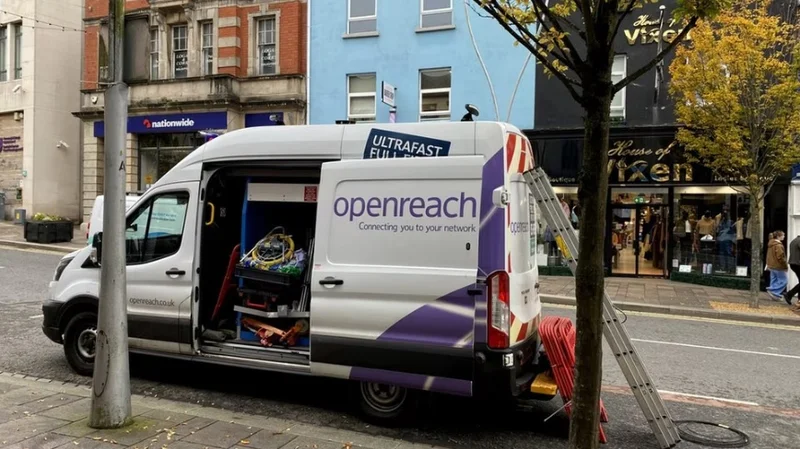
Ofcom proposed on Tuesday to block a discounted wholesale offer from Openreach, the first time the regulator has ever moved to stop a commercial deal from BT’s network arm. The offer would have given internet providers up to £9.50 off per customer per month, for as long as 30 months, when they connected more new full-fibre customers to Openreach than their usual run rate.
The structure is what troubled the regulator. Because the discount applies only to sign-ups above a provider’s normal level, it targets precisely the marginal customers that alternative networks depend on for growth.
What Ofcom said
The regulator concluded the pricing was “not fair and reasonable” and risked harming competition in a wholesale full-fibre market that is still developing. Rivals might feel compelled to match the pricing while being unable to recover their costs, which Ofcom said would undermine competition and eventually push prices up.
“Openreach must be able to compete, but they cannot use their significant market power to drive other networks out of the market,” said Natalie Black, Ofcom’s group director for infrastructure and connectivity.
The three offers Ofcom is leaving alone
Openreach put forward four commercial offers, and Ofcom is provisionally clearing the other three. One is a one-off £50 discount for new full-fibre customers above the usual sign-up level in areas where Virgin Media O2 operates.
Another caps charges for new high-speed connections. Ofcom said the geographic offer is significantly smaller in value than the one it is seeking to block, and therefore less likely to distort competition.
Openreach disagrees
“We’re disappointed that Ofcom has expressed concerns about one of our four offers, which we put forward in good faith at a time when many households are watching every bill,” said James Lowther, managing director for commercial at Openreach.
“In such a competitive market, we don’t believe that regulation should protect poor business models and we disagree with Ofcom’s analysis,” he added, saying the company would engage through the consultation.
Rivals say one out of four is not enough
Virgin Media O2 welcomed the proposal but argued Ofcom had looked too narrowly. A spokesperson said the “interrelated nature of the offers and Openreach’s clear intent to ‘test the waters’ means Ofcom should be tougher,” accusing Openreach of drip-feeding discounts to discourage providers from using rival fibre networks.
Nexfibre chief executive Rajiv Datta made a similar case. He welcomed the block on “the most egregious” offer but said the regulator should weigh “the cumulative effect of the steady drip-feed of other offers, which form part of a wider playbook to prevent the emergence of scaled wholesale competition.”
Why the timing matters
James Robinson, senior equity analyst at Assembly Research, noted that Openreach had held back from launching new commercial offers while Ofcom’s latest Telecoms Access Review was running, then moved fast once it concluded. “Openreach moved so quickly to test the waters, and its proposals certainly did that,” he said.
Robinson said the company now faces “an uphill battle and a tight timeline” to convince Ofcom the discounts would not harm competition. He added that the regulator had at least clarified the limits of Openreach’s pricing strategy.
The market being fought over
Nearly eight in ten UK homes can now access full-fibre broadband, up from under a quarter five years ago, after BT put roughly £15 billion into its network and dozens of altnets built alongside it. Around three quarters of the country can reach at least two networks, and nearly a third can choose between three.
Openreach is targeting 25 million premises by the end of 2026 and has expanded its work with Google Cloud to bring AI into the rollout. Scale is the whole argument: whoever reaches breakeven density first sets wholesale prices for everyone else.
That dynamic is not new to UK telecoms regulation. Ofcom spent years deciding how far to constrain BT’s control of the national network, ultimately separating Openreach rather than breaking it up entirely.
What is at stake beyond broadband
The coverage improvement has been genuine. A decade ago the milestone was 30Mbps availability, a benchmark that now looks quaint next to gigabit fibre.
Connectivity is also an economic input rather than a consumer product. Analysis has repeatedly found the UK’s digital economy to be larger than headline figures suggest, with digitally intensive firms growing faster and hiring more than their peers.
Broadband competition now sits inside a wider infrastructure debate. The government committed £1.3 billion to AI hardware, skills, and adoption at London Tech Week, a programme that assumes the underlying connectivity is both cheap and universal.
Ofcom’s consultation runs until 27 August, with a final decision expected by the end of September. Whichever way it lands, the regulator has now established that it is willing to intervene in Openreach’s commercial pricing, which is a shift in itself.
Get the TNW newsletter
Get the most important tech news in your inbox each week.