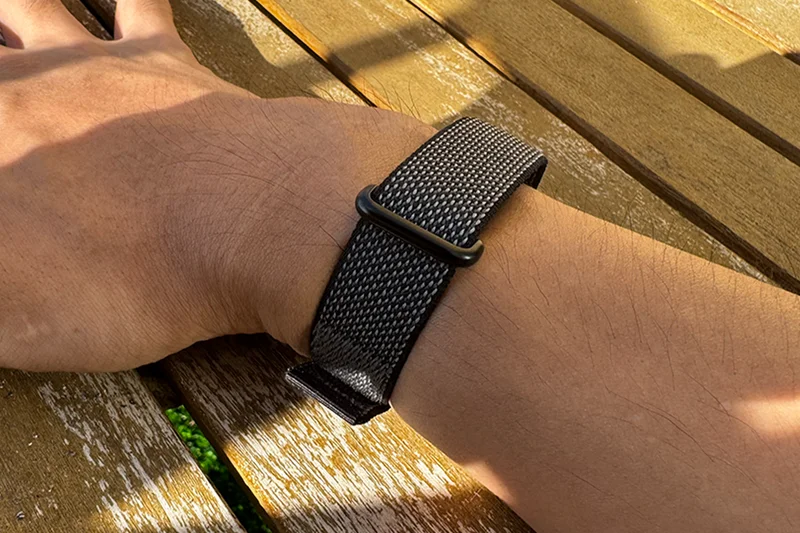
Like many inducted into the CrossFit cult, I've been a Whoop devotee for years. I mean, with Whoop pretty much hogging the screen-free recovery market for years, there was frankly nowhere else to look. But in May, Google launched the Fitbit Air, the Whoop’s biggest competition to date, and I’ve been wearing it ever since.
Google's Fitbit Air is an £85 screen-free fitness tracker that costs a fraction of a Whoop, doesn't require a subscription and similarly focuses on passive, round-the-clock health tracking. But can it really compete?
For the past two months, I've had the Fitbit Air glued to one arm and the Whoop 5.0 on the other to find out. I've tracked everything from sleep and workouts to recovery metrics such as heart rate variability, respiratory rate and more, and have put Google's revamped Health app and its AI coach through their paces. Here's how it stacks up.
Read more: Whoop 5.0, reviewed
Read more: I tried the Garmin cirqa ahead of its launch – here’s everything to know
- Why we love it- Extremely light and comfortable
- Much cheaper than Whoop and doesn’t require a subscription to work
- Google Health's AI coach was actually useful
- Excellent sleep and recovery tracking
- Comes with a smart wake alarm
-
Simpler design and charging system than Whoop
-
Take note- Auto-workout detection struggled with CrossFit and functional fitness
- Dedicated stress tracking is missing
- Some advanced coaching features locked behind Google Health Premium
Fitbit Air: Design
As someone who's worn a Whoop for years, I've never really liked the design. The wearable itself is, of course, excellent, but the whole system around it has always felt unnecessarily complicated and overly fiddly. Whenever I want to swap bands, I have to unclip and rethread the sensor, and the way you charge the Whoop is just as head-scratching, requiring you to slide a battery pack onto the device while still wearing it. Totally clunky – it always takes me a minute to get it on.
The Fitbit Air is the complete opposite. It’s just so ruddy simple. It's so easy to wear and looks so minimal on your wrist. The tracker itself is just a tiny pebble that slots into the included Velcro fabric band. You tighten it on your wrist and pull the strap over the top to secure it in place. You don't need to wrestle with an annoying metal clasp, like you do with the Whoop.
And it's tiny. The Fitbit Air is just 17mm wide and 8.3mm thick, making it one of the smallest fitness trackers I've worn. Over the past two months, I've actually forgotten I was wearing it. The ultra-lightweight design makes it especially good for sleep tracking. For context, the Whoop 5.0 is roughly 7mm wider and 2.3mm thicker.
The performance band itself is soft and comfortable and never irritates my skin. Because the tracker sits so flush against your skin, it almost disappears. You can get the performance loop band in one of four different colours – obsidian, fog, lavender and berry, and Google also sells separate active bands in silicone for sweatier, swim-ready workouts. There are also more fashion-focused leather bands as well. There’s even a Stephen Curry special edition band that comes in orange.
I think Whoop still has the edge in terms of sheer customisation, with everything from leather and knit bands to bicep straps and Whoop Body clothing, so you’ve got more ways to wear the tracker.
Fitbit Air: Setup
Setting up the Fitbit Air is a doddle, and it’s actually quite unlike anything I’ve tested before. After popping the tiny pebble-shaped tracker into the band and putting it on charge, you just pair it with the Google Health app and you’re essentially good to go. Being screen-free, you don’t have to configure any apps or watchfaces.
But the reason why it’s so unique is because of the revamped Google Health app, which turns the usual setup process into a chat. Instead of manually entering lots of information, Google wants you to have a conversation with its new AI coach to build out your profile.
I was first asked about my goals and what I wanted to achieve. I told it I wanted to reduce my body fat percentage and lower my stress levels. The coach immediately linked the two together and initially suggested increasing my daily step count and adding more intentional walks as a low-stress way to improve both.
But interestingly, once I mentioned I regularly attend CrossFit sessions, it became even more personal. Instead, it said I could ditch the walking and work on training consistency, recovery and workout intensity instead.
From there, it started asking follow-up questions. How often do I train? What does my weekly CrossFit schedule look like? Do I have any limitations? Would I rather have it automatically build a plan for me, or work through one together?
Because CrossFit can be demanding, it recommended creating the plan collaboratively. It then proposed tracking four CrossFit sessions per week and monitoring my recovery and heart rate zones during workouts to make sure I was recovering properly between sessions.
What impressed me most, however, was how readily it adapted to things I told it. When I mentioned I was heading to Japan for a work trip and wouldn't be able to train, the coach suggested temporarily pivoting away from CrossFit goals to a more travel-friendly step target instead. And so I did. It felt more like talking to someone than slogging through the usual setup process of a new fitness tracker.
It isn't perfect, however. Like a lot of AI, it struggled with dates and timelines. After adjusting my plan around the Japan trip, it still got confused about what day I was leaving, how long the trip was and how long I'd be away for.
It's a classic generative AI issue that still seems to plague the tech, and occasionally made the experience frustrating as I had to tell it that, no, today was not Friday, and my week-long trip did not end in two days' time. It still thought I was in Japan a month on – thankfully, that’s not the case anymore.
Fitbit Air: Features and performance
The Fitbit Air tracks all the basics you'd expect, including 24/7 heart rate, sleep stages, resting heart rate, blood oxygen, heart rate variability, respiratory rate, skin temperature and irregular rhythm notifications for atrial fibrillation.
It also tracks workouts, steps and has a new weekly cardio load target metric, which is effectively its answer to Whoop's strain. It measures how much cardiovascular stress exercise places on your body.
You also get a daily readiness score, which looks at your heart rate variability, sleep and resting heart rate, so you know how ready you are to work out.
One feature I really like is the smart alarm clock. It can wake you up at the optimal time before your chosen wake time by gently vibrating against your wrist. It'll snooze automatically if you don't firmly double tap the top of the Air. That said, as a fairly deep sleeper, I wouldn't always rely on it. I still manage to sleep through the haptics on a few occasions. You can also check battery life by double tapping the device. It’s good to note that Whoop also has this feature.
Most of this works without a subscription to Google Health Premium, which costs £7.99 per month after the included free trial. While the tracker works without it, many of the AI insights, contextual recommendations and coaching tools I'm talking about here are locked behind the subscription. You don't need it to use the Fitbit Air – a major advantage over the Whoop – but you'll definitely get the most out of the device if you do subscribe.
It's also worth noting that, much like Whoop, some of the advanced insights take time to calibrate. It took about a week before my daily readiness score became available, with Google Health gradually learning my sleep, recovery and activity patterns to build a baseline. Over the following weeks, the coaching has also become more tailored and personalised. The early recommendations focused a lot on steps and movement, but as it learnt my CrossFit schedule, travel plans and recovery patterns, the guidance has got better.
Sleep tracking has been excellent. The strength of it was most noticeable while I was travelling around Japan and battling severe jet lag. It didn't merely track my sleep stages, but also gave context around them, recognising that my disrupted sleep coincided with travelling. One night, after getting just two hours and 21 minutes of sleep and going to bed at 3:12am, my sleep score crashed to 49. The following day, my readiness score fell to 25, with Google warning me that my recent sleep trend was worse than my 28-day average.
One thing I would say is that the sleep notifications can be a little inaccurate. After testing it for a couple of months, I’ve noticed that it often tells me I’ve only had a couple hours of sleep, just because I got up in the middle of the night to use the loo. It doesn’t realise that I’m obviously heading back to bed, and that it should probably deliver a more accurate notification when I wake up for real.
That said, what still impresses me to this day is the level of detail. Instead than just telling me to sleep more, Google Health spots how many minutes it takes me to reach sound sleep, then links my suppressed REM sleep to any exercise or travel stress and recovery.
I’ve also noticed how it’s more context aware than the Whoop. Google Health can access my location, and the weather, so it knows how the heat can affect my sleep, and knows where I’ve been. For instance, it’s previously recommended I get some steps in because I was at Heathrow Airport.
After wearing the Whoop and Fitbit Air side by side for two months, I can say the Fitbit Air is just as accurate as my Whoop. Both can identify the same overall trends, spotting recovery tanking during travel and highlighting sleep disruptions.
It gives me similar readiness scores, tells me when I should go hard at the gym and when to take it easy. It also pays a lot of attention to heart rate variability in the night, which seems to go up when I eat closer to bedtime – something I’d never really noticed whilst wearing the Whoop.
Read more: I’ve tested the best fitness trackers on the market – these are my favourite options
That said, I think the Whoop is a lot better at fitness tracking. While the Fitbit Air lets me view my cardio load, total energy burned and estimated VO2 max, which measures aerobic fitness and endurance, it’s very poor at tracking workouts automatically.
My Whoop can always tell the kind of workout I’m doing and log it automatically. Sometimes my Fitbit Air doesn’t even recognise that I’ve worked out, so I’m often having to put it in manually. The Whoop has recognised pretty much every workout I’ve thrown at it over the years, from CrossFit WODs and Hyrox-style sessions to general strength training.
This is because the Fitbit Air can only automatically detect activities such as walking, cycling, running, hiking, elliptical workouts, aerobics and general sports. It consistently struggles with CrossFit, Olympic lifting and functional fitness sessions.
All that said, I do like how I can input my sets and reps. Instead of scrolling through numbers and drop-downs, you can just tell the AI Coach how many sets and reps you did, and it’ll log it automatically for you, all in natural language text.
It also misses out on dedicated stress tracking, which remains one of Whoop's biggest strengths.
The Fitbit Air still did a good job of recognising effort through Cardio Load. One particularly brutal CrossFit session contributed 52 points alone, helping push my weekly cardio load score to 88 against a target of 170. I like that the cardio load target changes week to week as well, based on how well I performed the week before.
In terms of other features, you can log nutrition and hydration manually, via barcode scanning, meal photos or conversational AI prompts. You can even sync the app with third-party services such as MyFitnessPal if you already track your meals elsewhere. I’ve really enjoyed just telling it exactly what I ate that day, so it can automatically input it in without having to search for food items and meal types.
And if you’re like me and love competing with your friends as it keeps you motivated and accountable, there are some new social features as well. You can now compete with others on shared leaderboards based on steps and cardio load, giving Fitbit something akin to Apple Watch’s competitions.
Those in the US can also sync their medical records with Google Health. Google says this feature will arrive in the UK in the future.
One neat addition with Google Health Premium is its recommended workouts feature. Based on your goals, it can suggest specific routines. It’s recommended entire workouts that are based on my energy levels. When I’d been away for a little while, it recommended I start with stretching, including cat-cow and bird dog, before moving onto squats, planks, rowing and walking lunges to help ease me back into training.
There’s also a huge library of video workouts to watch and follow – it’s very similar to Fitness+ on Apple Health.
Whoop still offers the full-package fitness experience, particularly if you're serious about training. But Google Health is the app I prefer using on the daily. It presents your data in a way that’s easier to understand, and I like that the AI Coach can just add anything to my nutrition, programming or exercise that I tell it to add.
Fitbit Air: Charging and battery life
I much prefer Fitbit’s charging system compared to Whoop’s. While you can’t charge it on the move, like you can with a Whoop, I’m not someone who tended to do this anyway, and sliding the power pack on has always been a pain. You recharge the Fitbit Air using an included magnetic charger. It simply clicks onto the front side of the tracker. It’s dead easy.
Because of its dinky size, you do only get a week charge out of the device – that’s obviously way more than an Apple Watch or regular smartwatch, but I wish it had more in the tank.
But as someone who generally hates charging things at all, I only have to take my Whoop off twice a month to charge, whereas I have to take the Fitbit Air off every single week. However I would say that it does charge super quickly. It takes five minutes for a day’s use, and a full charge takes 90 minutes. The Whoop can take up to 2.5 hours to charge, which is frankly ridiculous.
Key specifications
- Weight:12g (with band)
- Size:34.9 x 17 x 8.3mm
- Battery life:Up to 7 days
- Charging time:5 minutes (1 day’s use); 90 minutes (full charge)
- Colours:Obsidian, fog, lavender, berry
- Health tracking:24/7 heart rate, HRV, SpO2, skin temperature, resting heart rate, respiratory rate, sleep stages, readiness score, Cardio Load, VO2 max, smart wake alarm, automatic workout detection and irregular heart rhythm notifications (Afib)