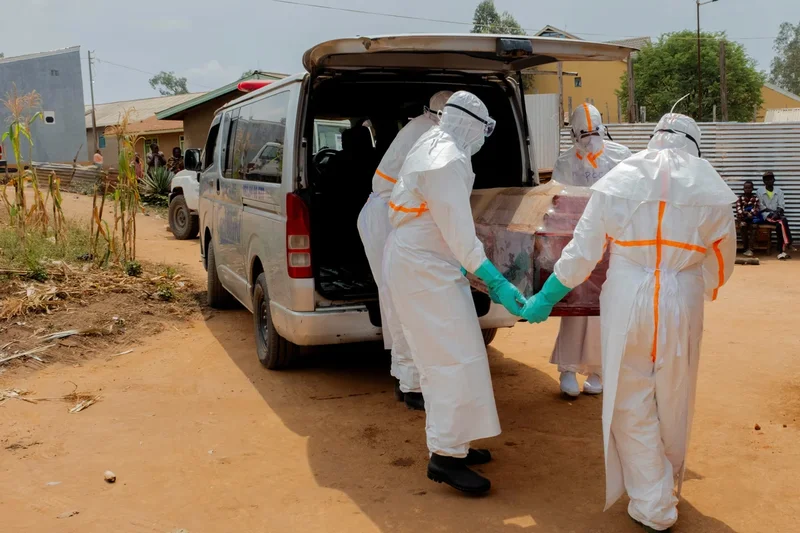
The Democratic Republic of Congo is grappling with an escalating Ebola outbreak, with confirmed cases now reaching 3,262 – a figure almost on par with the country's largest recorded epidemic between 2018 and 2020.
The Ministry of Health reported overnight that 1,437 patients have died from the 3,262 cases, marking what officials describe as the fastest Ebola outbreak on record, primarily concentrated in the eastern Ituri province.
This rapid spread is particularly alarming when compared to the 2018-2020 outbreak, which spanned roughly two years across Congo and neighbouring Uganda, resulting in over 3,400 reported cases and more than 2,200 deaths, according to the U.S. Centers for Disease Control. Globally, only the devastating 2014-2016 West African outbreak, with 28,000 cases and over 11,000 fatalities, surpassed this toll.
The current outbreak's rapid transmission is compounded by significant on-the-ground challenges.
Residents express concerns that many communities in affected provinces are either inaccessible or have been abandoned by responders due to safety fears, following attacks from both angry locals and rebel groups.
Onesphore Bangenza, Mercy Corps response team lead in Bunia, Ituri's capital, highlighted the gravity of the situation on Tuesday, stating: "The fact that, in just 10 weeks, we have reached nearly the same number of cases recorded over an almost two-year outbreak is alarming and should stop us in our tracks." He added: "There is no doubt that the virus is moving faster than we can contain it."
Declared on 15 May, this particular outbreak presents a unique hurdle: it is caused by the Bundibugyo virus, for which no approved vaccines or treatments currently exist. Efforts to curb its spread are further hampered by ongoing rebel violence in eastern Congo and strikes by health workers protesting unpaid wages.
Despite an expanding response, the outbreak continues to outpace health officials' tracking capabilities. A critical obstacle remains the unidentified patient zero, while widespread displacement from armed conflict and illegal mining in the region makes tracing thousands of contacts exceptionally difficult.
However, amidst the challenges, signs of progress in community engagement are emerging. Fabrice Mumbesa, a resident of Mongbwalu, a mining town at the epicentre where treatment centres were previously burned down, reflected a shift in sentiment: "We can never again wage war against the Ebola teams. We have lost members of our families. As a community, we have a vested interest in fighting Ebola to return to normal life."
In a contrasting development, neighbouring Uganda declared its Ebola outbreak officially over on Tuesday. Authorities confirmed the East African nation is now "free" of Ebola, with the last patient discharged in mid-June, having consistently maintained that its cases were imported from Congo.