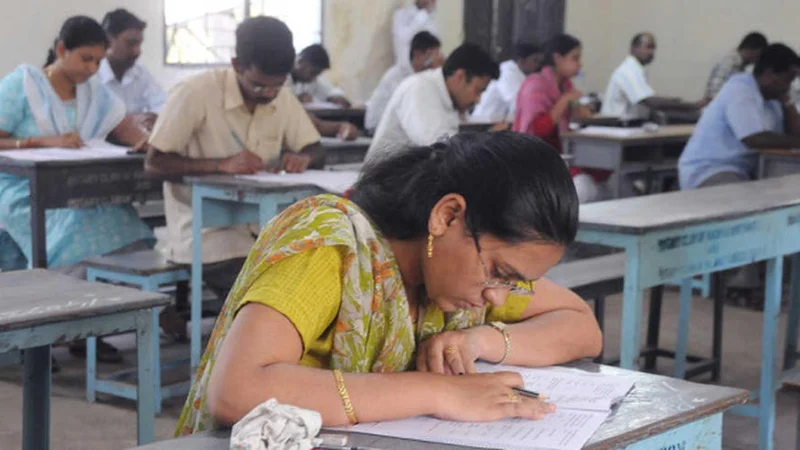
What began with a single leaked entrance exam paper became, in the student protesters’ own telling, a movement about unemployment, shrinking opportunity, and how much a young person’s future hinges on a handful of competitive examinations.
India has dramatically expanded school and higher education; today’s young Indian is far more educated than her parents. Governments across party lines have invested heavily in skilling, apprenticeships, and vocational training.
However, these investments have collided with a labour market incapable of absorbing the aspirations they helped create. Of about 307 million people aged 15 to 29, some 141 million are in the labour force and 127 million are employed. Yet only about 15 million, fewer than one in eight, hold a regular salaried job with a contract and social security — what most would regard as a ‘good job’ with fair pay, social protection, decent working conditions, and career progression. This scarcity creates two forms of distress, often mistaken as separate problems.
At one end are young people who leave school early. Among Indians aged 15-29, whose education is largely complete, about 39% have not finished secondary school and over half hold no qualification beyond Class 10. Most are employed; joblessness among the middle-educated is below 5%. However, they work in informal, low-paid, and often subsistence jobs as casual labourers; are self-employed; or are unpaid workers in family farms and businesses.
A worker who completed only Class 8 earns roughly ₹12,300 a month, and finishing secondary school adds barely another ₹1,000. For many young women, this arithmetic ends in withdrawal: with wages this low, marriage and unpaid care win. Over two in five are neither working nor studying, against fewer than one in 10 men.
At the other end are graduates. While conventional analyses often state that educated youth are rejecting work by holding out for comfortable jobs, the data says otherwise. Graduates face the highest unemployment rate of any group at 22.7%, more than three times that of those who never completed school.
They are only 17% of India’s youth population, but 56% of all unemployed young people. While expectations matter, it is far lesser than what the “choosy graduate” narrative suggests. Only about 22% of the labour force earns more than ₹15,000 a month, with nearly 55% earning below ₹9,000. Only about 17 out of 100 graduates secure the salaried employment a degree promises. India, then, has roughly 15 million meaningful jobs and 300 million young people. The chart below shows the average monthly earnings of young workers by level of education (in ₹).
The appeal of government jobs
Hence, the extraordinary importance of government recruitment examinations. They are among the few routes to secure work for first-generation graduates who do not have the money for elite or foreign degrees, and the networks of class, caste, and family that shape private-sector hiring networks which are far less open to marginalised households, regardless of talent. These exams promise to judge candidates by performance alone. In 2024, roughly 30 lakh candidates competed for about 17,700 government posts; about 170 candidates for every vacancy.
Part of the problem is that the transition from school to work is itself broken. Fieldwork by JustJobs Network particularly highlights the wage-expectation mismatch. Young people express clear ambitions but cannot name the course or occupation that would get them there; and when a job appears, the entry-level pay of ₹10,000–15,000 a month falls well below the ₹20,000–25,000 graduates say they need even locally. Moreover, a job requiring migration is worth taking only at a pay of ₹30,000-₹40,000. Faced with no visible path, many rationally default to a general degree and the examination queue.
These failures are symptoms of a deeper structural problem. India’s economy has become efficient at generating output, but less so at generating meaningful employment. Through much of the 2010s, growth remained strong while employment stagnated; since 2019, much of the increase has reflected workers returning to low-productivity agriculture rather than moving into better-paying jobs. Investment has favoured capital- and technology-intensive sectors, with rising automation creating relatively fewer jobs.
Public investment has risen significantly, but it has flowed more into physical infrastructure than into health and education systems. India spends about 2.7% of its GDP on education, well below the national target of 6%, and about 1.9% on health, short of the 2.5% its National Health Policy set for 2025.
None of this is the fault of the young people who took to the streets. The school-leaver in unpaid family work and the graduate on her fifth attempt face the same shortage from opposite ends. Neither lacks effort. What is scarce is not determination but good quality jobs.
The students achieved what a protest can: accountability for an immediate failure, and national attention for a larger crisis. But no recruitment reform can change the arithmetic of 170 applicants for every vacancy. The deeper challenge is to reshape growth itself.
Until growth generates opportunity as fast as education generates aspiration, India’s young will keep waiting for the economy to catch up with their ambitions.
Published - July 28, 2026 09:09 pm IST