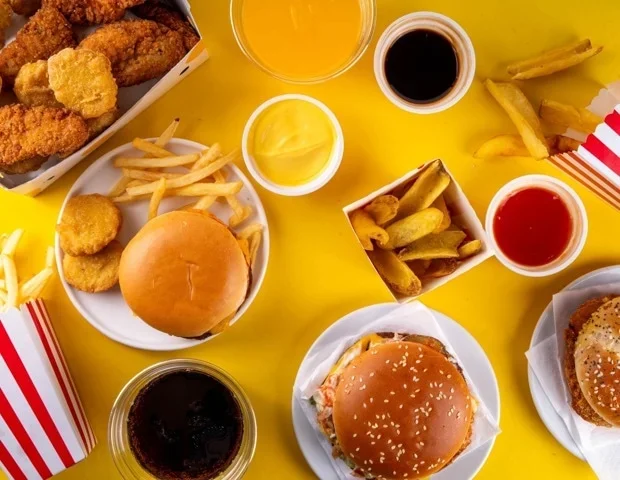
A father's diet can affect his children's health and body composition before they are even conceived. A study of 43 triads of fathers, mothers, and newborns treated in the public healthcare system of Ribeirão Preto in the state of São Paulo, Brazil, demonstrated this. The analysis revealed that the greater the consumption of ultra-processed foods by the fathers, the higher the birth weight and the greater the accumulation of fat in the baby's thighs and suprailiac region (commonly known as "love handles"). High birth weight and elevated body fat early in life are risk factors for cardiometabolic diseases in adulthood.
"Maternal nutrition and health before, during, and after the baby's birth have always received attention, but little is said about the role of the father's diet. Our study shows that it also matters a great deal for the baby's health," says Daniela Sartorelli, a professor at the Ribeirão Preto School of Medicine at the University of São Paulo (FMRP-USP) who coordinated the study published in the journal Nutrition Research.
The study is the first to demonstrate an association between fathers' consumption of ultra-processed foods and the body composition of newborns. So-called ultra-processed foods are industrial formulations mostly made of food-extracted substances and synthetic chemical additives; the presence of whole foods in the composition of items such as packaged snacks, filled cookies or soft drinks is either scarce or non-existing.
The researchers' hypothesis is that consuming ultra-processed foods negatively impacts sperm formation, which occurs prior to conception.
Diets rich in ultra-processed foods can create a pro-inflammatory environment in the body, affecting sperm quality and altering the expression of genes that will be passed on to the baby. This process is known as epigenetics. Gene activity can be 'activated' or 'deactivated' depending on the father's dietary habits."
Mariana Rinaldi Carvalho, a FAPESP doctoral scholarship recipient and co-author of the study
One of the genes mentioned in the study is IGF-II, which is responsible for fetal growth and is inherited exclusively from the father. "Previous studies have shown that a father's dietary habits can biochemically modify this gene in sperm through a process called methylation [the addition of a methyl group], thereby influencing fetal development," says the researcher.
The study is part of a larger project supported by FAPESP that investigates how the diets of mothers and fathers influence the health of newborns.
According to the results, fathers' consumption of ultra-processed foods was associated with higher birth weights, while the effect of mothers' consumption was the opposite. Consuming these foods early in pregnancy (up to the 16th week) was associated with lower birth weight, shorter height, and smaller head circumference at birth.
"We believe that the impact of maternal consumption of ultra-processed foods on the baby's birth weight and body measurements may be related to placental development, which depends on many nutrients. Ultra-processed foods are, in fact, nutrient-poor," Carvalho assesses.
Health predictor
A baby's birth weight is considered an important predictor of health in both childhood and adulthood. In addition to an increased risk of death, numerous studies have shown that babies born with low (or high) birth weights may develop noncommunicable diseases later in life, such as cardiovascular disease, type 2 diabetes, and certain types of cancer.
"Although the study didn't find an increase in total body fat, only fat accumulation in certain regions of the baby's body, the results suggest that the quality of the father's diet may also influence fetal development. This is important because, on average, ultra-processed foods accounted for 30% of the total energy consumed by the fathers whose diets were analyzed in the study, particularly processed meats, sugary drinks, and cookies," Sartorelli notes.
In a previous study, the same team of researchers observed that overweight fathers tended to have babies with lower birth weights. However, by specifically analyzing diet quality, they demonstrated that it isn't only the father's weight that matters but also what he eats (read more at agencia.fapesp.br/53400).
"With these two studies, we've shown that it isn't just a matter of whether the father is overweight. The quality of the father's diet before conception has a significant impact on the baby's health," says Sartorelli.
Although the sample size was small, with only 43 families, the study is a pioneering effort to investigate the impact of ultra-processed foods on paternal and neonatal health. "The results pave the way for larger studies and reinforce the need to include men, not just women, in family planning guidance," says Sartorelli.
Source:
Journal reference:
Carvalho, M. R., et al. (2026) A higher paternal ultra-processed food consumption is directly associated with parameters of neonatal anthropometry. Nutrition Research. DOI: 10.1016/j.nutres.2026.04.015. https://www.sciencedirect.com/science/article/pii/S0271531726000552?via%3Dihub