If you scroll down to section eight of the Public Investment Corporation (PIC) Act (of 2004), it says that âthe board must control the business of the corporation, direct the operations of the corporation and exercise all such powers of the corporation that are not required to be exercised by the shareholders of the corporationâ.
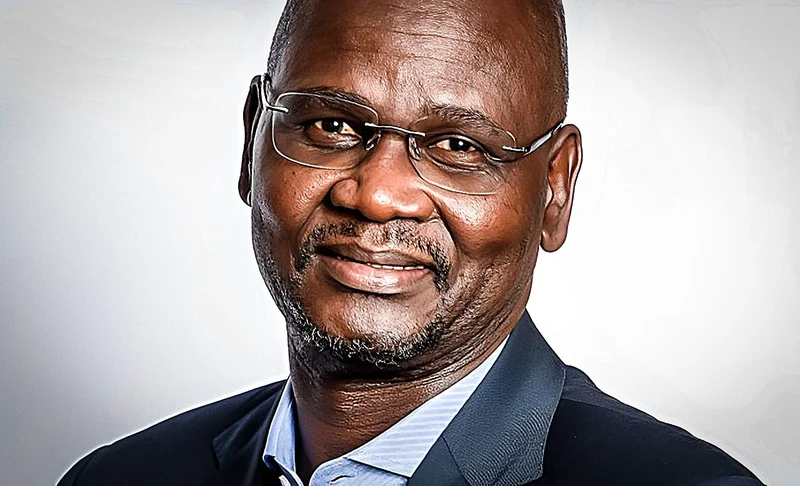
Suspended PIC CEO Patrick Dlaminiâs application to the Gauteng high court for an urgent interdict to overturn his precautionary suspension argues that the decision was unlawful, invalid and procedurally flawed.
The main contention? The board breached its fiduciary duties and internal policies, including whistleblower protocols, by removing him without proper notice.
He has a point. Under Section 6 of the PIC Act, Clauses 7.3 and 7.4 of the Memorandum of Incorporation (MOI), and Clause 10.13 of the Delegation of Authority (DOA), the sole authority to appoint, discipline, or suspend the CEO is vested in the Minister of Finance as the shareholder representative. Consequently, the boardâs unilateral suspension without the ministerâs written approval is beyond its powers (read: ultra vires) and unlawful.
Into the weeds
His legal argument is also strong when he maintains that the board violated the basic tenets of procedural fairness and the right to be heard. And the fact that the decision to suspend was leaked to the public hours before the formal notice was served also counts heavily in Dlaminiâs favour.
On the whistleblower complaint, however, the conversation becomes a lot more nuanced. Dlamini argues that the anonymous whistleblower complaint does not qualify for protection under the Protected Disclosures Act 26 of 2000 because it was authored by external âconcerned citizensâ rather than internal PIC employees.
Dlamini is technically correct on the law â the Act strictly protects employees who make disclosures about their employers, meaning external counterparts cannot claim its statutory protections.
But, as the boardâs attorneys pointed out in its response, there is an independent fiduciary duty under the Companies Act and the Board Charter to investigate any serious allegations of misconduct against its CEO, regardless of whether the complaint qualifies under the Act.
The R900m question
Dlamini has dismissed the 26-page whistleblower complaint, which accuses him of various improprieties, as a highly coordinated, bad-faith attack copy-and-pasted directly from Acapulcoâs legal threats to derail the PICâs investigation into Acapulco.
Wait, what is this Acapulco craziness?
To understand the suspended CEOâs legal battle, we have to look back at a highly messy, long-running deal involving Lanseria Airport and an entity called Acapulco Trade and Invest 164.
In 2013, the PIC gave a R333-million loan to Acapulco (a BEE partner linked to the PICâs controversial former CEO, Dr Dan Matjila) to buy a 25% stake in Lanseria Airport.
Over the next decade, Acapulco repeatedly failed to repay the loan. The debt ballooned to R630-million, leaving the investment deeply underwater. Consequently, the PIC stepped in and âperfectedâ its security by taking over Acapulcoâs shares in Lanseria.
Acapulco legally challenged this takeover. Shockingly, the resulting arbitration awarded R410-milliontoAcapulco, despite the fact that it still owed the PIC R630-million (the UDM called this a âpaper revaluationâ that essentially conjured a R400-million windfall out of thin air for a defaulting debtor).
Dlamini commissioned PwC to investigate the transaction and the arbitration. In retaliation, Acapulco went to war. It launched a massive R900-million damages claim in the high court against both the PIC and Dlamini personally for its actions after the arbitration. It also sent letters to the board accusing Dlamini of severe executive misconduct.
Acapulcoâs original letters revealed that Dlamini was appointed to the Lanseria board by Harith General Partners, which is run by his close associate of many years, Tshepo Mahloele.
It also alleges that Dlamini was deeply conflicted and repeatedly refused to recuse himself from making decisions on the Lanseria file. If an independent investigation confirms he failed to manage this conflict, it is a direct violation of his fiduciary duties under Section 76 of the Companies Act.
Acapulco also pointed out that the PICâs official Letter of Authority appointing PwC to run the forensic audit bore Dlaminiâs signature alone, with no accompanying board resolution. If Dlamini initiated a high-stakes forensic probe into an active BEE partner unilaterally, he bypassed standard Delegation of Authority protocols.
And under Clause 5 of the Corporate DOA, the CEOâs powers are strictly confined to those delegated to him by the board. No CEO has the ânear-unlimited powerâ to unilaterally run off-the-record corporate warfare or ignore potential conflicts of interest on multimillion-rand files without formal board oversight.
Weight of expectation
When Dlamini succeeded Abel Sithole in June 2025, the sentiment surrounding his appointment was overwhelmingly positive and expectant.
Even now, former PIC board chair David Masondo publicly lauded Dlamini for his âexemplary record of strategic and ethical leadership,â highlighting his decade-long tenure as CEO of the Development Bank of Southern Africa.
He was framed as a turnaround specialist equipped to handle the immediate concerns (read: Daybreak Foods) confronting the PIC.
But in the first month of Dlaminiâs tenure, the PIC injected a further R150-million into the Daybreak crisis, bringing the total 2025 exposure to R400-million and total historic exposure to R1.7-billion, demonstrating a lack of risk-mitigation and consequence management.
And by late 2025, credit loss ratios in the unlisted portfolio (read: the Isibaya Fund) exceeded 39%, yielding negative returns and resulting in an estimated R70-billion being provided for ultimate write-offs.
Yes, many of the failures of the unlisted division can be chalked up to the acting head Thabiso Moshikara, who was accused of demanding kickbacks, illustrating that corruption remained entrenched within the division.
But rather than bringing stability, Dlaminiâs tenure is plagued with executive suspensions, direct board conflict, mass resignations of non-executive directors and an active FSCA investigation.
The court challenge, despite the clear points, reveals a leader struggling to maintain control of a highly factionalised and failing institution. DM