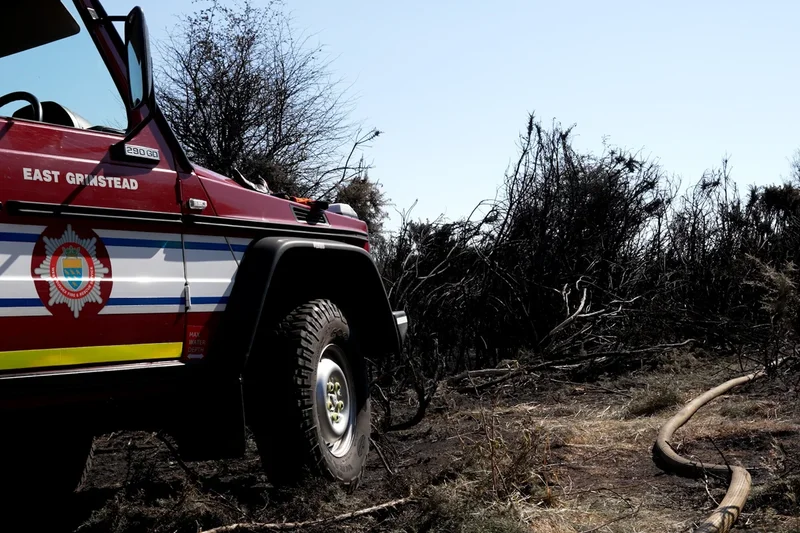
Fire chiefs have warned that the risk from wildfires across the UK remains elevated, with more than 200 blazes recorded in the past fortnight.
This comes as the country braces for its fourth heatwave of the year, with temperatures in south-east England expected to soar to 35C by Wednesday.
A Met Office assessment indicates that if fires ignite in parts of London, the South East, and eastern England, they could be exceptionally severe by Wednesday, exacerbated by the hot, dry conditions.
In response, the UK Health Security Agency (UKHSA) has issued an amber heat-health alert for the East Midlands, the East, South East, and London.
The alert, in effect from Tuesday to Thursday, highlights that rising temperatures pose increased health risks, particularly for vulnerable groups.
Fire and rescue services in England and Wales have responded to 706 wildfires so far in 2026, with 208 incidents recorded between July 16 and 28 alone, the National Fire Chiefs Council (NFCC) said.
It added that the latest figures, which do not account for wildfires across the rest of the UK such as a major wildfire in the Cairngorms in Scotland, show “how quickly wildfire activity can increase during prolonged periods of hot and dry weather”.
Fire chiefs warned that wildfire risk “remains elevated across the UK”, with the NFCC adding there were “currently eight live wildfire incidents being monitored through national reporting systems”.
Derbyshire Fire and Rescue Service said firefighters were continuing to “make progress at the major wildfire incident at Tintwistle Moor” after 60 personnel were deployed on Tuesday.
While wildfire numbers in England and Wales remain below the 788 recorded by the same point last year, fire chiefs warned “continued dry conditions, combined with warmer temperatures and harvesting activity in many rural areas”, were creating conditions in which fires can start and spread rapidly.
Images showed widespread brown grass across Blackheath in London, with parched dry grass present in many parks in the capital following the hot weather.
It comes as Royal Parks staff were advised not to leave deckchairs under trees over fears branches will fall during hot weather.
Large-scale wildfires across Europe, including in parts of Spain, France and Greece, have led to evacuations, environmental damage and pressure on the emergency services.
The NFCC said UK wildfires are typically smaller and different in nature to those seen in southern Europe, adding, however, that the “long-term effects of climate change are increasing the likelihood of larger, more complex and more resource-intensive wildfire incidents occurring”.
Phil Garrigan, chairman of the NFCC, said: “More than 200 wildfires in just 12 days shows how quickly the risk can escalate when hot, dry conditions take hold.
“The scenes we’re seeing across parts of Europe are a stark reminder of what a changing climate means for fire and rescue services.
“We are not seeing fires of that scale in the UK today, but the science tells us we should expect larger, more frequent and more complex wildfires in the future.
“That’s why we need continued investment in specialist wildfire capabilities, including aerial firefighting support, so we’re prepared for the risks ahead.
“But prevention remains our strongest defence. Most wildfires are avoidable, and we’re asking everyone to take extra care during the hot weather to help keep their communities safe.”
Fire chiefs said many wildfires are caused by everyday human activity, adding that “disposing of cigarettes safely, avoiding the use of disposable barbecues in open spaces and taking litter home can significantly reduce the risk of fires starting”.
July has been 3C above average across the UK, according to provisional Met Office data, potentially putting it among the hottest three or four months of July on record.
Fire chiefs said people should report any signs of fire immediately by calling 999 and asking for the fire and rescue service.