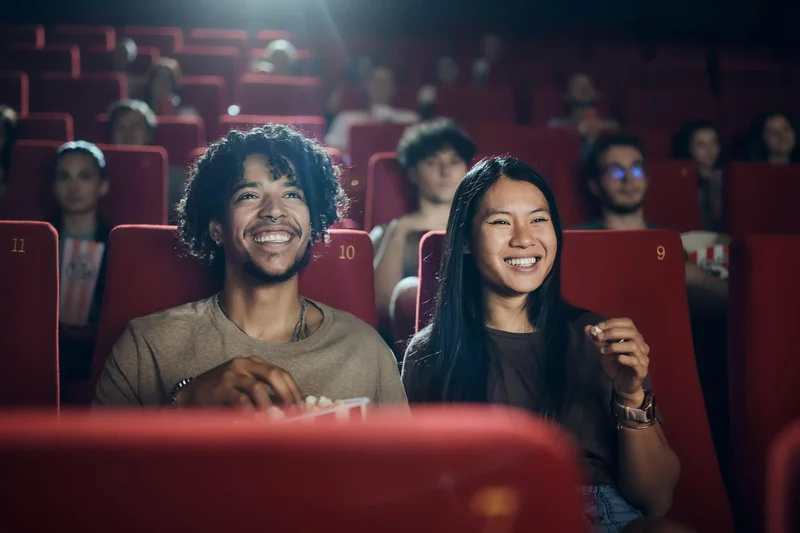
Experts predicted that the cinema industry might never recover from the pandemic and subsequent lockdown. The U.S. box office plummeted 80% in 2020; studios prioritized direct-to-audience distribution and platforms like Netflix, YouTube and TikTok swallowed up a greater share of attention. The dominant narrative was that going to the cinema is an outdated concept, especially for young people.
But against all odds, young people are leading the revival of cinema. Gen-Z are the most active cinemagoing demographic, with 87% having seen a movie in the cinema in the last year compared to 58% of Baby Boomers. What has caused this change in fortune and what’s the biggest lesson for marketers and brands?
The cinema comeback has coincided with a wave of big blockbusters capturing the imagination of both die-hard fans, online communities and first-time cinemagoers alike. Global cinema sales are projected to reach $35 billion in 2026—a milestone the industry hasn’t reached since the pandemic. The Super Mario Galaxy Movie became this year’s first $1 billion release. Michael Jackson’s biopic Michael is now the highest-grossing biopic of all time, surpassing Oppenheimer. And Christopher Nolan’s universally acclaimed The Odyssey is projected to reach a similar milestone. In contrast, Netflix’s shares are down nearly 50% in the last year.
Meanwhile, the cultural impact and box-office success of low-budget movies like Backrooms, directed by 20-year-old Kane Parsons and Obsession, directed by 26-year-old Curry Barker on a $750,000 budget, highlight a structural shift in the industry. Both directors started on YouTube and have brought their audience on the journey, cutting out the traditional gatekeepers.
Young people love watching movies on the big screen because it’s one of the only moments in modern life when they can spend a couple of hours disconnected, uninterrupted and liberated from screens, apps and algorithms. Cinema is a collective experience. We get the chance to watch a movie with friends, families and strangers: in the same place, at the same time. In contrast, most people watch movies and TV shows on streaming platforms alone. For a generation deprived of physical interaction, going to the cinema is a social activity. You get to meet up with friends, watch a movie together and talk about it afterwards.
Gen-Z is the loneliest generation in human history, more lonely than any other age group, including people aged 65 and over. A central factor is the proliferation of smartphones. Social media offers the feeling of connection without face-to-face interaction. Streaming platforms give us access to 1000s of movies without leaving the house.
Social media connects us with people without requiring physical interaction. Streaming platforms allow us to watch whatever movie we like, without leaving the house. E-commerce means we can buy food, clothes and electronics without ever stepping into a store. Naturally, teenagers spend less time socializing. The average American now spends 35 minutes a day socializing. Silicon Valley has successfully removed friction from our lives, but is convenience killing community?
Going to the cinema is part of a wider trend of young people seeking shared communal experiences. We, humans, are social creatures; we rely on cooperation to survive and thrive. However, the modern world has been designed for hyper-individualization, stripping away the community infrastructure, collective memories and shared rituals critical to our well-being.
The signals are everywhere. The Knicks winning the NBA championship after 53 years sparked wild celebrations in New York, inspiring collective joy and uniting diverse communities across all five boroughs. It was a shared moment of rapture for New Yorkers and beyond. The World Cup brought together football teams from 48 countries and fans from 210 nations, united by a shared passion for the beautiful game. For those unable to buy a ticket, fan zones offered communal space to celebrate or lament. And going back to movies, the Michael Jackson biopic Michael turned a cinema screening into a concert-like experience, with viewers singing, dancing and transforming the theater into an impromptu dance floor.
Global brands often focus their media spend on the big game, a blockbuster movie or the most anticipated concert of the year. But the biggest opportunities for cultural relevance exist before and after the actual experience. Young people want to talk about the experience long before and after the event has concluded. The conversation is a social ritual: where meaning-making and human connection happen.
Currently, brands are fixated on AI transformation, digital optimization and creator partnerships. Meanwhile, Gen-Z are attempting to escape the algorithm and spend more time offline. Pioneering will not only sponsor more experiential events but fund more grassroots community spaces and cultural programs that connect young people in person.