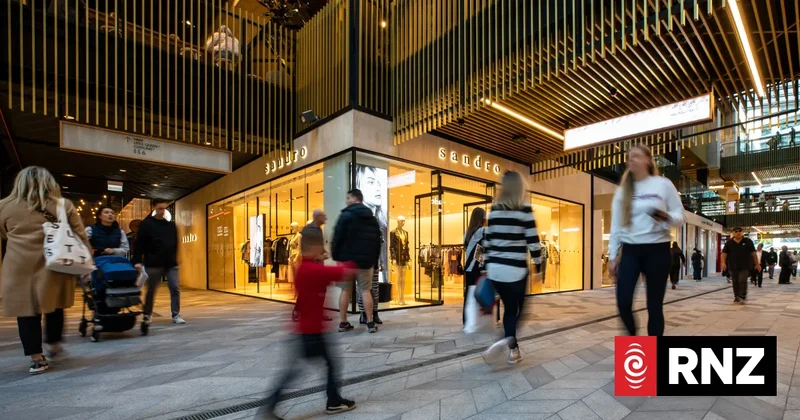
Retailer confidence rebounds, but weak sales and BNPL costs keep pressure on
Retailers are more confident about the year ahead, but weak sales growth and unease over Buy Now Pay Later (BNPL) costs show the sector is still under pressure.
Confidence amongst the nation's retailers bounced back strongly in the second quarter of the year as firms breathed a sigh of relief that spiralling fuel prices didn't send the economy back into a recession.
However, the report said trading conditions remained tough, with June electronic card transaction data showing core retail growth of just 0.4 percent year-on-year - well below inflation.
Retail NZ's latest Retail Radar report, based on responses of Retail NZ members, showed 69 percent of retailers were confident of surviving the next year, up from 61 percent in Q1.
Retailers were even more upbeat about the prospect of the tills ringing this year, with 61 percent of members expecting to meet or exceed sales targets in the third quarter, a huge increase from 34 percent in the last survey.
Retail NZ chief executive Carolyn Young said it was pleasing to see confidence levels returning to normal this quarter after "the shock felt in the sector due to tensions erupting in the Middle East at the end of February and through March".
Easing fuel-price pressures had also reduced members' concerns about freight costs, which fell from 79 percent in the first quarter to 63 percent this quarter.
The cost of living remains the top concern for retailers but worries around surcharges slipped out of the top five worries as the report noted indications from Parliament suggested the surcharge ban had been "kicked into touch for the foreseeable," with just 23 percent believing it to be a concern.
The rise of Buy Now Pay Later
Although the report showed nearly half (47 percent) of retailers now offered BNPL, Young said the jury was still out on whether it was worthwhile.
Young said it was clear it was no longer a niche product, with members saying customers were using it for a range of transactions, from small impulse buys to purchases worth thousands of dollars.
"While it's becoming an increasingly popular payment option for customers, the fees are much higher than credit card or contactless charges," Young said.
Members were divided on whether the extra cost was worth it.
The scepticism was primarily driven by the much higher fees BNPL providers charged retailers - about 6 percent, compared with card fees of between 2 and 3.5 percent.
The report said most retailers offering BNPL had not noticed any increase in average basket size, while some respondents said younger or lower-income customers were using it as a day-to-day payment method or alternative to credit cards.
It said that raised questions about affordability checks, although most retailers believed responsibility for those safeguards should sit with BNPL providers or consumers, rather than retailers.
"It will be interesting to see how retailers' views of Buy Now Pay Later changes in the coming years as it matures as a payment option, and as the economic environment changes," Young said.