It was eight years ago, during a bruising royal commission, that Australia’s banking industry sustained injury to its image so damaging that it lost the community’s trust.
Now, after several years of rehabilitation efforts by the banks, behavioural creep is emerging again. The latest example is the shortchanging of hundreds of thousands of customers with mortgage offset accounts. The systemic nature of this issue was uncovered by the Australian Securities and Investments Commission.
The backlash from the royal commission’s revelations of banks’ bad behaviour wiped out a legion of the industry’s board directors and executives on the back of a community shaming exercise.
Fast-forward to this week, and ASIC has identified that banks have recently needed to compensate borrowers to the tune of $55 million for interest they are owed.
That figure will undoubtedly rise as customers attempt to navigate the complexities of working out whether their offset savings are being accurately assessed by their bank.
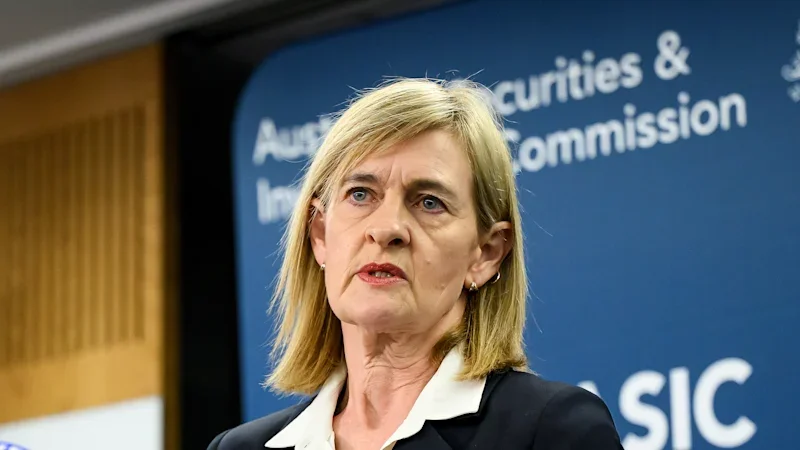
“One of the things about these … offset account failures is it’s very difficult for a customer to work out for themselves,” said ASIC chair Sarah Court, admitting that the amount of the potential losses to customers at this stage is completely unknown.
She wouldn’t rule out that a level of complacency around behaviour may have crept back into the sector.
While branding the offset problems as “structural”, it doesn’t look like the regulator is raising the issue to the level of a head-rolling offence.
The banks’ defence to the shortchanging will inevitably default to these mistakes being innocent and due to deficiencies in systems and processes. In other works, they happened by accident rather than design.
(It’s a fair bet that if these deficient processes and systems were costing the banks money, they would have received attention, resources and rectification.)
This echoes the banks’ explanations for many of the problems uncovered during the royal commission in 2018, such as the charging of fees for no service or the breaching of responsible lending obligations. Some of the more egregious behavioural issues uncovered by the royal commission were also not particularly widespread.
In the banks’ latest misstep, while mortgage offset miscalculations happened to only a fraction of customers, many will be affected – there are more than 3.3 million Australians with a mortgage, after all, holding a combined $350 billion in offset accounts.
The Australian Banking Industry reckons 99 per cent of those with offset accounts are paying the correct interest. But given the sheer number of accounts, 99 per cent simply isn’t good enough.
ASIC cited one case, in which a customer paid more than $3500 in extra interest in just over one month when their offset account was incorrectly delinked by their bank.
In another example, two customers paid more than $17,000 in additional interest after the bank failed to inform their broker that the offset account needed to be re-linked following refinancing.
One telling point about this issue needs airing: ASIC maintains that in the process of its deep dive into the eight banks surveyed, it saw no examples of customers being accidentally overcompensated.
The regulator has decided against naming and shaming financial institutions caught in the offset issue. Its review didn’t cover all the banks, but covered a sample of the big four, some medium-sized lenders and smaller lenders.
Some of them have been a bit tardy with redress action, others have more willingly come to the party.
So customers won’t know whom to trust.
The Business Briefing newsletter delivers major stories, exclusive coverage and expert opinion. Sign up to get it every weekday morning.