Sari-cular fashion: Tradition meets modernity as new brands tap market for upcycling ethnic wear
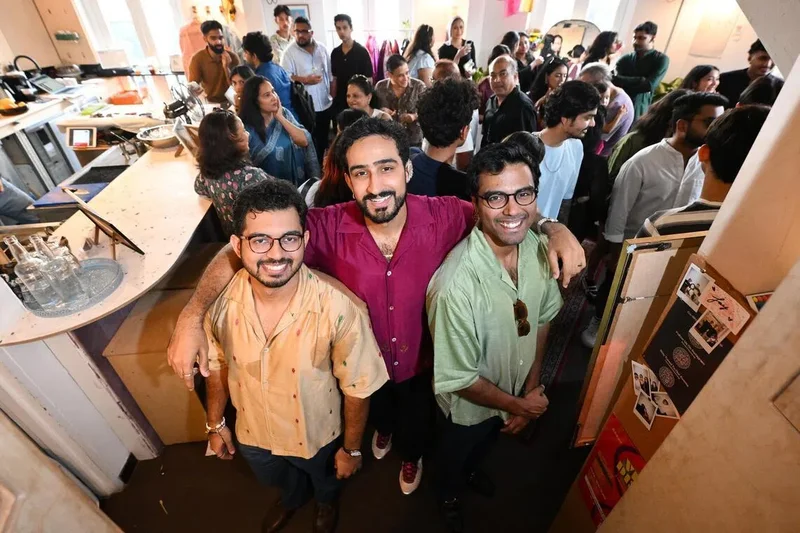
SINGAPORE – It was standing room only at The Dori’s launch of its debut collection of shirts upcycled from saris on July 19.
The crowd was shoulder to shoulder at the One Trick Pony bar in Chinatown, jostling past one another to view the 45 shirts on sale. Two-thirds were sold on the day.
About 200 people attended the launch of the circular fashion brand, almost twice the expected crowd. Many had heard about it from friends and family of the three co-founders, Rishabh Sharma, Laavanya Kejriwal and Ajinkya Kulkarni, all aged 27.
The Dori is among a small group of businesses that have recently started upcycling traditional clothes for modern wear.
Three companies that The Straits Times interviewed said they saw a market for the many unused saris in Indian households which could be given a second life.
These brands have been enjoying a strong reception in the marketplace with customers willing to pay a premium for these unique pieces. The Niram Collective said it has sold more than 150 upcycled pieces since launching in October 2025.
Customers ST spoke to at The Dori’s launch said that they had traditional outfits left unworn at home as they felt too formal for daily wear.
Fashion content creator Anisha Batra said every Indian household has a cupboard where “beautiful saris live, folded away and waiting”. These saris would have been worn for weddings or festivals such as Deepavali.
Rishabh said it was because of those dormant saris hidden in cupboards that he founded The Dori.
“A number of family friends told me about how once they have worn a sari to either a prayer or a wedding, most of their friends have already seen them in that sari. The chances of them wearing it again drops quite significantly,” he said.
The Dori’s debut collection took about nine months to complete and the saris were sourced from Singapore’s Indian diaspora.
The shirts are designed around the pallu – the decorative end of the sari fabric and often its most detailed part, featuring motifs and embroidery.
The borders of the sari are turned into cuffs, plackets or back yokes. Hence no two shirts are the same, said Rishabh.
Each shirt comes with a tag detailing the fabric type, the Indian state the sari came from and what motifs and embroidery it carries.
Rishabh came up with the idea for the business in August 2025 when he noticed most brands upcycling saris seemed to be focused on women’s wear.
“There was no reason men should miss out on that craft (of saris). This is when I decided to fill the gap myself, with what I love most in my own fashion journey: unisex and androgynous garments,” said Rishabh.
He added that the process has also allowed him to learn more about his heritage.
Anisha, 30, bought a $145 Mysore silk blend shirt upcycled from a Karnataka sari. She was attracted to its copper-gold sun motifs, which she described as a balance between minimalism and maximalism.
Getting a one-of-a-kind piece for that price was also a draw.
“It’s not okay to refashion traditional clothes into modern wear if the essence goes missing. But when a brand not only keeps the essence of the sari and turns it into something that actually gets worn, that, to me, is the future of fashion,” said Anisha.
Another customer, Adnan Azam, 27, said he bought a $160 Banarasi silk satin shirt upcycled from an Uttar Pradesh sari – known for their intricate brocades – as it would fit into his normal wardrobe.
“I liked that it retained a visible connection to Indian textiles without looking like something I could wear only at a wedding or cultural event. The strongest sustainable products are the ones people would want even without the sustainability label,” said Adnan.
The unique designs have drawn in customers from other races too.
Michelle Tay, a 27-year-old administrator, said: “Seeing the pieces in person, you can definitely feel the quality of the fabric and see all the intricate embroidery and detailing up close.”
She bought two cotton silk and gradient satin shirts from Punjab and New Delhi that cost her $145 and $187.
Post-partum weight gain gave birth to The Niram Collective, started by sisters Radha Kunasaigran and Sindhu B. in October 2025. Their ethnic clothes did not fit them anymore after pregnancy.
Saris take weeks of skilled craftsmanship to complete and it would be a waste to throw them away or for them to sit aside unused, said Radha.
The duo now sells everyday pieces such as crop tops and jackets repurposed from preloved saris, which people may donate in exchange for store credit.
Radha added that while the business began as a way to preserve heritage, she and her sister also considered long-term commercial sustainability.
“The starting point was heritage and sentiment, as saris carry so much emotional weight. But we also believe circular fashion has to be commercially sustainable to actually make a dent. A purely heritage/charity model doesn’t scale, and scale is what changes how people think about their old clothes,” said Radha.
Most of The Niram Collective’s customers are women aged 25 to 55. About half are Indian and the other half includes Chinese and Caucasian customers.
Tops are priced from $55 and the most intricately designed jackets and skirts cost above $200.
Raja Rani, another circular fashion brand, was started in 2021 by couple Naveen Murugan and Beatrice Nannini. It is a passion project driven by their love for fashion, music and traditional textiles.
Its offerings, mostly priced above $100, include upcycled sari kimonos, tops and pants. About 70 per cent to 80 per cent of its products are upcycled from preloved saris.
It also sells handmade embroidered capes at $300 that each take four to five days to complete.
Most customers are between 30 and 60 and are predominantly female, said Beatrice.
She added that while customers of Indian heritage have been very supportive, some misunderstood the brand’s message and thought it was referring to saris as waste.
Naveen said: “Upcycling saris is not about treating tradition as outdated or disposable.
“It is a way of appreciating and celebrating the fabric by extending its life and introducing it to people who may wear it in a different form.”