Africa · Eastern
Key Facts
—The milestone. Africa now has about 307 million undernourished people, surpassing Asia’s total for the first time.
—The prevalence. One in five Africans faced hunger in 2024, compared with a global average of 7.8 percent.
—The cost barrier. More than one billion Africans, roughly two-thirds of the population, could not afford a healthy diet.
—The 2030 projection. Nearly 60 percent of the world’s chronically undernourished people will live in Africa by the end of the decade.
—The funding gap. The World Food Programme needed more than $453 million for West and Central Africa operations over a six-month period alone.
Africa has overtaken Asia as the world’s largest hunger hot spot, with about 307 million people undernourished in 2024, a structural shift driven by population growth, conflict, climate shocks and deepening exposure to volatile global food and fertiliser markets.
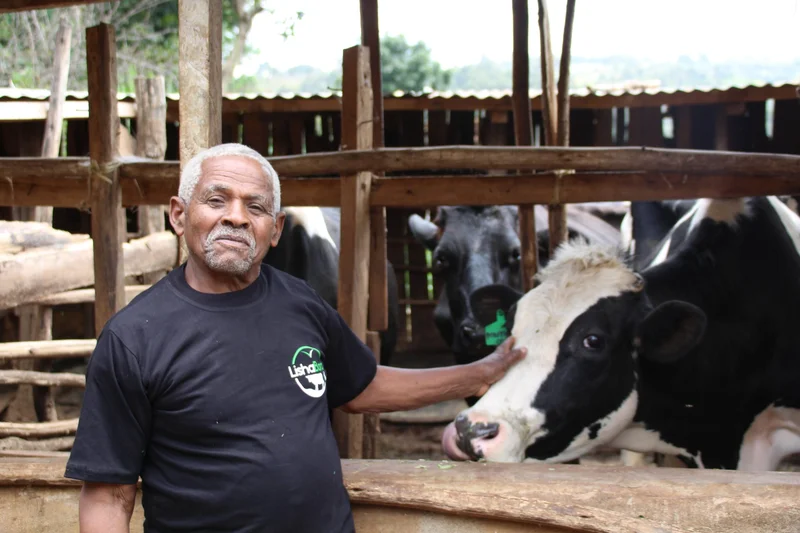
UN report: Africa overtakes Asia as the world's hunger hot spot (Photo internet reproduction)
One-stop reference
Company Intelligence
Every listed company in Latin America — financials, ownership and structure for 1,450+ companies across 26 exchanges, in one place.
RTAsk Rio TimesMarkets, currencies and the economy›
RT
Ask Rio Times
Latin American markets, currencies and companies.
×
Markets todayThe currencyRates \& inflationEconomy outlook
A milestone the numbers had long predicted
The finding comes from the UN’s State of Food Security and Nutrition in the World 2026 report, published on 21 July by five agencies including the FAO and WFP. Global hunger did ease modestly, falling to 645 million people from 659 million in 2024, yet Africa’s absolute number kept climbing even as Asia’s declined.
The report projects that by 2030 nearly 512 million people will remain chronically undernourished worldwide, with almost 60 percent of them in Africa. This is not a sudden crisis but the result of population growth outpacing agricultural productivity gains and conflict eroding food systems faster than aid can repair them.
Why Africa became the global hunger epicentre
The UN points to a combustible mix of conflict, climate extremes and economic shocks. In West and Central Africa alone, 55 million people were expected to face crisis-level hunger during the June-to-August 2026 lean season, while the Sahel saw acute food insecurity jump from 41.8 million in late 2025 to a projected 52.8 million.
Behind those numbers lies a hard commercial reality: African economies are disproportionately dependent on imported grain, fuel and fertiliser. When global energy markets are disrupted, the cost of growing, transporting and buying food rises simultaneously, squeezing households that already spend more than half their income on meals.
The great-power contest over food and fertiliser
Food insecurity in Africa is increasingly a theatre of geopolitical competition, a theme explored in our ongoing coverage of Africa: The New Scramble. Russia’s war in Ukraine disrupted wheat, grain and sunflower-oil flows for years, while fertiliser price spikes hit African farmers harder than their Asian or Latin American counterparts.
The financing picture is equally stark: humanitarian budgets are tightening just as needs expand, forcing the WFP to warn of severe operational gaps. For BRICS members and Gulf states, this opens a window to deepen influence through bilateral grain deals, fertiliser supply agreements and infrastructure investment, while Western donors recalibrate their commitments.
What the Africa hunger hot spot means for investors and frontier markets
Chronic food insecurity is a macro-risk multiplier that affects currency stability, labour productivity and political risk premiums. Countries where two-thirds of the population cannot afford a healthy diet, as the UN reports for Africa, face constrained domestic demand and higher exposure to social unrest. Our reporting has shown that these conditions also create openings for non-traditional investors—including funds from Gulf states and BRICS members—who are beginning to treat cold-chain logistics, irrigation, fertiliser blending plants and climate-resilient seed research as frontier-market opportunities.
Yet the same data set points to investment gaps that some funds are beginning to treat as opportunities: cold-chain logistics, irrigation, fertiliser blending plants and climate-resilient seed research. The UN’s call for greater investment in agriculture and food systems signals where public and private capital may flow next, particularly in Eastern Africa’s fast-growing economies.
A South-South lens for Latin American readers
Brazil, Argentina and Paraguay are among the world’s largest grain exporters, and Africa’s growing import dependence makes it an increasingly important market for Latin American agribusiness. The hunger data underscores both the commercial opportunity and the diplomatic sensitivity of food trade between the two regions.
Within BRICS, food-security cooperation has moved from rhetoric to concrete mechanisms, including a proposed grain exchange and emergency reserve arrangements. For Latin American policymakers and exporters, Africa’s hunger trajectory is not a distant humanitarian statistic but a demand signal with long-term contract implications.
What to watch in the months ahead
The FAO and WFP have flagged Sudan, South Sudan, Yemen and Palestine as the most critical hunger hotspots, while Nigeria and the Democratic Republic of Congo remain areas of very high concern. Eastern Africa’s next rainy season and the trajectory of global fertiliser prices will determine whether the 2026 lean season breaks recent records.
The deeper question is whether the international financing architecture adapts before the 2030 projection of 512 million chronically undernourished people becomes reality. For governments, multilateral lenders and private investors alike, the UN’s latest report makes clear that Africa’s food systems are now a frontline of both risk and opportunity in the global economy.
Frequently Asked Questions
Why did Africa overtake Asia as the world’s largest hunger hot spot?
Africa’s population growth outpaced improvements in food production and distribution, while conflict, climate shocks and high food-import costs eroded gains. Asia, by contrast, continued to reduce its absolute number of undernourished people, allowing Africa’s total to surpass it for the first time in 2025.
How many people in Africa cannot afford a healthy diet?
According to the UN report, roughly 1.03 billion people in Africa, or about 66 percent of the population, were unable to afford a healthy diet in 2025. This is the highest share of any region and reflects the combined pressure of low incomes and high food prices.
What is the outlook for hunger in Africa by 2030?
The UN projects that nearly 512 million people globally will still be chronically undernourished by 2030, with almost 60 percent of them living in Africa. Without accelerated investment in agriculture, infrastructure and climate resilience, the continent’s hunger burden is expected to deepen further.