Now Published in Two Editions
Get the Latin America Power Map
You’re reading the Brief — the whole hemisphere at a glance, free, every weekday. The Latin America Power Map is the daily instrument no one else publishes: a single reading of all fourteen nations across markets, power and society — a power ranking, currencies and rates beside defense strength, the leader’s grip, alliances and social cohesion. Thirty signals, one board, every morning. The whole region in sixty seconds.
Rio Times · Latin America
Key Facts
—Colombia A parliamentary palace coup leaves Petro isolated as the right unites—feeling a mix of institutional relief and elite vindication.
—Argentina A double blow of World Cup heartbreak and Milei’s cabinet shakeups drives a sense of wounded pride and weary political resignation.
—Chile 10 dead and whole towns underwater as the state admits the damage bill has hit US$400 million—an exhausted nation cleans mud again.
—Mexico Sheinbaum bets big on hospital bricks while seismic tremors and US tariff chaos feed a quiet, pragmatic anxiety.
—Venezuela The earth won’t stop shaking: 578 dead, 1,405 aftershocks later, the country is in a dissociated stupor of survival.
—Brazil Corporate Brazil is jittery as the Ibovespa freezes up to pandemic lows and the Armed Forces roll out across 7 states for elections.
Latin America woke up bruised on July 22, nursing a hangover of natural disasters, institutional breakdowns, and collective heartbreak that punctured the region’s fragile optimism.
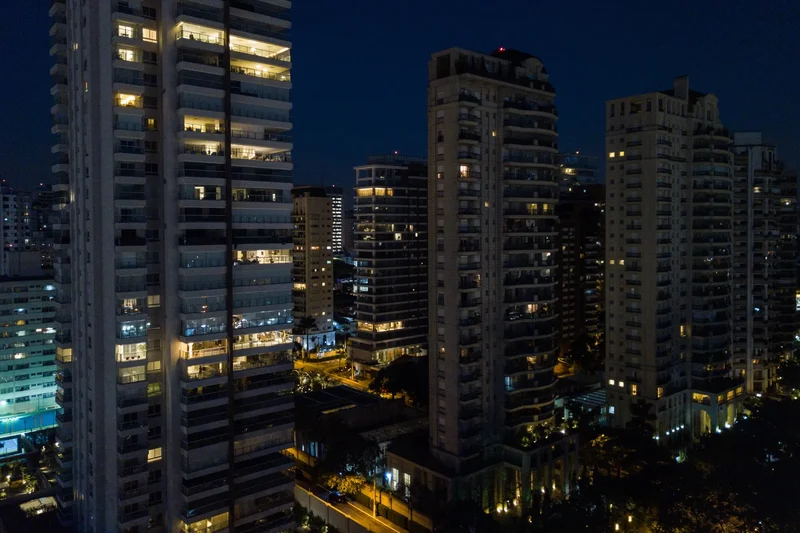
The day across Latin America at a glance. (Photo internet reproduction)
One-stop reference
Company Intelligence
Every listed company in Latin America — financials, ownership and structure for 1,450+ companies across 26 exchanges, in one place.
| Instrument | Level | Session |
| --- | --- | --- |
| Ibovespa (Brazil) | 173,326 | -0.03% |
| S\&P/BMV IPC (Mexico) | 66,714 | +0.89% |
| S\&P IPSA (Chile) | 10,954 | +0.52% |
| S\&P Merval (Argentina) | 3,281,979 | +1.81% |
| COLCAP (Colombia) | 2,301 | +0.13% |
| USD/BRL | 5.0732 | -0.33% |
| USD/MXN | 17.413 | -0.10% |
Source: EODHD close, 2026-07-21. Figures rendered directly from the feed.
The Continent’s Mood Today
The hemisphere’s default mode right now is a survivalist trance, caught between the earth moving beneath its feet and political classes moving against each other. On Monday, the region’s focus bounced frantically between the dead being counted in Venezuela and Chile, the right seizing control of Colombia’s Congress, and Argentina sinking into a sulk after losing a World Cup final to a Spanish goal in extra time.
The anchors from The Rio Times tell a parallel story of money trying to stay calm while humans panic: Brazilian dividends surge to US$6.3 billion, lithium stocks rally, but São Paulo’s Ibovespa liquidity dries up to pandemic lows. The mood is a clenched jaw—people are holding their breath, whether from tear gas in Bogotá, floodwater in Valparaíso, or the sheer disbelief that Ferran Torres’s goal actually went in.
Colombia – The Palace Coup Becomes Real
Bogotá feels like a city where the axis of power just tilted sharply right. On Monday, the Chamber of Representatives elected conservative Nicolás Barguil as its president with broad backing, while the Senate chose its own leadership after a tense battle that shut out Gustavo Petro’s allies. For Petro, who gave his final congressional address and repeated his claim that last week’s presidential election was illegitimate—confirming a nullity lawsuit against the victory of Abelardo de la Espriella—the isolation is now physical: he speaks, but the chambers no longer listen.
The stitching-up of the opposition majority gives the country a sense of institutional relief mixed with a dirty taste of elite vengeance. The Tribunal Superior de Bogotá warned that hundreds of election tutelas are clogging the judiciary, which means the legal war over legitimacy will grind on even as a new government tries to govern. For a foreign investor, this means the legislative machinery will likely turn against Petro-era spending experiments immediately; expect fiscal hawkishness dressed in conservative social values. The Anchors show GeoPark holding output steady and Ecopetrol bidding US$534 million for Brava Energia: oil moves, but politics might soon tax it.
Live Market IntelligenceLatin America — Cross-Market BoardInside: market breadth, the sector heatmap, currencies \& rates, the Latin America scoreboard and the full instrument board.
Rio Times · Live Market Intelligence
Latin America — Cross-Market Board
Regional
Jul 22, 2026 · 05:35
Ibovespa · benchmark
173,325.65
-0.03%
+29.19% over 12 months
Market breadth · 4 names
100% advancing
4 ▲ advancing0 declining ▼
Currencies, rates \& key inputs
Latin America scoreboard
IndexLastTodayStrength
IbovespaBrazil
173,325.65
-0.03%
S\&P/BMV IPCMexico
66,709.60
+0.88%
S\&P IPSAChile
10,954.04
+0.52%
S\&P MERVALArgentina
3,281,979
+1.81%
MSCI COLCAPColombia
2,301.34
+0.13%
BVL S\&P PerúPeru
56,620.35
—
Full instrument board
| Instrument | Last | Change | YoY | Prev. | High | Low | Volume |
| --- | --- | --- | --- | --- | --- | --- | --- |
| IBOV | 173,325.65 | -0.03% | +29.19% | 173,371.35 | — | — | — |
| IPSA | 10,954.04 | +0.52% | — | 10,896.87 | 11,000 | 10,808 | 1,513,213,483 |
| IPC MEX | 66,709.60 | +0.88% | +19.47% | 66,125.27 | — | — | — |
| MERVAL | 3,281,979 | +1.81% | +60.69% | 3,223,652 | — | — | — |
| COLCAP | 2,301.34 | +0.13% | — | 9.04 | 9.05 | 9.02 | 4,133 |
| BVL PERÚ | 56,620.35 | — | — | — | — | — | — |
| USD/BRL | 5.06 | -0.27% | -9.10% | 5.07 | 5.07 | 5.06 | — |
| EUR/BRL | 5.77 | -0.83% | -11.22% | 5.82 | 5.79 | 5.77 | — |
| USD/MXN | 17.41 | +0.00% | -6.65% | 17.41 | 17.43 | 17.39 | — |
| USD/CLP | 934.18 | -0.03% | -2.04% | 934.50 | 934.18 | 934.18 | — |
| USD/COP | 3,230 | -0.79% | -19.92% | 3,256 | 3,230 | 3,213 | — |
| USD/PEN | 3.40 | +0.07% | -4.50% | 3.40 | 3.40 | 3.39 | — |
| USD/ARS | 1,478 | -0.27% | +15.97% | 1,482 | 1,478 | 1,478 | — |
| USD/UYU | 40.11 | +1.23% | +0.75% | 39.62 | 40.11 | 40.11 | — |
| USD/PYG | 6,045 | +1.76% | -19.24% | 5,940 | 6,045 | 6,045 | — |
| USD/BOB | 10.80 | +2.69% | +60.48% | 10.52 | 10.80 | 10.80 | — |
| USD/DOP | 58.02 | -0.31% | -3.32% | 58.20 | 58.17 | 58.02 | — |
| USD/CRC | 446.12 | +1.15% | -9.31% | 441.06 | 446.12 | 446.12 | — |
Largest moves today
USD/BOB
10.80
+2.69%
MERVAL
3,281,979
+1.81%
USD/PYG
6,045
+1.76%
USD/UYU
40.11
+1.23%
USD/CRC
446.12
+1.15%
IPC MEX
66,709.60
+0.88%
EUR/BRL
5.77
-0.83%
USD/COP
3,230
-0.79%
The session read
The Ibovespa eased 0.03%, with breadth positive — 4 of 4 names higher. MERVAL led, while BVL PERÚ lagged.
From The Rio Times
Related coverage · 22 Jul 2026
Global Economy Briefing — July 22, 2026
Read →
Argentina – A Goal Down, A President Departing
There’s a uniquely Argentine cocktail of tears, conspiracy theories, and political exhaustion sloshing around Buenos Aires. The Albiceleste lost the 2026 World Cup final 1-0 to Spain via a Ferran Torres extra-time strike, and the national mood is somewhere between a funeral and a group therapy session that’s failing badly. Fact-checkers and coach Lionel Scaloni had to formally deny viral claims that the game was fixed—a testament to how deeply the country needed that win as a morphine shot against the economic adjustment Javier Milei keeps injecting.
Milei himself is packing for Brazil on Friday, a trade mission without Lula, while his government appoints ex-press secretary Javier Lanari as Banco Nación director and the Senate bloc swears it will donate its fat salary hikes to charity because the optics of a raise right now are radioactive. The CGT and the two CTA factions announced yet another national protest day, but Congress is frozen for two weeks of winter recess, leaving electoral reform and the cold-zones law in limbo. A foreigner holding Argentine assets should read this as classic Argentine stalemate: the street is angry, the government is reshuffling, but nobody has enough oxygen to change the course—the Merval might swing on football tears more than on YPF’s shale surge.
Chile – Ten Dead, and the Mud Keeps Coming
Chile is a waterlogged trauma zone. The frontal system that President José Antonio Kast declared a preventive emergency for across 10 of 16 regions has killed 10 people, displaced over 2,400, and isolated nearly 104,000. The damage estimate hit US$400 million, and the government had to declare a state of catastrophe in the Huasco province and Coquimbo region because rivers forgot their beds. Valparaíso suspended classes across all continental communes, while a 4.5 magnitude earthquake 47km west of El Tabo reminded everyone that water is only half the geological menace.
The emotion underneath the mud is a frayed resilience: Chileans have spent years perfecting their disaster-response systems, and they work, but exhaustion has set in. Radio U de Chile’s coverage carried the quiet fury of people saying, ‘we evacuated, we followed the protocol, and the house is still gone.’ For anyone invested in Chile, the near-term play is grim but predictable—public reconstruction spending will spike, Codelco might sell assets to cover its US$25 billion debt, and the IPSA will likely price in a rough winter before the rebuilding bounce.
Mexico – Building Hospitals, Braced for Tremors
Claudia Sheinbaum’s morning conference felt like a fortress of technocratic calm. Her health team announced that 30 of the planned 152 hospital projects are already finished, with 1,474 new beds added and a goal of 106,105 beds by the end of the sexenio. Health Undersecretary Eduardo Clark’s numbers were crisp, a reassurance that the state still works even when the earth wobbles. Six earthquakes between magnitudes 4.1 and 4.6 rattled Ciudad Hidalgo, Chiapas, overnight, a reminder that the ground beneath the public-works talk is permanently anxious.
The broader mood is caught in a pincer: the U.S. slapped 50% tariffs on Canadian dairy and auto goods, and Mark Carney screamed ‘USMCA violation,’ which means Mexico’s trade triangulation with its northern partners is wobbling just when the country wanted to bask in record local tourism. The mercury of Mexican public feeling reads as guarded mid-level anxiety—no panic, but nobody is buying rounds. The Bolsa’s IPC reflected the steel and zinc flatness flagged by The Rio Times anchors; a foreigner holding Grupo Bimbo or watching the Mérida AAA credit rating knows the consumer is soft and the trade north is a live nerve.
Venezuela – The Earth Has Killed 578
Caracas is in a suspended state of national catastrophe that is almost too large to feel coherently. Jorge Rodríguez’s official bulletin counted 578 dead, 16,740 injured, and 1,405 aftershocks from the double earthquake emergency, with 6,462 people rescued from rubble. The numbers are so vast and the state apparatus so distrusted that the national mood is a dissociated hum: families weep, the state tallies, and the aftershocks keep cracking stairwells.
The geopolitical farce around Venezuelan crude continues regardless of the body count. A French firm shipped one million barrels of crude under a U.S. waiver, and Lionheart put in a near-US$400 million bet on oil investment, which means the money is flowing precisely when the morgues are full. For a foreigner in Caracas or holding Venezuelan bonds, this is the essential contradiction: the economy hasn’t stopped because the dead don’t derail tankers, but the humanitarian misery is a moral freefall.
Brazil – Liquidity Freeze and Election Armour
Even as Embraer announces a deal for up to 45 jets from Gol’s parent and Brazilian dividends hit a monthly US$6.3 billion bonanza, the São Paulo trading floor is running on fumes. The Ibovespa’s liquidity dried up to pandemic lows, a silent alarm that whispers ‘trust is gone.’ The Armed Forces officially prepared to secure the 2026 election in seven states, while the Carlos Bolsonaro spy-scandal trial moves forward and União Brasil backed Flávio Bolsonaro in São Paulo, confirming that the Lula vs. Bolsonaro clash is so radioactive it requires an institutional shield.
The national psyche is a peculiar mix of commercial vigour and political dread. Nubank and Itaú top Latin America’s AI bank ranking, Brazil’s first home-built Gripen E fighter jet rolled out, and the ethanol turbine to power mobile field hospitals is inventive genius—yet the tariffs from Trump hit Brazil hardest while Mexico got a 90-day delay, a ranking that stings Brazilian pride. For a foreigner living here or parked in the Bovespa, this translates to an earnings season where Vale’s output jumps and the government pushes into its board, profits are real but trapped inside a political thunderstorm: take the dividends, but don’t bet the house on the index.
The Shared Mood
From Santiago’s muddy hillsides to the emptied halls of Bogotá’s Congress, the hemisphere is telling itself a story of institutional endurance under unbearable pressure. The specific resets differ—Chile counts bodies, Argentina cries over a ball, Colombia reshuffles its political chessboard, Venezuela trembles beneath the aftershocks—but the bottom line is emotional exhaustion. What ordinary people are feeling is a deep, bone-level need for things to just stop going wrong for a week, a need that is not being met by any government, earthquake forecast, or football federation.
Frequently Asked Questions
Why is the Colombian Congress being called a palace coup?
On July 21, the Chamber elected right-wing Nicolás Barguil as president and the Senate excluded Petro’s allies from leadership, giving the anti-Petro bloc institutional control just as he ends his term and fights a nullity suit.
How bad is the damage from Chile’s storm and quake?
The frontal system and a 4.5 quake near El Tabo have killed 10, displaced 2,400, isolated over 100,000, and racked up US$400 million in damage; a state of catastrophe covers Huasco and Coquimbo regions.
Why did Argentina react so strongly to losing the World Cup?
The 1-0 loss to Spain in extra time triggered a wave of fix-conspiracy theories, a formal Scaloni denial, and a cancelled public reunion—a reflection of how the country looked to football to escape Milei‘s austerity-driven public malaise.
Sources: La FM Colombia, Noticias Argentinas, 24 Horas Chile, Excélsior México
Companion: today’s Latin America Power Map (PDF) — our full daily dossier on who holds power across the region.
Who's gaining power in Latin America — and who's about to lose it?
The daily Power Map ranks all fourteen nations — markets, companies, armies, alliances and the leaders behind them — and shows exactly which way each is moving. The whole region’s pecking order, on one page.
Read More from The Rio Times