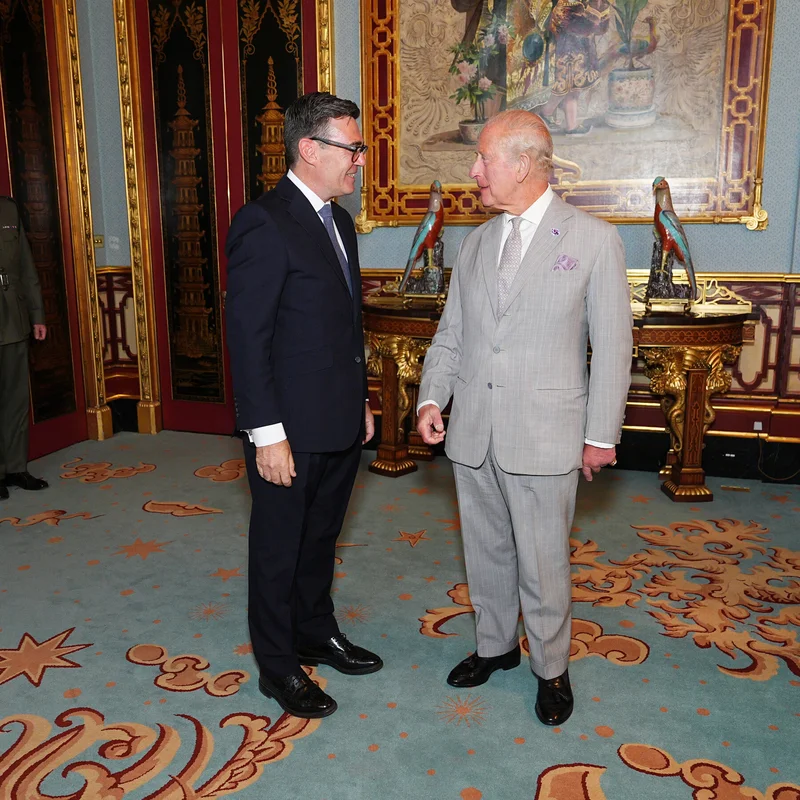
Andy Burnham’s day began with a visit to a homeless shelter in central London, where he chopped mushrooms and chatted with other helpers preparing breakfast.
A few hours later, by now wearing a suit and tie, he shook hands with King Charles III in the gilded splendor of Buckingham Palace. Accepting the monarch’s request to form a government, Mr. Burnham, who was named leader of the governing Labour Party on Friday, became Britain’s seventh prime minister after a decade of extraordinary turbulence.
Mr. Burnham’s early-morning trip to the homeless charity seemed designed to send a signal to the country about his priorities, and to underscore his pledge to tackle social issues and reshape British politics.
On a day of ritual and ceremony, Mr. Burnham pledged in a short speech outside 10 Downing Street to “put the care of people at the heart of everything I do.” He described his move into Britain’s top job as a “circuit-breaker moment” to change the direction taken by a succession of neoliberal governments over the past four decades that favored privatization and deindustrialized the country.
“I know people at home are fed up with politics,” he told the public, speaking without notes and minus the lectern that prime ministers usually speak from outside Downing Street. “I hear you, and I want to be honest with you: We have not been good enough, and we need to be better. We will be.”