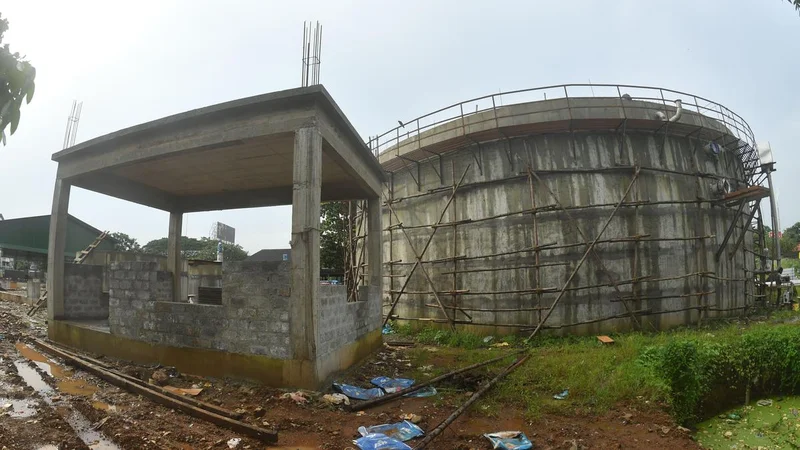
Thrissur Corporation’s ambitious plan to end the city’s long-standing organic waste problem while producing clean energy is entering its final phase, with the construction of a compressed biogas (CBG) plant nearing completion near the Shaktan bus stand.
The facility, coming up on a two-acre site, will have the capacity to process 30 tonnes of biodegradable waste a day and convert it into compressed biogas, organic manure, and liquid fertilizer. The civic body is targeting its commissioning by November 1. Corporation officials said nearly 70% of the construction has been completed. The project is expected to cost around ₹12 crore.
According to the Corporation’s Health wing, the old municipal area alone generates between 25 tonnes and 30 tonnes of biodegradable waste every day from markets, hotels, apartment complexes and households. With waste from the areas merged into the Corporation also expected to be routed to the facility, the plant is likely to receive its full design capacity of 30 tonnes a day.
‘No pollution’
Mayor Niji Justin said the project would not cause environmental pollution and would be a major step towards sustainable urban waste management.
“The new plant will not cause any environmental pollution. We expect to commission it under the Chief Minister’s 100-day programme. A trial run is planned by the middle of September. Products from the plant will be marketed under the Corporation’s own brand. Our goal is to achieve zero waste,” the Mayor said.
The project received a major boost after the Corporation council recently approved emergency works worth ₹4.7 crore to complete the facility. These include a fertilizer packaging unit and a gas cylinder bottling unit, both considered essential for commercial operations.
The compressed biogas plant will scientifically process organic waste, purify the methane generated, and compress and store it under high pressure. The gas can be used as an alternative to CNG for vehicles.
According to Corporation sources, processing 30 tonnes of organic waste will yield around one tonne of compressed biogas every day. The plant is also expected to produce four to six tonnes of organic manure and about 12 kilolitres of liquid fertilizer daily.
New revenue stream
The biogas, manure and liquid fertilizer will be marketed, creating a new revenue stream for the civic body while reducing the cost of waste management. At present, a similar compressed biogas facility is functioning at Brahmapuram under the Kochi Corporation.
Once operational, the plant is expected to scientifically process biodegradable waste generated at the Shaktan and Jayhind markets as well as other major commercial centres in the city. Besides improving urban sanitation, the project is expected to remove rotten garbage from the streets and help curb the spread of vector-borne diseases.
The Corporation also sees the project as a key component of its broader vision to transform Thrissur into a green and sustainable city by reducing carbon emissions, promoting renewable energy and adopting a circular economy approach to waste management.
Published - July 29, 2026 09:09 pm IST