Last week Bloomberg New Energy Finance (BNEF) forecasted that development of hyperscale data centers in the U.S. will accelerate dramatically in the next decade. According to BNEF’s projections, data centers’ electricity demand will increase to 194 gigawatts by 2035, an 83% jump from BNEF’s forecast just eight months ago. To put this in perspective, 194 gigawatts is 20 percent of U.S. electricity consumption, equivalent to the output of roughly 194 traditional nuclear reactors.
Substantial environmental and financial harms have already been caused by state and local officials’ fast-tracking of data center approvals in the roughly three years since the hyperscale development boom began. Policy guardrails must now be put in place, prior to any additional approvals, to prevent irreversible damage to the global climate as well as local air and water quality, freshwater supplies, and household finances.
The Power to Drive Enactment of Data Center Guardrails
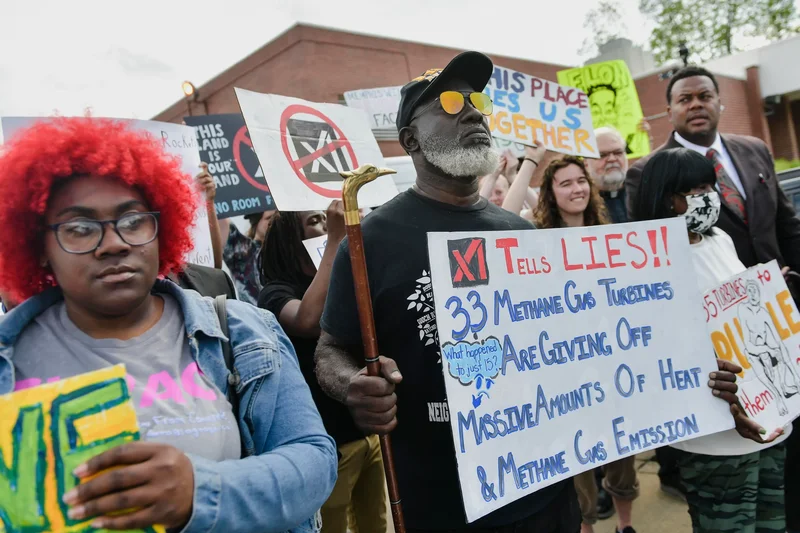
Fortunately, a new environmental movement has emerged just in time to make the case for these guardrails. As Abre’ Conner of the NAACP, one of the key leaders working with the frontline communities that are shaping the public narrative and creating the momentum, has stated, this latest iteration represents one of “largest expansions of people recognizing their power" in recent U.S. history.
Several features of this people-powered movement provide reason for optimism that state and local leaders will respond to its call for attention to data centers’ threats to the environment and affordability.
Spurring A Dramatic Local and State Policy Shift
First, the new movement has already demonstrated its ability to influence policy makers, racking up significant wins since its beginning just a few years ago. The research firm Data Center Watch reports that in just the first three months of 2026, advocates blocked or delayed at least 75 data center projects nationwide worth about $130 billion, matching the total for all of 2025. More than 300 local bans and moratoriums have now been enacted nationwide.
The movement has also demonstrated its impact with state policy makers. This month New York Governor Kathy Hochul enacted the first statewide data center moratorium and Virginia Governor Abigail Spanberger signed legislation imposing the first statewide energy consumption tax on data centers. In Illinois, Governor JB Pritzker announced that the state will pause processing new agreements under the Data Center Investment Program while his administration works with the General Assembly on a framework addressing affordability, natural-resource protection, and responsible growth. In Ohio, Governor Mike DeWine directed the Ohio Tax Credit Authority to pause consideration of new data center tax exemption requests while lawmakers study the industry’s impacts. In Texas, Governor Greg Abbott directed the state’s utility regulator and grid operator to identify “necessary actions that can be taken … to safeguard Texans, their property, and resources” from data center impacts.
Meanwhile, 104 large load tariffs have now been approved or proposed by regulators in 37 states to help rectify the shifting of data center costs from tech companies to everyday electricity ratepayers.
This is a remarkable change from just two years ago, when state and local policy makers were competing to see who could award the more generous subsidies, and even waiving local zoning, to attract data centers.
Cross-Partisan Concerns About Environmental Degradation and Rising Costs * *
A third feature of the movement is the ideological diversity of the people who have coalesced around the values of environmental protection and economic fairness. Recent surveys show that data centers’ environmental impacts and cost-shifting are concerns shared by people of every political stripe. A May 2026 Gallup survey found that seven in 10 Americans oppose constructing AI data centers in their local area, and a nearly identical number say they worry about environmental impacts. In June 2026, a Reuters/Ipsos poll found that 77% of Americans are concerned that AI data centers will make electricity more expensive.
A June 2026 Data for Progress survey found that 67% of Democrats, 66% of Independents, and 58% of Republicans support data center moratoria. A July 2026 Fox News poll found that 76% of Democrats, 60% of Republicans, and 53% of self-described “MAGA Republicans” oppose the building a data center for AI in their area. Among the reasons provided by these poll respondents for their opposition, environmental impact was cited more than any other as the main reason.
A Movement Helping to Revitalize Democracy
Finally, the movement gains its strength from the powerful idea of restoring democracy. Mark Daly, the co-author of BNEF’s recent data center forecast, portrays what can only be described as the flowering of democracy at the local level due to data center activism: “We read a lot of local county meeting minutes for land use rezoning, and it’s incredible how well-attended they are, and the extent to which people are vocal about their disapproval.”
Historically, the process for reviewing and approving data center proposals has been anything but democratic. As described in a recent Public Citizen report, the tech industry’s strategy has been to quickly win approvals of its data center proposals by entering secret deals with state and local officials, denying everyday people a meaningful opportunity to provide input and influence outcomes.
Today, the new environmental movement is fighting back and winning, including by voting to replace elected representatives not willing to truly listen to their concerns. A recent example was the vote this summer in the Utah Republican primary, called a “stunner” by the New York Times, to replace J. Stuart Adams, president of the Utah State Senate, due to his championing of a massive proposed data center beside the Great Salt Lake without any serious effort to engage the public.
The New Environmental Movement: Ready to Act and Badly Needed
The rapid, large-scale, and energy-intensive data center buildout underway is by far the largest private infrastructure project in U.S. history. That fact alone tells us our country must prepare for major environmental and affordability challenges, at a time when planetary life support systems are already straining. On top of this, the project is led by tech companies with enormous political and market power and a desire to move quickly, with little or no community input, to scale AI models. Given the enormity of these threats, we should be grateful that a new environmental movement has arisen to ensure that the needed guardrails are put in place.