It's no secret that AI technology is advancing faster than it can be regulated, with some execs now even saying so themselves. But it seems anything which threatens the advancement of AI must be avoided, in fear of that always present and ever dangerous ‘other’.
The latest installment of ‘please, dear God, slow down before it gets too dangerous’ comes in the form of Pacing the Frontier. Thousands of staff from frontier AI companies once again pleading for a halt in the development of AI technology.
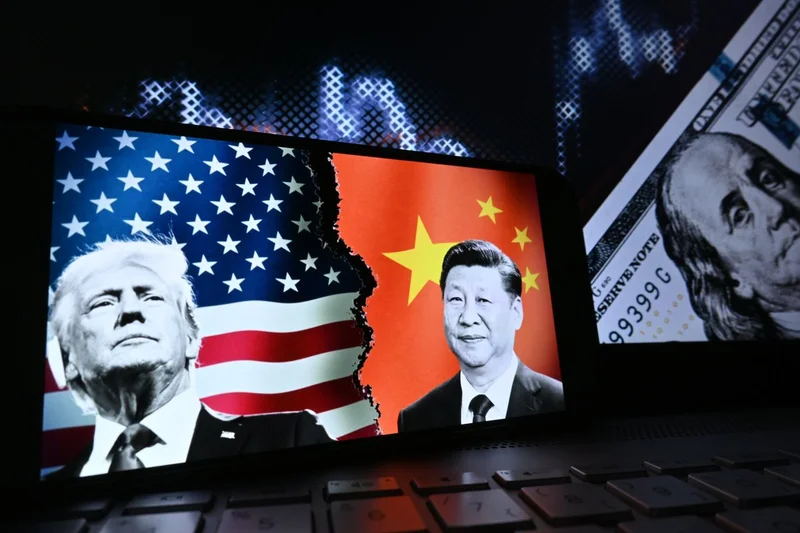
It's all too predictable that the reason from the top for continuing development will be that China ‘threatens’ to catch up. China deploying advanced AI in the military, or in the police, or using it for spying are the threats most often cited, as if these same things aren’t happening at home and around the rest of the world.
So now that China is distilling US AI models to produce rivals at a cheaper cost, I play my tiny violin - the hypocrisy of intellectual property rights suddenly becoming important to AI companies because they could lose money is comical.
Respect my rights
The rights AI companies are citing are the same rights AI companies may have inadvertently violated in hoovering up public data to train their models in the first place, but that's still up for debate.
But AI companies can claim that this trove of public data is a trade secret as a way to prevent human creators from accessing AI training data to see (and possibly prove) that their content has been stolen. Rights for me but not for thee.
What I find funny is that the average American has more in common with the average Chinese person than they do with an AI company. Does an AI company enjoy cooking? Drawing or reading? Can it go out after work for a hot drink or a cold beer? Does it worry that if it doesn’t make any money this month everything might come crashing down? Possibly the last one.
Somehow the bond of national identity tied between a person and a corporate entity is expected to be more powerful than shared human experience. It’s also the bond that AI companies and those in power use to press the accelerator on the machine, just so long as we, the ‘good guys’, are ‘winning’.
Beware the ‘bad guys’
This myth of the external ‘other’, or the ‘bad guys’, is a powerful propaganda tool. But it only works in a vacuum. If you can directly engage with those you are told are your enemy and you find they are not so different from yourself, the myth of the ‘other’ evaporates. (Social media and the internet is a double edged sword in this regard, but that's a discussion for another time).
So if Chinese companies can produce a rival product that doesn’t annihilate a monthly token budget in a matter of days, I say let them. If you are worried about China having your data, are you not worried about who is currently collecting it? If you are worried about China deploying AI systems in the military, police, surveillance, and cybersecurity, are you not worried about it happening closer to home?
The warning that using Chinese AI models is dangerous because they can steal your business secrets is especially weak, especially when you consider Microsoft CEO Satya Nadella’s warning that US AI companies are already doing exactly that, and selling it to your competition.
So the next time an AI company complains about their intellectual property being stolen, remember that it is just the great, ever-turning wheel of innovation. Or if you are warned about the data collection policies of a foreign AI model, check the policies of the tech closer to home. You’d be surprised at just how much they already know about you.
Benedict is a Senior Security Writer at TechRadar Pro, where he has specialized in covering the intersection of geopolitics, cyber-warfare, and business security.
Benedict provides detailed analysis on state-sponsored threat actors, APT groups, and the protection of critical national infrastructure, with his reporting bridging the gap between technical threat intelligence and B2B security strategy.
Benedict holds an MA (Distinction) in Security, Intelligence, and Diplomacy from the University of Buckingham Centre for Security and Intelligence Studies (BUCSIS), with his specialization providing him with a robust academic framework for deconstructing complex international conflicts and intelligence operations, and the ability to translate intricate security data into actionable insights.