Fed holds interest rates steady as economy weathers resurgent inflation
The Iran war set off resurgent inflation amid on-again, off-again fighting.
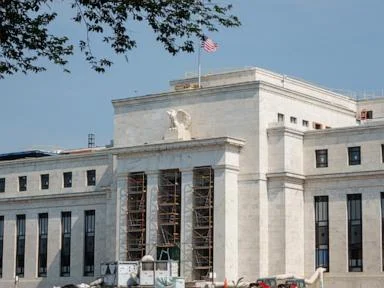
The Federal Reserve held interest rates steady on Wednesday as the economy weathers resurgent inflation set off by the Iran war.
The policy decision arrived as oil prices surged and stock prices tumbled in response to a resumption of fighting in the Middle East, underscoring the challenge faced by central bankers tasked with containing price increases.
The war triggered a historic oil shortage that drove up fuel costs and catapulted inflation to a three-year high.
A preliminary peace agreement in June offered up some relief, but a burst of on-again, off-again fighting in recent weeks has rekindled crude prices.
Fed Chair Kevin Warsh, who took the helm of the central bank in May, has repeatedly vowed to slash inflation to the Fed's desired level of 2%. The annual pace of price increases currently registers at 3.5%.
"Persistently high prices are a burden for the American people," Warsh told reporters in Washington, D.C., last month. "This committee will deliver price stability."
Odds stand in favor of a rate hike in September, the next time central bankers meet, according to the CME Group's FedWatch Tool, a measure of investor sentiment
Elevated price increases pose a challenge for central bankers eager to beat back price hikes. In theory, the Fed could raise interest rates in an effort to cool off prices, but the move risks a slowdown of hiring.
So far this year, hiring has proven largely resilient, despite increased costs borne by shoppers and businesses.
Over the first half of this year, the labor market added an average of 92,000 jobs each month, U.S. Bureau of Labor Statistics data showed. That pace marks an improvement from an average of about 7,000 jobs lost per month over the second half of 2025.
Oil prices, a key ingredient in overall price levels, have swung dramatically in recent weeks. Last month, oil prices briefly fell to their lowest level since before the late February outbreak of the Iran war on news that a preliminary agreement to end the war had been reached.
A resumption of large-scale fighting between the U.S. and Iran, however, cast doubt over the staying power of that deal.
Shipping traffic in the Strait of Hormuz declined sharply as the war escalated. The maritime trading route facilitates transport of about one-fifth of global oil supply. In turn, worldwide oil prices climbed above $100 a barrel last week.
By Monday, however, oil prices had plunged below $90 a barrel after the U.S. paused strikes on Iran in an apparent attempt at further negotiations. On Wednesday, surged back above $90 per barrel after fighting resumed.
Crude costs account for a large share of the price of auto gasoline. The average price of a gallon of gas currently stands at $4.11, according to AAA. Relief in oil prices typically brings down gas prices within days, some analysts previously told ABC News.