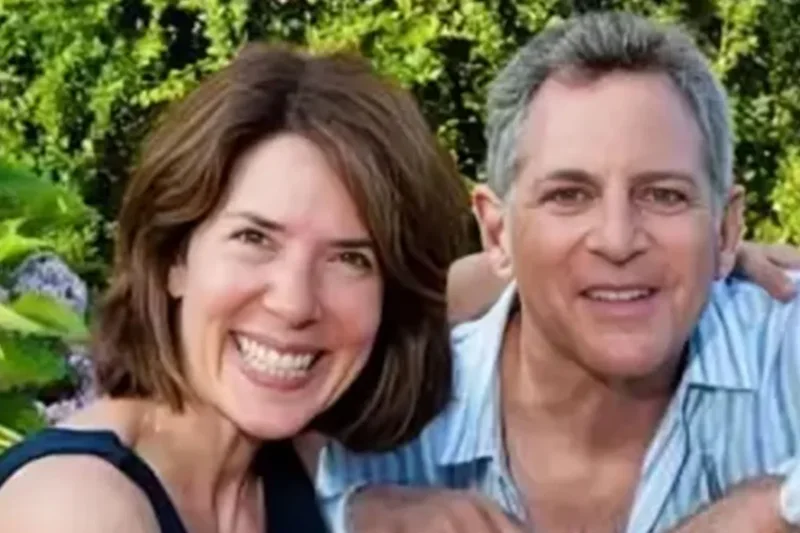
Veteran news anchor Bill Ritter and his wife, Kathleen Friery, are opening up about the years-long process that ended with an early-stage Alzheimer’s diagnosis for Ritter.
The Emmy-winning journalist announced last month that he was leaving ABC New York after more than 25 years with the network due to his diagnosis of the progressive brain disease.
Ritter, 76, and Friery, 63, told People in an article published Wednesday that they first spoke to doctors at the beginning of 2024, after they had noticed Ritter experiencing intense lapses in memory. However, doctors initially thought the symptoms were caused by mild cognitive impairment.
After the memory decline and confusion continued to worsen, the couple — who married in 2008 — then decided to seek an evaluation from other doctors, which led to Ritter’s diagnosis in late 2025.
“A couple of people have said to me, ‘So what’s that moment like when you find out?’ Well, it’s not a moment,’” Friery said. “By the time you get the diagnosis, you’ve gone through this long process of countless conversations with doctors. So when we finally heard Alzheimer’s, there was this sense of, ‘Okay, so we’re not crazy. This thing is real.’”
Ritter told the outlet that when he was diagnosed, his instant reaction was to consider his family.
“My first thought was, ‘Oh my God, it’s going to really be hard on this family,’” said Ritter, who shares daughter Ella, 17, with Friery, as well as his adult children Mia, 33, and Owen, 31, with his ex-wife, Janny Scott.
“That’s what really got me,” he continued. “I wondered, ‘What is it going to mean for us and what do we do?’ But within a few minutes, I thought, ‘Okay, we’ve got to deal with this.’”
While there is no known cure, Ritter currently takes a monthly infusion of medication to slow the disease’s progression.
Friery told People that she has been impressed with her husband’s strength since his diagnosis.
“Honestly, since this all happened, I’ve never been more proud of him,” the former TV producer said. “It would be natural for us to focus on loss, and he’s not doing that at all. It’s just not his way. He’s focusing on the next thing, and I’m in awe of how he’s doing it.”
In his sign off from WABC’s evening broadcast, Ritter — whose father died of the disease in June 1998 — said he will continue to contribute to the network as he tells stories about living with Alzheimer’s.
“I am going to so miss reporting the news to you. With the truth, and with facts, no matter where they fall. It has been my honor to do that. For now, I wish you health and peace, and let's take care of each other,” he said.