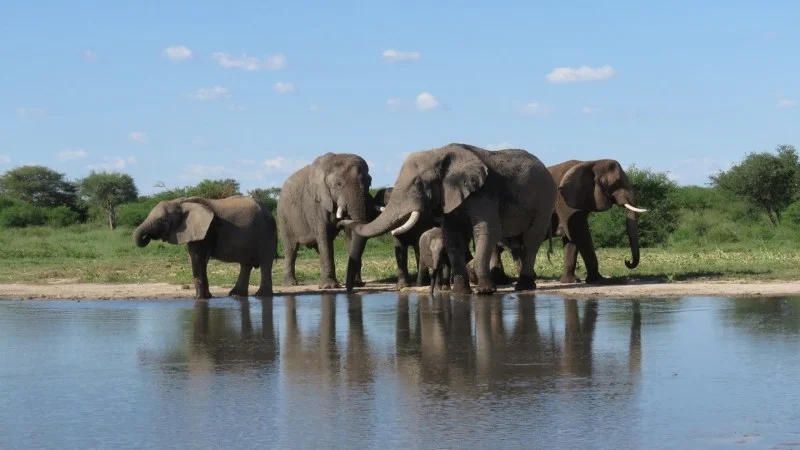
After decades in tourist camps and circuses, African elephants that were returned to the wild are behaving, in many respects, like elephants that were never captive.
A new study offers cautious evidence that elephants can regain many wild-like behaviors. Eleven elephants living freely on South African reserves showed rates of vigilance, confrontation and self-directed touching broadly similar to those of wild elephants, researchers report July 29 in PLOS One. But stress measurements revealed a more complicated picture, hinting the need for further work to determine if the animals are well-adjusted.
“It’s encouraging to see that despite prolonged periods in captivity, elephants indeed are capable of ‘readapting’ to natural conditions, if given a chance,” say Sanjeeta Sharma Pokharel, an elephant biologist at Kyoto University in Japan who wasn’t involved in the work.
Across the world, more than 15,000 Asian and African elephants are kept captive, often in zoos and temples, in tourist and logging camps, and in circuses and private establishments. Many suffer from osteoarthritis, reduced reproductive success and shorter lifespans.
Animal welfare groups have long called for better living conditions and more humane treatment of these elephants. But there’s an ongoing shift in sentiment toward providing captive elephants the chance to live more naturally, Pokharel says.
One option is to bring these animals back into the wild, either through an immediate release or a gradual transition. Over the years, researchers have been assessing how well the ex-captives fare.
A recent study from Sri Lanka found that orphan Asian elephant groups released into the wild acclimatized quickly, showing rapid stress recovery. A study from Botswana showed that post release, newly freed African elephants adjusted their movement patterns in response to seasonal cues.
In the new study, researchers recorded behaviors of 11 African elephants (Loxodonta africana) on three fenced South African reserves and compared them with observations of wild elephants in a fourth, much larger open reserve system. The team documented how often elephants touched or brushed their face, swished their trunk or swung their foot, for instance. Those behaviors can be used to catalog moments of uncertainty, feeling uncomfortable or irritated or being vigilant.
The ex-captive elephants often displayed these behaviors at similar frequencies as wild elephants. But when it came to attentive behavior, rewilded pachyderms assessed and gauged their environment less often than wild individuals. That’s probably because the animals didn’t need to practice those skills in captivity, says Tenisha Roos, a researcher at the Elephant Reintegration Trust in South Africa.
Overall, the elephants do seem to adjust to the wild, Roos says, despite their varied individual personalities and past traumas. The rehabilitation works if the animals are released in groups, and there are existing elephants at the release site to potentially join up with and learn from, she says.
But not all captive elephants are fit to rewild, and many landscapes may be ill-suited for their return. Think, fragmented forests and areas already rife with human-elephant conflict.
But where rewilding opportunities exist, Pokharel also suggests monitoring rehabilitated elephants’ physiology to better understand how the animals cope. Roos and her colleagues have preliminarily measured levels of a stress biomarker and found those to be higher among several rewilded individuals. But Pokharel suggests the team needs more robust sampling as well as tracking other fitness indicators such as reproductive hormones to fully evaluate the success of the program.