I'm currently training for a marathon this fall, and today was supposed to be a rest day. Spotify had other plans for me: Today the company launched a new running mode, so I laced up and put it to the test.
This new mode cues up songs based on the different phases of your run and selects tracks based on your preferences and desired tempo. Instead of just shuffling a playlist and hoping the BPM lines up with your cadence, it builds a run around your effort structure: warmup, work intervals, recovery, cooldown. On top of the music, it layers in audio cues at key moments of the run, so you're getting something closer to a coached session, like Nike Run Club is known for.
How to find and use Spotify's Running Mode
Only paid subscribers can currently access this new running mode. Search "fitness" in the app to pull up what it calls the "Fitness Hub," and running mode is right at the top. From there, you can choose from one of 25 presets, or build your own from scratch.
Once you're in running mode, you first pick a workout type: Just Run, Easy Runs, Interval, Pyramid, or Long and Advanced. Then you choose a music genre. For me, the options were pop, hip-hop, EDM, rock, and R&B.
I messed around with a few presets before landing on the one I actually wanted to test properly: a Pyramid Rock Run. Here's how I "refined" it:
- Bumped the duration from 30 to 35 minutes.
- Workout type: I chose pyramid, which comes with a helpful graphic showing what the effort structure looks like over the course of the run.
- More genre options showed up at this stage, including house, Latin, classical, and country. There's also a "discovery slider," so I pushed mine to 75% toward new music.
- Turned on the audio coach.
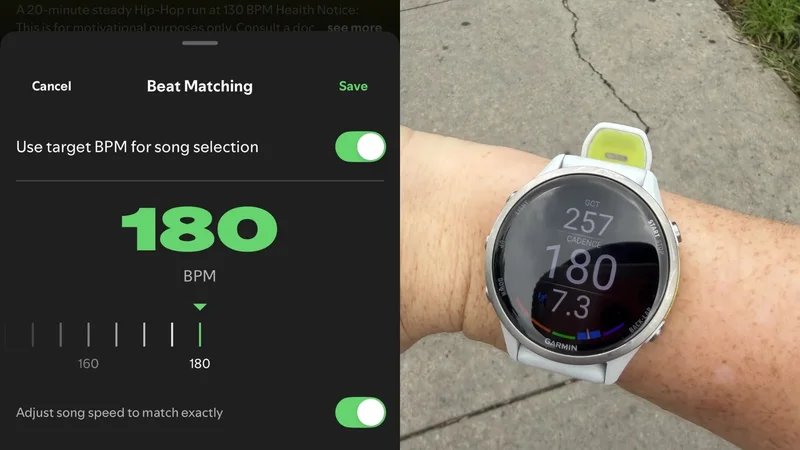
- Toggled on using a target BPM for song selection, set it to 180, and also turned on "adjust song speed to match exactly," though after my test run, I'm not sure what this was supposed to do exactly.
After I locked in those settings, it took Spotify a solid two minutes to generate the playlist. Once it's built, you get options to smart reorder, add tracks, or refine further. Two things I noticed right away: It nailed the 75% new music request (fun!); the run started at 133 bpm (solid), climbed to a peak of 180 (perfect), and then the cooldown had one track sitting at 210 bpm (confusing and bad).
Why Spotify's Running Mode is a great training tool
I thoroughly enjoyed my test run with this new feature today, even though I was supposed to be resting. Beyond the novelty, I think this is a genuinely good tool for runners trying to sharpen their internal sense of pace. Locking music tempo to target cadence gives you something to run alongside, and effort structures like pyramids force you to notice how your stride changes as intensity shifts. The audio coaching reminded me of what I've always liked about Nike Run Club: form cues and, more often than not, reminders to slow down, which is advice most runners need more than they know.
Spotify's AI coach delivers that guidance by way of music, always announcing each song, which I enjoyed. For instance, during the hip-hop playlist, one cue told me to "let the groove loosen my stride, and remember to unclench your fists and drop your shoulders." On the rock playlist, during a peak effort segment, it told me to "keep it snappy, but not forced." My pitch to Spotify here would be to announce the song's bpm, too.
One note worth remembering: the coach isn't actually responding to you in real time—it's all pre-set according to your workout preferences. Still, I approve of these built-in settings. The only real miss was that 210 bpm cooldown track. Everything else about the pacing logic tracked, which made that one outlier stand out more.
My favorite piece of coaching advice was to lock into the kick drum. I tried it during "Misery Business" by Paramore, and according to my Garmin Forerunner 970, I was running at exactly 180 bpm. Even if runners don't love the songs that Spotify selected for them (although I had no complaints personally), I'd still recommend this feature as a fun way to perfect your inner metronome and practice pacing before race day.