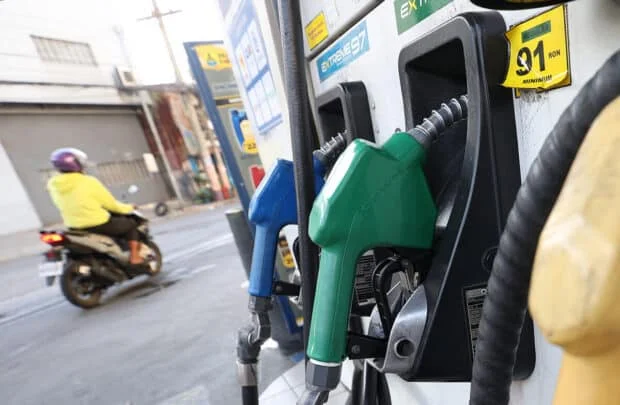
Possible fuel price relief next week seen
CEBU CITY, Philippines – Filipino motorists absorbed another round of pump price increases this week as the conflict in the Middle East continued to impact global oil markets.
But the Department of Energy (DOE) said that fresh developments may ease the pressure as early as next week.
In a recent briefing, officials from DOE revealed that diplomatic efforts from China and Pakistan, as third-party negotiators, renewed hopes of cooling tensions in the Middle East.
READ MORE: New capacity boost for Visayas grid eyed
Additionally, the United States and Iran reportedly agreed to halt missile strikes against each other.
“These two positive signals have pulled down the price in Friday trading as well as last night’s trading… So (there’s a) glimmer of hope there that… will bring us lower prices for next week,” said Usec. Alessandro Sales.
Pump prices in the Philippines rose for the sixth consecutive week on Tuesday, July 28. Tensions in the Middle East are now on their fifth month.
This wave of increases adds major adjustments of up to ₱7.30 per liter for diesel, ₱6.80 for gasoline, and ₱4.20 for kerosene, driven by persistent supply constraints and tensions in the Middle East
The DOE now dictates these ceilings directly, a shift from the past practice of letting individual gas stations set their own adjustments.
READ MORE: Cebu needs unified business ecosystem to keep pace with regional rivals
The price movements trace back to the escalating conflict between Israel and Iran, which has kept global crude markets on edge for months.
The Philippines, which imports the bulk of its petroleum requirements, has felt the ripple effects just as it did during the war in Ukraine and past tensions in the Strait of Hormuz.
Too early
While the picture may be shifting once again, Sales cautioned, however, that it remains “too early to say” whether the de-escalation will hold.
“It’s too early, but we are hopeful given the continuing events geopolitically, so there is a chance that next week the trajectory in fuel price will change,” he explained.
Meanwhile, DOE said that the country’s fuel inventory remains healthy despite the sustained global volatility.
National average stock levels stand at roughly 45 days for gasoline, 42 days for diesel, 77 days for jet fuel, 38 days for fuel oil, and 36 days for LPG.
To cushion the impact on public transport, the DOE continues to roll out its ₱10-per-liter fuel discount for jeepney and UV Express drivers, now in its 15th week.
The program has released roughly ₱374 million in subsidies since it launched in April, benefiting more than 90,000 registered PUV plate holders, up sharply from just over 1,600 in its first week.
Disclaimer: The comments uploaded on this site do not necessarily represent or reflect the views of management and owner of Cebudailynews. We reserve the right to exclude comments that we deem to be inconsistent with our editorial standards.