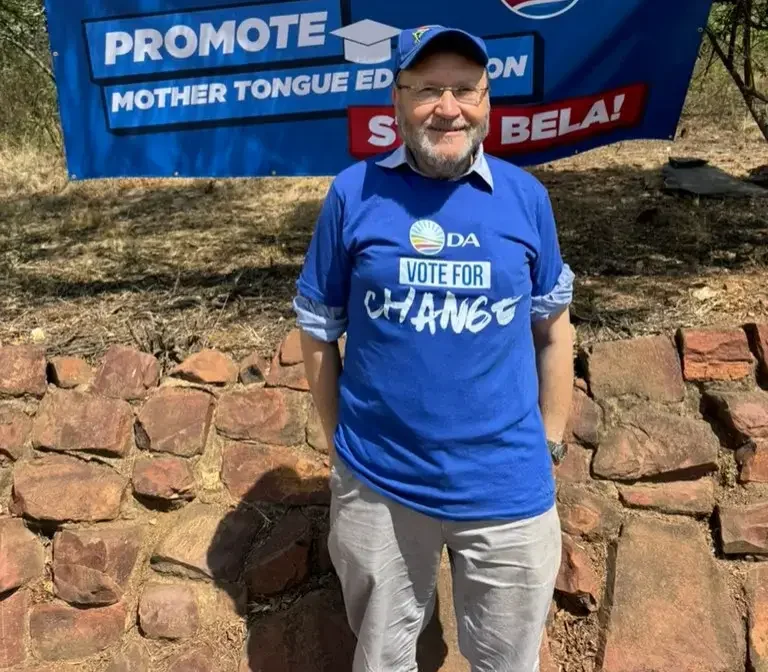
Community clean-up campaigns could tackle the symptoms of South Africa’s river pollution only if the government fixed failing sewage works and cracked down on polluters, Deputy Water and Sanitation Minister Jack Bloom said at the launch of the department's 2026 Clear Rivers Campaign.
Launching the campaign along Pretoria’s heavily polluted Apies River on Monday, Bloom said removing litter from riverbanks was important but would have little lasting impact unless authorities addressed the underlying causes of pollution, including untreated sewage, illegal dumping and industrial discharges.
“We need to be honest that these clean-ups are tackling the symptom, not the cause,” he said.
The campaign aims to encourage volunteerism and citizen participation in protecting rivers while raising awareness of the importance of healthy freshwater ecosystems for water security, biodiversity and livelihoods.
Bloom described a healthy river as one with clean water that was safe for people and wildlife, had healthy indigenous fish populations and intact riverbank vegetation that stabilised banks, filtered pollutants and reduced erosion.
The Apies River was the opposite of that.
“The Apies River is not a healthy river. According to tests, it is highly toxic. You cannot drink the water and it is dangerous to swim in it. If you have an open wound, it will become infected. There are no fish either. And the banks are so eroded that it enables severe flooding.”
The Apies River had deteriorated drastically in the past 20 years, Bloom said. He noted that although the department of water and sanitation had declared sections of the Apies River a disaster area in 2011 because of raw sewage from the Rooiwal wastewater treatment works, sewage pollution continued.
“Tests show that this river has no good bacteria, only bad bacteria. There are leeches and blood worms. It has fly infestations and terrible smells. According to tests, it is polluted both chemically and microbiologically.”
The pollution emanated from waste and debris from the Pretoria CBD, including the Pretoria Zoo, while industries in Pretoria West were another source of pollutants. “This is so sad as the Apies River flows through the heart of our capital city. It sustains communities, supports livelihoods and holds cultural and spiritual significance,” he said.
The deterioration of the Apies reflects a wider national crisis.
According to the 2025 Green Drop Report, 396 of the country’s 848 municipal wastewater treatment works — nearly half — are classified as being in a critical state, while only 8% achieved a good or excellent performance, down from 14% in the previous assessment.
Bloom, who was sworn in as deputy minister on 1 July, said the department was investigating 96 criminal cases involving sewage pollution across 53 water services authorities.
He said he had been given the responsibility to establish a National Polluters Register, a significant name-and-shame tool for accountability.
“My view is that we need to get tougher on those who pollute our water,” he said. “I intend to be relentless in pursuing those who poison our precious water.”
While the government had to repair failing infrastructure and enforce environmental laws, Bloom said citizens also had a responsibility to report pollution, monitor river health through citizen science initiatives and help protect waterways.
He praised the work of the Environmental Warriors NPO, which has cleaned the Apies River since 2023, joking that the volunteers “should be called the Magnificent Seven”, as well as pupils from Laerskool Akasia and other schools who had become involved in restoring the river.
Ferrial Adam, the executive director of WaterCAN, welcomed the focus on tackling the root causes of river pollution but said the biggest challenge remained holding municipalities accountable for failing wastewater treatment works.
“If we look at all the levels of pollution, one of the biggest polluters in the country of our open waters, our rivers and our beaches is municipal sewage,” she told the Mail \& Guardian.
“It's wastewater treatment works that are polluting most of our rivers and streams and we know this is happening. We’ve exposed it and the department of water and sanitation has even laid criminal charges. That, for me, is where we need more visible leadership and action. We know who the big polluters are and we know what needs to happen.”
Adam questioned how far the proposed National Polluters Register would go.
“It's not enough to just charge the municipality as a whole,” she said. “It's about holding individual people accountable for polluting. People need to lose their jobs or be fired. I'd like to know what the deputy minister would do in terms of that.”
She added that while the deputy minister needed greater support, he should also work more closely with civil society to find practical solutions to the country’s worsening water pollution crisis.