Balancing the budget of the Science and Technology Facilities Council has resulted in the cancellation of several significant international projects, as Michael Banks reports
Physicists in the UK have reacted with dismay following the decision by the Science and Technology Facilities Council (STFC) to cancel funding for several high-profile international projects. The Institute of Physics (IOP), which publishes Physics World, says that the axing of support threatens the UK’s international reputation as well as the ability to attract people into the subject.
The STFC cuts come after the council announced late last year that its core annual budget would rise by only £7m to £842m over the four years from 2026 to 2030. One of seven research councils within UK Research and Innovation (UKRI), the STFC runs the UK’s national facilities and supports particle physics, astronomy and nuclear physics (PPAN) research in the UK.
In a strongly worded statement, IOP President Paul Howarth is now urging the government to review “this ruinous set of decisions”, calling the cuts a “terrible blow” that will do “real damage” to the UK’s scientific reputation and put future economic growth at risk.
“Despite reassurances, physics has not been protected, crucial facilities remain under threat and jobs are being lost,” says Howarth. “Scientific capability that has taken years to build up is being put at risk by these decisions – it undermines a number of our most important international collaborations and could put a whole generation of young people off a career in science.”
Balancing the books
Although UKRI has received a record £39bn investment across the four-year period, it said last year that projects at STFC would need to be cut given inflation, rising energy costs as well as “unfavourable movements in foreign exchange rates”. Together, the STFC’s annual costs will rise by over £1bn per year by 2030, forcing it to find ways to balance its books by 2029.
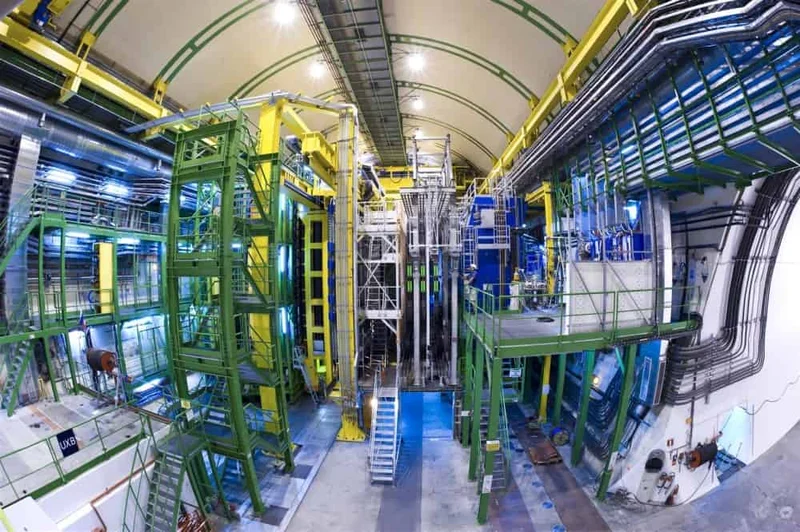
Earlier this year, the STFC said it would have to cut its core science budget by at least 30% over 2024/2025 levels. UKRI also noted it would stop funding two UK facilities – the Relativistic Ultrafast Electron Diffraction and Imaging facility and the C-MASS mass spectrometry centre. A UK-led upgrade to the LHCb experiment at CERN and support for the Electron-Ion Collider at Brookhaven in the US would be axed too.
That announcement caused significant distress within the physics community, prompting the heads of UK university physics departments to publish an open letter to then science minister Patrick Vallance, expressing their “deep concern” about funding changes adding that such cuts cause “reputational risk”.
UKRI then carried out further consultation with researchers and the STFC’s expert advisory bodies, with the results of this “funding prioritisation exercise”now revealed. There is some good news for STFC-funded “discovery-led” PPAN research, which physicists had feared could be cut by a third. Following lobbying, UKRI says this work is being “protected”, although it will still fall by 2.7% over the next four years.
Under attack
While facilities such as Diamond Light Source, the ISIS Neutron and Muon Source, and the Central Laser Facility will not be mothballed, the STFC’s budget for multidisciplinary facilities will reduce by 15% over the next four years to save £28m. As a result, ISIS will have to reduce operational time at the facility.
UK physics leaders express ‘deep concern’ over funding cuts in letter to science minister Patrick Vallance
Yet the STFC warns that if saving and income targets for the programme are not met by 2028 then further action could be taken, which could involve closing a multi-disciplinary facility.
STFC’s national laboratories and estates budget fares slightly better, falling by 8% over the four-year period, but individual facilities will be hit harder. The operational budget of the Boulby Underground Mine, for example, will be slashed by 40%.
Particle fever
The STFC insists that subscriptions for international projects, such as CERN and the European Southern Observatory, will remain protected despite their costs expecting to rise by 19% over the next four years. But other projects, including the EIC as well as the LHCb upgrade, will not be funded. The latter is expected to operate until 2033 by which time it would have reached the end of its lifetime after years of intense radiation damage.
An upgrade was planned so that it could take advantage of the upgrade to the LHC – the High-Luminosity LHC (HL-LHC) – and offer an order of magnitude increase in luminosity over upgrade I.
Tim Gershon from the University of Warwick, who became international spokesperson for the collaboration this month, says that the outlook for STFC-funded science is “grim”.
“With a 15% cut last year and an outlook that sees funding shrink further due to inflationary pressure, not even excellent-rated and internationally-leading science like LHCb can be supported,” he adds. “LHCb is the canary in the coalmine for the future sustainability of particle physics and astronomy research.”
Gershon states that the decision to cut UK involvement in LHCb will throw away the leadership it has built up. “Not only is this a tragedy for researchers and engineers who have dedicated their lives to making LHCb one of the most successful experiments in history, it destroys opportunities for current and future students to be involved in world-leading scientific discovery,” he adds.
This is a short-sighted move, to save a tiny fraction of the overall UK science budget
Catherine Haymans
Gershon says it will take some time to understand what the UK’s decision means for the upgrade and how other funding agencies will react but without UK expertise it will be hard to progress given the UK is the largest partner in LHCb with a 20% stake.
“Ultimately, the LHCb Upgrade is an essential part of the full exploitation of the HL-LHC, which is the top priority of the European and CERN strategies for particle physics,” adds Gershon. “We are determined to deliver the best detector that is possible within the available resources. But such a major change to the level of expected resources makes this extremely difficult.”
Peter Millington, a particle physicist from the University of Manchester, says that the outcome for particle physics is “bad news” for accelerator physics and the applications that it fosters, particularly in medical physics. “It is completely at odds with UK priorities across all industrial strategy growth-driving areas, while also eliminating skills pipelines pivotal to a wide range of sectors and eroding the UK’s long-held position as a global scientific leader.”
Astronomy woes
Astronomy is another area that is bearing the brunt of the cuts. The UK contribution to the e-MERLIN network of seven radio telescopes, which includes the iconic Lovell telescope at Jodrell Bank in northern England, is also ear-marked for cancellation. Its funding will now run out in 2028 and the move not only threatens e-MERLIN but also the future of Jodrell Bank , which the Royal Astronomical Society calls a “deeply troubling development”.
Catherine Haymans, Astronomer Royal for Scotland, says she is “absolutely devastated” for those working on e-MERLIN. “This is a short-sighted move, to save a tiny fraction of the overall UK science budget,” she says. They are now considering contacting the new Department for Business, Innovation, Science and Trade to reverse the decision. CERN upgrade to LHCb experiment threatened by UK funding cuts
Other astronomy cuts include the UK withdrawal from the James Clerk Maxwell Telescope located in Hawaii as well as 20% cuts for the UK’s Square Kilometre Array Regional Centre and activities at the Vera C. Rubin Observatory in Chile, which recently began a 10-year survey of the universe.
Jim Wild, president of the Royal Astronomical Society, notes the cuts are “devastating news” for UK astronomy. “At a time when technological innovation is crucial to our country’s prospects, discarding unique, globally significant observatories threatens both our scientific future and the inspiration of future generations of astronomers,” adds Wild.
Michele Dougherty, executive chair of the STFC, who is also Astronomer Royal, says that the situation requires “tough, but necessary decisions”.
“After listening to our community we have protected core discovery research within PPAN, through a more focused portfolio that safeguards postdoctoral researchers, protects PhD opportunities and maintains the UK’s international leadership.” adds Dougherty, who stepped down as president of the IOP in January over the conflict of interest with her position at the STFC. “These are never easy choices, but we have made what we feel are the right decisions to bring STFC to a sustainable financial position by 2029/30″.