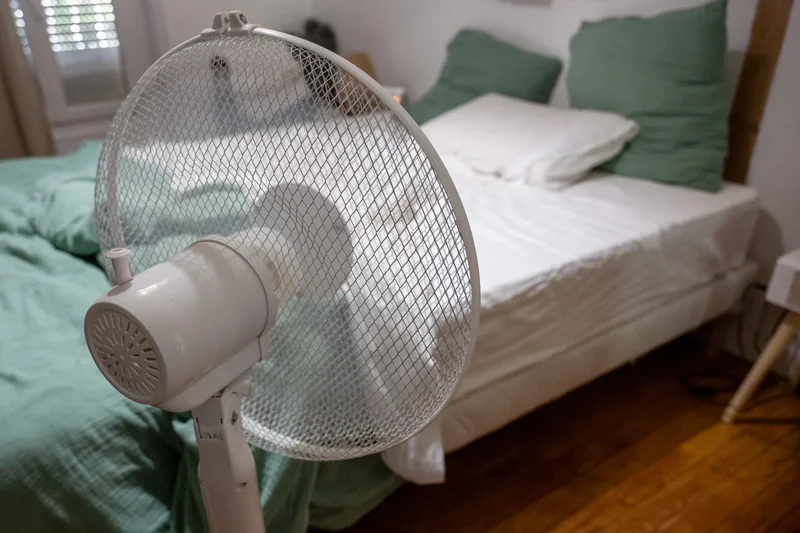
As Britain endures another sweltering heatwave, a common dilemma plagues many households: should the fan stay on all night?
The oppressive conditions make a good night's sleep elusive, rendering the whirring comfort of a fan almost irresistible.
To shed light on this debate, we consulted James Wilson, known as The Sleep Geek and Bensons For Beds' resident sleep expert.
Mr Wilson outlined both the advantages and potential disadvantages of keeping a fan running overnight, offering practical advice to navigate this tricky summer challenge.
Pros:
Helps with temperature regulation
“Temperature is so important for sleep because your body’s core temperature needs to drop a little bit to fall asleep,” explains Wilson.
“Therefore, the two most important things you need to fall asleep is to be relaxed and to be cool. If you are hot and stressed then it’s really difficult to sleep.”
He says a fan can help solve both of these problems.
“The psychological benefit is that it helps you relax because you feel like you’re doing something helpful,” says Wilson.
“The physiological benefit is that if you’ve got sweat on your body, having fan air running across your body will move that sweat on and that allows the body to breathe better.
“So, although that air is not cold-like air conditioning, it’s stopping your immediate sleeping environment from getting too hot.”
He adds that putting a bowl of ice in front of the fan can make the room feel cooler for a short while.
“However, this does add a bit of moisture to the room, so if it’s really humid don’t do this,” says Wilson.
Cons:
Dry eyes and airways
“Having a fan on all night can make everything very dry,” says Wilson. “People often wake up with dry eyes, a dry nose, a dry throat and a dry mouth.”
Stirs up allergens
“If there are allergens in your bedroom, such as dust, a fan will move them around which can be problematic for people with existing respiratory issues or allergies,” says Wilson.
Muscle stiffness
“If you put a fan directly on your face and lay in one position all night, you will probably wake up with a stiff neck and shoulder, and you might wake up feeling worse than you would have done if you didn’t have the fan on in the first place,” says Wilson.
Noise
People have different views on the noise of fans.
“Some people find the sound of a fan really relaxing and sleep-inducing. However, some people might feel like they want to throw the fan out of the window,” says Wilson.
“This becomes a problem when two people sleeping next to each other have different views on this.”
Sensory differences
Wilson says that electric fans often trigger a strong “love it or hate it” Marmite reaction for neurodivergent people due to sensory processing differences.
“Some people who are neurodivergent find that fan air is really off-putting and makes them feel really uncomfortable,” says the sleep expert.
“In addition, some women find that when perimenopause starts they get really sensitive to fans.
“Therefore, sleeping with a fan might have worked last year, but that doesn’t necessarily mean it will be helpful this year.”
What should I do about having a fan on at night?
Here are some suggestions on how to counteract some of these drawbacks…
Point it away from you
“Instead of having the fan right next to you and pointing directly at you, I would recommend putting it across the bedroom away from you,” advises Wilson.
Put a timer on
“You might want to consider having a fan on before you go to bed, and then turn it off before you go to sleep,” suggests Wilson.
Clean the bedroom and the fan
“If the fan has been kept in a cupboard and you bring it into the bedroom it will probably start blowing dust around the room, so make sure that it is clean,” advises Wilson.
“Keeping your bedroom and sleep environment clean can also be helpful for people with allergies.”
Keep hydrated
“Have a glass of water by your bedside table to help you stay hydrated,” advises Wilson.
Reach a compromise with your sleeping partner
“If you can’t decide whether to have a fan in the bedroom or not, you need to have a compassionate discussion with your partner about how to solve this,” recommends Wilson.
“For example, you could suggest putting the fan across the bed rather than directly next to the bed, or you could put it on the side of the bed of the person who prefers the fan.”
Sometimes a compromise needs to be made.
“Sometimes you’ve got to work out if would you rather get six hours’ of sleep and wake up with a dry mouth, or get three hours’ sleep where you have been tossing and turning all night,” says Wilson.
Experiment
“Try different things,” recommends Wilson. “Every house is different, so experiment and find what works for you. If your body’s telling you it helps, and you’re sleeping better, keep doing it. If it’s not improving your sleep, then stop doing it.
“Remember that the rain will hopefully be here sometime in the next couple of weeks, and we’ll go back to the British winter before you know it.”