Latest
The Middle East teetered on the brink of an expanded war on Thursday, after Iran and the United States reignited their hostilities and inflamed conflicts on other fronts that threatened to draw in more countries.
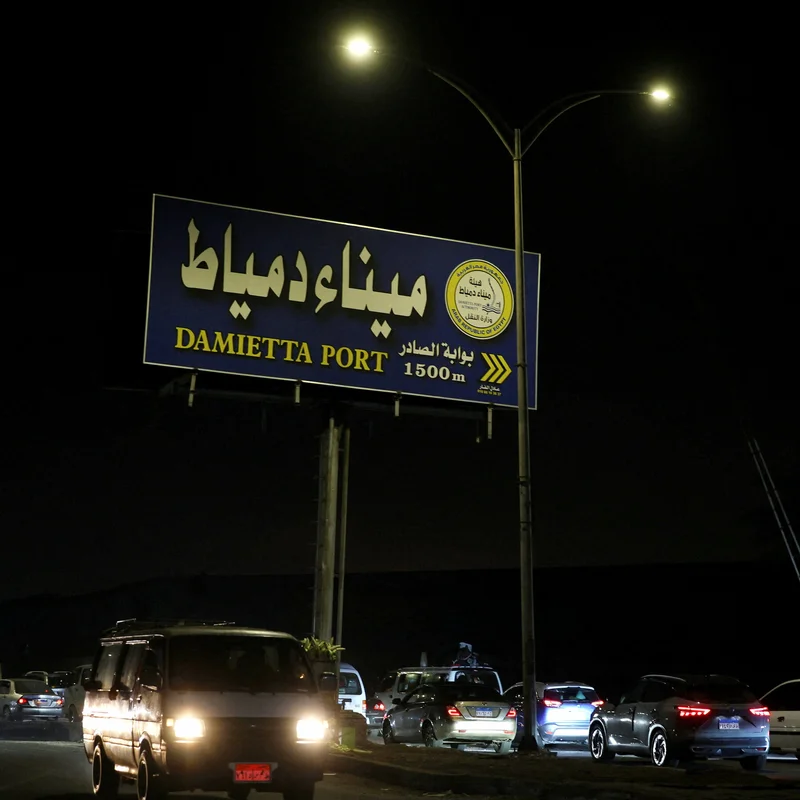
For the first time since the conflict began in February, the authorities in Egypt said Thursday that an unidentified drone had caused an explosion at the Mediterranean port of Damietta the previous day. Earlier, Saudi Arabia also acknowledged direct involvement in the war for the first time, after conducting joint strikes with U.S. forces on Iranian-backed militias in Iraq on Wednesday.
As the scope of the fighting widened, U.S. Central Command said Thursday morning that it had completed another wave of strikes on sites in Iran, including military command centers and missile and drone facilities. The Jordanian military later said it had shot down five missiles launched from Iran, though Iranian officials did not publicly take responsibility for the attack.
Central Command said its latest strikes were a response to Iran’s launching ballistic missiles at American forces in the Middle East on Wednesday.
The fighting this week ended a pause in direct attacks between the United States and Iran and has affected an expanding list of U.S. allies, among them Jordan, Saudi Arabia, Iraq and, now, Egypt.
The attack in Egypt ignited a fire on two ships, including a U.S.-owned gas storage tanker, and threatened to draw Cairo into the conflict. On Thursday, the authorities there said they would take “necessary measures to protect Egypt’s interests and national security.”
At a news conference at the Oval Office on Wednesday, President Trump implied that Iran was responsible for the attack in Egypt, without offering details.
While the fighting between the United States and Iran expanded beyond efforts to control the Strait of Hormuz, ships attempting to pass through the narrow waterway still faced significant risks.
Months of threats and attacks on shipping have throttled oil exports from Persian Gulf states. Saudi Arabia’s economy had shrunk in the last quarter by 4.8 percent, the worst quarterly contraction since the Covid pandemic, the kingdom said on Thursday In the United States, growth slowed down to 1.5 percent in the second quarter as the war upended prices and supply chains.
Threats by the Iranian-backed Houthi militia against shipping in the Red Sea also have stoked fears of a second choke point, injecting more volatility to energy markets. After the Yemeni group claimed to target another Saudi oil tanker with missiles this week, insurers warned shipping companies navigating the Red Sea that they faced a heightened risk of attack.
Here’s what else we’re covering:
- Iraqi militias:Iran-aligned militias in Iraq were under growing pressure to disarm, but the U.S.-Saudi strikes may embolden them to get more deeply involved in the war. Read more ›
- Attacks in Iran:Iranian state media reported Thursday morning that areas along the country’s Persian Gulf coast had been hit, including in Hormozgan and Bushehr provinces. The United States said it was targeting Iranian military sites.
An attack on an Egyptian port near the Suez Canal demonstrated the important waterway’s vulnerability and showed how the widening conflict in the Middle East could further disrupt global trade, analysts said on Thursday.
Two ships, including a U.S.-owned gas storage tanker, caught fire in the Wednesday attack at the Port of Damietta, which Egypt said on Thursday appeared to have been carried out with a drone. The episode did not appear to disrupt traffic to the Suez Canal, which is southeast of the Mediterranean port.
But two Iranians, who asked not to be named to discuss security matters, said on Wednesday that the strike was meant to show that global shipping and energy supplies could be disrupted further if Iran chose to escalate. The Iranians did not say whether Iran or one of its allies had carried out the strike.
About 10 percent of seaborne trade moves through the Suez, with about 50 ships passing through the 120-mile canal each day, according to the Suez Canal Authority, an Egyptian government agency.
The canal, which connects the Mediterranean Sea and the Red Sea, is the shortest maritime route between Europe and the Indian Ocean, linking supply in Asia and the Gulf to demand in Europe and North America.
It is not an alternative to the Strait of Hormuz, which has been mostly blocked since the United States and Israel attacked Iran in February, because it supplies a different trade route. But a disruption of traffic through the Suez would force ships to undertake longer, costlier journeys around Africa, via the Cape of Good Hope, analysts said.
“The Hormuz and Suez risk stories are increasingly separate but compounding,” said Dimitris Ampatzidis, a maritime risk analyst at Kpler, a maritime-tracking firm.
The Wednesday attack — the first on Egyptian territory since the war began — effectively reinforced the blockade declared in the Red Sea last week by the Houthis, the Iran-backed militia in Yemen, said Nitya Labh, an analyst at Chatham House in London who focuses on maritime security. “It raises the stakes of the conflict and increases the leverage that the Houthis and Iran share,” Ms. Labh said.
The Houthis control the Bab al-Mandeb Strait, a narrow waterway between the southern end of the Red Sea and the Gulf of Aden. The militia has fired missiles and drones into Saudi Arabia and at ships in the Red Sea, widening the conflict and adding to the strains put on global trade since the war began.
President Trump said on Wednesday that he had been briefed on the attack on the Port of Damietta and implied that Iran was responsible for it. Egypt has not publicly blamed anyone for the attack. Ms. Labh said Egypt was being careful not to point fingers, hoping to avoid reprisal attacks and shocks to its economy.
A sustained disruption to traffic through the Red Sea would be a direct blow to Egypt’s economy. The country is deeply in debt, and revenue from the Suez is one of its major sources of hard currency, Mr. Ampatzidis said. The Suez Canal Authority said at the end of last year, before the Iran war began, that it expected the canal to generate $8 billion in revenue this fiscal year and $10 billion the next.
When the Ever Given, one of the world’s largest container ships, was stuck in the Suez for nearly a week in 2021, the global traffic jam held up nearly $10 billion of cargo a day and cost the Egyptian government up to $90 million in lost toll revenue.
U.S.
Struck Iran in response
to attacks on American
forces.
Egypt
Explosion set fire
to two ships,
including a U.S.
tanker.
Iran
Targeted U.S.
military assets
in Jordan.
Attacks
IRAQ
Jordan
Saudi Arabia and the U.S.
Struck Iranian proxies in
Iraq after proxies attacked
Saudi oil facilities.
EGYPT
YEMEN
The Houthis
attacked a
Saudi oil tanker.
Arabian
Sea
U.S.
Struck Iran in response
to attacks on American
forces.
Attacks
Iran
Targeted U.S.
military assets
in Jordan.
IRAQ
jordan
Egypt
Explosion set
fire to two ships,
including a U.S.
tanker.
Saudi Arabia and the U.S.
Struck Iranian proxies in
Iraq after proxies attacked
Saudi oil facilities.
Red
Sea
Arabian
Sea
The Houthis
Attacked a
Saudi oil tanker.
YEMEN
The U.S. economy slowed in the second quarter of this year, expanding at an annual rate of 1.5 percent as the war with Iran upended prices and supply chains, according to data released the Commerce Department on Thursday. The data underlined the cross-currents affecting markets and consumer sentiment, with persistent inflation putting a drag on growth. Still, overall consumption and business investment, especially outlays related to the artificial intelligence boom, continued to plow forward.
Iran’s Islamic Revolutionary Guards Corps said it had carried out strikes targeting the U.S. military’s Ali al-Salem air base in Kuwait, claiming it had destroyed two drone hangers and a fuel depot, Iranian state media reported.
The I.R.G.C. issued its claim hours after Kuwait said a worker was killed in an Iranian strike on a Chinese company’s building in the country’s north.
Saudi Arabia’s economy shrank by almost 5 percent in the second quarter compared to the same period last year, according to preliminary data released by the kingdom on Thursday, underscoring the damage the war in Iran is causing. The contraction is the worst quarterly decline since the Covid-19 pandemic, as the world’s biggest oil exporter has struggled as the war has choked off the Strait of Hormuz, a key waterway for oil and gas shipments. Saudi oil sector activity was down almost 25 percent in the period from April to June, the data showed.
Since the start of the war, Saudi Arabia has used the Bab al-Mandab Strait to export much of its oil because of the near-total lockdown of the Strait of Hormuz. The kingdom has been using a pipeline to bring oil from its eastern coast to the western port of Yanbu, on the Red Sea, to avoid the Strait of Hormuz entirely.
Now, the Saudis are turning their ships away from the Bab al-Mandab, redirecting nearly half of the crude that they were exporting through the Red Sea north to the Suez Canal or a nearby pipeline, according to Windward, a maritime data agency. This adds about a month to voyages from Saudi Arabia to Asia, via the Mediterranean, Gibraltar and around the Cape of Good Hope. “But it keeps the oil moving,” Windward said.
The Houthis’ threat on July 20 to blockade Saudi oil shipments in the Red Sea has caused a big drop in the number of ships passing through the Bab al-Mandab Strait, a critical waterway for cargo heading to China and other countries in Asia. The number of vessels passing through the waterway has decreased by about one-fifth, according to Windward, a maritime data agency.
There were 39 confirmed crossings on Wednesday, down by two compared to the previous day, Kpler, a martime data tracking firm, said on Thursday. They were split equally between ships entering and exiting the Red Sea.
The cost of insuring shipments through the Red Sea was expected to climb higher on Thursday, after a group of maritime underwriters expanded the area it designated as high risk to a swath of the sea roughly south of Jeddah in Saudi Arabia.
In an updated advisory on Wednesday, the Joint War Committee, which consists of underwriters at Lloyds of London and other organizations, cited the escalating threat of attacks by the Iran-backed Houthi militia in Yemen as it widened northward the area through which ships would be required to pay costlier premiums.
As hostilities reignited across the region, Pakistan, which has mediated between the United States and Iran, signaled that diplomatic efforts to contain them were continuing. Tahir Andrabi, a spokesman for the foreign ministry of Pakistan, said at a news briefing on Thursday that “negotiations between the parties are ongoing to normalize the situation.”
The Egyptian authorities said on Thursday that a preliminary investigation suggested a drone caused the fires on two ships in the Egyptian port of Damietta the previous day. No country has taken responsibility for the attack, but President Trump previously implied that Iran was responsible without offering details.
The Kuwaiti military said in a statement on social media that an Iranian strike targeting a building belonging to a Chinese company killed one worker and severely damaged the building in the north of the country. It did not release the name of the Chinese company.
Iran’s Islamic Revolutionary Guards Corps said on Thursday that two tankers that had tried to use what it called an unsafe route through the Straight of Hormuz turned back after a fire broke out on one of the ships. The statement from the Guards, published by Iranian state media, did not mention the cause of the fire or whether it was the result of an attack.
Over the weekend, President Trump rejected a return to full-scale war. But as he tries to find a way out of a conflict he started, Iran has proved a stubborn enemy.
On Tuesday evening, Iran fired multiple missiles on American bases in Jordan. The U.S. military intercepted the missiles with apparent ease, but the incident has drawn Mr. Trump once again back into fighting.
The United States struck back in a “powerful response” against Iran on Wednesday evening, U.S. Central Command said on social media. “We’re going to be hitting them very hard, because it’s our turn to hit them,” Mr. Trump told reporters earlier in the day.
The Iranian and U.S. moves come as the war has widened quickly, with Saudi Arabia joining U.S. forces in striking Iranian proxies in Iraq, an American tanker in Egypt set ablaze from an apparent drone strike and tensions rising between Ukraine and Iran.
The war, which Mr. Trump has been trying to bring to a diplomatic conclusion since April, is now threatening to grow bigger at the very moment the United States wants to move past it.
“When Trump started the war, he thought he could control it,” said Vali Nasr, a professor at the Johns Hopkins School of Advanced International Studies. “The Iranian response is to extend the battlefield much, much wider, so the United States has to defend a broader battlefield.”
Experts said that at this stage in the war, which the United States launched with Israel five months ago, Iran wants to demonstrate the military adage that the enemy always gets a vote.
“Iran wanted to demonstrate that they are not going to sit back and wait for the U.S. or Israel to strike at a time of their preference,” said Jason Campbell of the Middle East Institute. “They are trying to seize the initiative, or at the very least keep the U.S. and Israel on their back foot.”
U.S. military commanders prepared a plan for Mr. Trump that would have started another days-long bombing campaign. U.S. forces had moved air assets to Israel in preparation for those attacks, and those planes remain in place should Mr. Trump change his mind in the face of the Iranian action.
In the deliberations over that plan, Gen. Dan Caine, the chairman of the Joint Chiefs of Staff, cautioned privately that resuming major combat operations against Iran was doable but would dangerously deplete interceptors available to the military’s Central Command, according to two people briefed on the discussions.
Adm. Brad Cooper, the head of Central Command, said that if Mr. Trump did not resume major combat operations, the United States should stop the bombing campaign around the Strait of Hormuz because it has reached the limit of its effectiveness, the two officials said, speaking on the condition of anonymity to discuss operational matters.
The U.S. strikes in the strait are aimed at reopening the international waterway, which the conflict effectively closed. As a result, oil prices have increased overall since the start of the war.
A spokesman for Admiral Cooper declined to comment, citing the confidential discussions.
On Wednesday, U.S. Central Command said it struck dozens of Islamic Revolutionary Guards Corps targets in Iran, “including military command centers, missile and drone facilities, coastal surveillance and defense sites and maritime capabilities.”
In a Fox interview on Tuesday, Mr. Trump seemed to weigh the misery and humanitarian costs that resuming major operations, including more strikes against Iran’s infrastructure, including bridges and power plants, would inflict on Iran’s civilian population.
“And who am I hurting there?” he said. “I’m hurting the people. So I’m not looking to do that.”
But between Mr. Trump’s doubts and his vow to hit Iran hard, the U.S. strategy is not at all clear.
Mr. Trump had recently seemed intent on bringing Iran back to the negotiating table. Some of the countries that have been mediating talks, including Pakistan and Qatar, are trying to do the preparatory work to restart such discussions.
Experts, however, are deeply skeptical about what kind of deal Mr. Trump can make.
Officials in the Trump administration now rarely discuss the list of priorities they had at the beginning of the war, which included eliminating Iran’s nuclear program but also eroding Tehran’s missile capability and curbing its proxy forces.
“The justification for the war has fluctuated considerably over the last few months,” Mr. Campbell said. “It has been months since you have heard Trump or any other senior official mention anything other than the nuclear program.”
For Mr. Trump, the single most important goal is reopening the Strait of Hormuz, and to do it in a way that does not look like a loss for the United States.
But unless traffic can begin to flow through the waterway, without being cut off by an Iranian attack on a tanker or insurance companies’ doubts about safety, oil prices will rise, not recede.
“As long as issues such as who controls the Strait of Hormuz remain unresolved, let alone concerns regarding Iran’s nuclear ambitions and other initial drivers of the war, the cycle of hostilities and temporary pauses will continue,” said Mona Yacoubian, director of the Middle East Program at the Center for Strategic and International Studies.
In an odd way, the Trump administration’s current struggles with Iran are at least partly the result of the U.S. success at the start of the war.
Ayatollah Ali Khamenei, Iran’s supreme leader for nearly 37 years, was killed in the opening strike by an Israeli attack based on American intelligence. He was quickly succeeded by his son, Mojtaba Khamenei, a far more hard-line leader who does not share his father’s caution. U.S. intelligence agencies have assessed the son is more open to pursuing a nuclear weapon than his father, who had long renounced their use.
What is more, the leaders of the old regime — most of whom were also killed in the war — often choreographed retaliatory strikes in a way meant to save face at home while not escalating hostilities against the U.S.
“That was the old Khamenei,” Mr. Nasr said.
Iran’s new leaders, he added, want to inflict as much damage on the United States and its allies as it can to deter a future war against their country.
Nicholas Hopton, a former British ambassador to Iran, Qatar and Yemen, called the five-month conflict “a misadventure” that is not winnable by military means alone.
“The president of the United States still doesn’t seem to have made up his mind whether he wants a negotiated solution to this or to try for some kind of military conclusion, which all observers who know the situation in Iran and have worked in the Gulf would say is highly unlikely to work,” Mr. Hopton, who is now a distinguished fellow with the Royal United Services Institute for Defense and Security Studies in London, said in a webinar on Wednesday.
Jonathan Swan, Erica L. Green, Edward Wong and Farnaz Fassihi contributed reporting.
Two ships, one of them a U.S.-owned natural gas storage tanker, caught fire after an explosion at an Egyptian port on Wednesday, broadening the conflict in the Middle East.
Three marine tracking companies reported the incident. One of the companies said the explosion, in the Egyptian Mediterranean port of Damietta, had been caused by a drone attack, though there was no official confirmation from Egyptian authorities or the ships’ owners.
The attack isn’t likely to affect global energy markets as much as those elsewhere in the Middle East because Egypt is not a big exporter of natural gas.
Kpler, a maritime tracking firm, said both vessels had been moved away from the Damietta Port, which is near the Suez Canal on Egypt’s Mediterranean coast. There were no confirmed injuries or deaths, Egypt’s ministry of petroleum said on social media.
Joshua Hutchinson, the chief commercial officer of Ambrey, another maritime tracking firm, said in an interview that the explosion was believed to be caused by a drone attack, which hit at least one of the ships. Ambrey has not identified the source of the attack.
Two Iranians, who asked not to be named to discuss security matters, said the explosion was a drone attack designed to show that global shipping and energy supplies could be more deeply disrupted if Iran chose to escalate. The individuals did not say whether Iran or an Iran-allied militia in the region had launched the attack, or from where.
President Trump told reporters in the Oval Office on Wednesday that he had been briefed on the explosion and implied that Iran was responsible, without offering details. He said the incident was “more of the same” and that the United States was “going to be hitting them very hard, because it’s our turn to hit them.”
By attacking ships in the Mediterranean, Iran could further disrupt trade. Shipping companies would have to assess the risks of using Egyptian ports. Since the Iran war began at the end of February, many ship operators have avoided the Red Sea and the Persian Gulf.
The Energos Winter, the U.S. storage tanker that caught fire, belongs to Energos Infrastructure, a U.S. company based in Stamford, Conn. Jonathan Chia, a representative for Energos Infrastructure, said the company had not been able to determine whether Energos Winter had been hit by a drone. Mr. Chia said that all the crew members had been accounted for, and that none of them had been injured.
Footage circulating on social media and verified by The New York Times showed tugboats hosing down the Energos Winter with water at the Damietta Port.
Energos Infrastructure’s website says the company is owned by investment funds managed by Apollo Global Management, a large Wall Street firm. Apollo declined to comment. The Energos Winter is being leased by Egyptian Natural Gas Holding Company, Egypt’s government-owned gas company.
The other ship, a liquefied natural gas carrier operated by a Greek shipping company, was struck by at least one drone, according to Ambrey.
The vessel, the GasLog Salem, caught fire after an explosion, said Marina Leonidhopoulos, a spokeswoman for GasLog, the operator of the vessel. Ms. Leonidhopoulos said the cause of the explosion was being investigated.
Attacks on ships in two crucial Middle Eastern shipping routes — the Persian Gulf and the Red Sea — have disrupted the passage of oil tankers, jolting global energy markets.
Since March, the war has made it much more dangerous to travel through the Strait of Hormuz, the narrow portal to the Persian Gulf. That has forced Saudi Arabia, one of the world’s largest oil exporters, to rely more heavily on exporting oil through the Red Sea, which was also recently threatened with a blockade by the Iranian-backed Houthi militant group in Yemen.
Those attacks and threats have deterred shipping companies from sending vessels through the region’s waters. The number of vessels passing through Bab al-Mandab in the Red Sea has decreased by one-fifth since July 20, according to Windward, a maritime data agency. Traffic through the Strait of Hormuz remains at less than one-tenth of prewar levels.
Rebecca F. Elliott and Erica L. Green contributed reporting.
Iraq is home to dozens of armed militias, a legacy of the 2003 U.S.-led invasion of the country and the war against the extremist group Islamic State. Now, some of those militias have once again been drawn into the broader conflict engulfing the Middle East.
At least 20 fighters of the Popular Mobilization Forces, or P.M.F., an umbrella group of Iraqi militias with ties to Iran, were killed in a wave of U.S. and Saudi airstrikes across Iraq targeting the group’s headquarters, the P.M.F. said in a statement on Wednesday.
Iraq maintains close ties to both Iran and the United States and has often found itself caught between the warring sides, with Iraqi territory at times turned into a proxy battlefield. Iraq has also struggled with exerting tighter control over the militias.
Here’s what you need to know about the Iraqi militias.
What is the P.M.F.?
Iraq’s many militias first formed after the U.S.-led invasion and occupation of Iraq in 2003, which led to widespread anti-American sentiment in the country. Neighboring Iran, which, like Iraq, has a majority Shiite Muslim population, responded by helping to train and arm Iraqi Shiite militias to attack occupying American forces in Iraq.
In 2014, as Iraq was battling the rapid spread of the Sunni extremist group Islamic State, many Shiite militias banded together under the grouping known as the Popular Mobilization Forces to fight the group, which had seized large parts of Iraq. Some of the militias within the P.M.F. receive military and financial backing from Iran.
Some of those militias at the time also cooperated with the U.S.-led coalition fighting the Islamic State.
Among the P.M.F. forces that succeeded with American and Iranian support in ousting the Islamic State from much of the country was a militia called the Badr Organization. It was also accused at the time of atrocities against members of Iraq’s Sunni Muslim minority. The militia was one of the groups targeted in the Wednesday airstrikes.
In recent years, the P.M.F., which gained political influence as some of its leaders moved into ministerial positions, has agreed to come under the authority of Iraq’s national security forces. But it has never been fully integrated, and some of the militias under its umbrella continue to operate with a large degree of independence and maintain close ties to Iran.
How did the P.M.F. get drawn into this latest conflict?
The joint U.S.-Saudi airstrikes targeting the P.M.F. were carried out early Wednesday morning. The United States said it attacked Iranian proxy armed groups in Iraq in response to recent drone strikes launched by those militias.
The U.S. Central Command said in a statement on social media that under the direction of Iran’s Islamic Revolutionary Guards Corps the Iraqi militias had launched more than 30 drone strikes this week on U.S. forces in the Middle East and on Saudi energy infrastructure.
None of the Iraqi militias claimed responsibility for these recent attacks.
The Saudi Foreign Ministry said in a statement on Wednesday, published by state media, that the country was not seeking escalation but would not hesitate to respond to any aggression.
The Badr Organization, one of the most powerful groups in Iraq and known for its close ties to Iran, strongly condemned “the heinous and unjustified attack targeting the sovereignty of Iraq and its armed forces” and called on the Iraqi government to take a firm stance against the strikes.
On Feb. 28, when the United States and Israel launched the war on Iran, the headquarters of another Iraqi militia, Kataib Hezbollah, was hit with airstrikes. The strikes killed three militia members and wounded others.
Neither U.S. Central Command nor the Israeli military claimed responsibility but the P.M.F. blamed the “Zionist-American forces.”
Kataib Hezbollah, along with other Iran-allied armed groups in Iraq, immediately threatened to retaliate against the United States and Israel. The militias said they were defending Iraq’s sovereignty and supporting Iran.
In early March, the U.S. Embassy in Baghdad was targeted in a rocket attack. No group took responsibility. Since then, Kataib Hezbollah and other militias have launched regular drone and rocket attacks on U.S. targets in Iraq.
The group has also claimed responsibility for high-profile kidnappings, including the abduction this year of Shelly Kittleson, a U.S. journalist in Baghdad. She was freed after one week.
Kataib Hezbollah has long been closely tied to Iran’s Quds Force, the overseas arm of Iran’s powerful Revolutionary Guards. In 2009, the U.S. designated it as a foreign terrorist organization.
Both Kataib Hezbollah and the Badr Organization are among the militias that operate partially outside state control.
What is the Iraqi government position?
The Iraqi presidency condemned the U.S. and Saudi strikes on the P.M.F. headquarters and said it “considers this an unacceptable attack and a blatant violation of Iraq’s sovereignty and targeting its official security institutions in contravention of international law and the Charter of the United Nations.”
The statement on Wednesday also said the government rejected the use of Iraqi land “as a launching pad or arena for attacks on neighboring countries or for settling regional and international scores.”
Soon after he came to power in April, Iraq’s prime minister, Ali al-Zaidi, ordered the country’s militias to come under direct state control in an attempt to rein in the armed groups. It was not the first time Iraq has tried to bring the militias under tighter government control, but previous attempts have failed.
Some of the most powerful Iran-linked militias rejected the latest government attempt.
Falih Hassan contributed reporting.