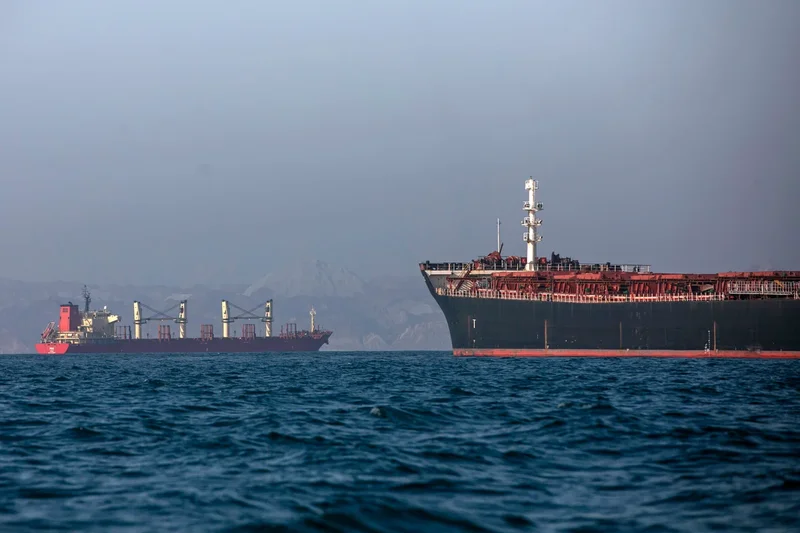
The closure of the Strait of Hormuz at the start of President Donald Trump’s war with Iran may lead to a “large-scale, marine bioinvasion ‘superspreader’ event,” according to a new study.
More than 1,500 commercial vessels have been stranded in the Gulf since the key waterway closed at the start of the war on February 28.
In that time, the ships have sat submerged in the same waters, likely leaving them now coated with marine microbes, algae and invertebrates, according to scientists at the University of Maryland and the Woods Hole Oceanographic Institution.
The research suggests this could lead to “significant environmental risks,” including the spread of invasive species as the idle ships re-enter the global shipping network, resulting in a “large-scale, marine bioinvasion ‘superspreader’ event.”
The scientists argue the current situation is “unparalleled” in modern history, that no other shipping disruption has left so many ships sitting idle for so long.
Most vessels in this region spend 1-3 days in port before departing, meaning the ships that have been stuck for months have had ample time for what scientists refer to as “biofouling,” or the unwanted build-up of marine communities on the vessel.
Once the thousands of stranded vessels depart — taking with them algae and other organisms — they may bring invasive species elsewhere. When species are taken from one environment to another it can create problems and put the current ecosystem at risk for damage.
The research highlights an “extreme worst-case scenario currently prevailing in the Gulf region,” which is exposing ecosystems across the globe to biosecurity risks.
Issues caused by stranded ships have long been documented, and the International Maritime Organization passed a resolution in 2023 to minimize the transfer of invasive aquatic species through biofouling.
The resolution specifically recommends that ships that sit idle for 18 to 30 days take “immediate actions before the next voyage” to manage biofouling.
However, the scientists note in the study that current biofouling management and regulatory frameworks are “insufficient” in mitigating such large-scale, unplanned vessel stoppages.
The researchers noted: “While the human and economic consequences of events like the war in the Middle East will always remain the highest priority, ecological impacts cannot be overlooked.”