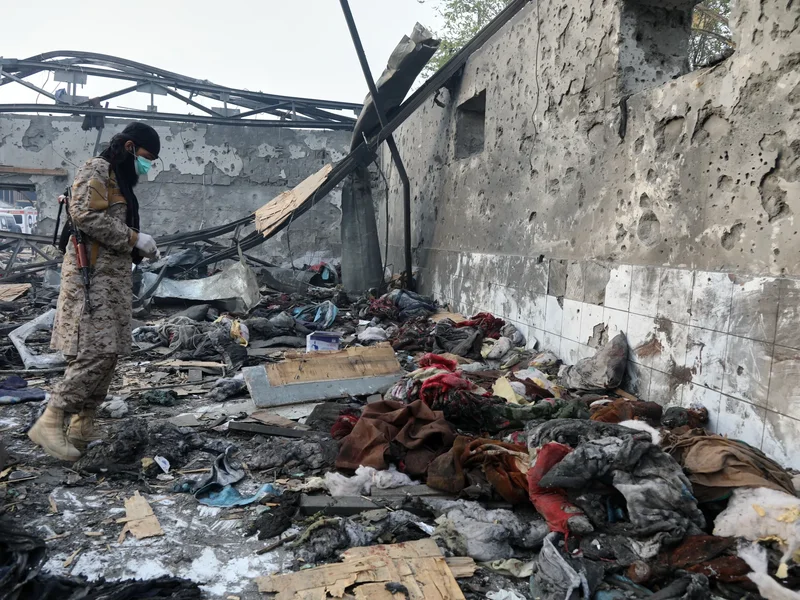
Since October 2025, Pakistan has carried out multiple air strikes in Afghanistan, causing large-scale civilian casualties and destruction. The deadliest came on March 16, 2026, when a drug rehabilitation centre in Kabul was hit, killing 269 civilians and injuring 122, according to United Nations figures.
In a report released on July 21, Amnesty International called on Pakistani authorities to explain the strike and urged that it be investigated as a possible war crime.
Pakistan says its operations target the Tehreek-e-Taliban Pakistan (the Pakistan Taliban or TTP), which it accuses the Afghan Taliban of supporting. The Taliban authorities deny supporting the group and insist the insurgency is Pakistan’s internal problem. Yet the strikes have failed to eliminate any prominent TTP leader or commander. Is the TTP the true source of contention, or are there other dimensions to the conflict?
A crisis rooted in Pakistan
The roots of the TTP lie inside Pakistan. In November 1994, Sufi Mohammad led an armed uprising in Swat and Malakand to impose Sharia law, the first such campaign led by a cleric in the country. Thirteen years later, Baitullah Mehsud, from South Waziristan, united several militant factions under the TTP banner. Sufi Mohammad’s son-in-law, Mullah Fazlullah, led the group from 2013 until his death in a US drone strike in 2018. The movement from which the TTP emerged therefore predates the Afghan Taliban itself.
Over the past two decades, the Pakistani military has launched nearly a dozen major operations against the group. Yet the TTP survived not only because of its resilience or ideological appeal, but because of Pakistan’s distinction between “good” and “bad” militants. Islamabad’s covert support for the insurgency in Afghanistan, intended to weaken and ultimately bring down the former Afghan republic, sustained militant networks and infrastructure from which the TTP also benefitted.
Pakistan has long been accused of using militant groups to pursue geostrategic objectives in Afghanistan and against India. Following Afghanistan’s 1978 communist coup and the Soviet invasion the next year, it became a key Western ally, particularly for the United States, in containing Soviet influence. Pakistan was already hosting Afghan opposition figures, including Gulbuddin Hekmatyar and Ahmad Shah Massoud, who had fled during President Mohammad Daoud Khan’s rule.
With US backing, Pakistan became the main base for supporting the mujahideen. The indigenous Afghan resistance was increasingly dominated by Pakistan and Western-backed factions. The Pakistani military established training centres along the Durand Line, where local communities were exposed to systematic radicalisation. Thousands of madrassas were established, literature glorifying jihad distributed and local fighters encouraged to join the Afghan mujahideen. Many were later mobilised alongside the Afghan Taliban against the United States and the former Afghan government.
After the September 11 attacks, the Pakistani military under General Pervez Musharraf publicly yielded to US pressure and joined the “war on terror”, while continuing to support selected militant groups it considered useful. The discovery of Osama bin Laden near Islamabad, where US Navy SEALs killed him in 2011, remains a damning symbol of this double game.
Many analysts therefore question whether Pakistan genuinely intends to eliminate the TTP and other militant networks. They argue that Islamabad still regards some groups as strategic assets and seeks not to eradicate militancy, but to keep it below a manageable threshold as a controlled insurgency.
If the TTP alone does not explain Pakistan’s attacks on Afghanistan, what broader objective is Islamabad pursuing?
From strategic depth to strategic dominance
Pakistan has not abandoned its longstanding pursuit of “strategic depth” in Afghanistan. Traditionally, this meant cultivating a friendly government in Kabul that could provide political and military space in a conflict with India. Today, however, that policy appears to have evolved into strategic dominance: treating Afghanistan not as a fully sovereign neighbour, but as an extension of Pakistan’s security perimeter.
This attitude was reflected in a recent social media post by Pakistan’s former special representative for Afghanistan, Asif Durrani, who said the Taliban’s growing ties with India “at the expense of Pakistan’s interests”, while Afghan territory remained available to armed groups, would cross a Pakistani “red line”. He offered no evidence that India was using Afghan territory against Pakistan. His comments reflected Islamabad’s assumption that even normal diplomatic relations between Afghanistan and India constitute a threat.
Afghanistan has historically remained neutral in India-Pakistan disputes, including over Kashmir, and did not take sides in the wars of 1965 and 1971. Yet Pakistan expects Afghanistan to view India through its security lens and limit its foreign relations accordingly.
The Central Asian dimension
Former Pakistani senator and political analyst Afrasiab Khattak argues that Pakistan is pursuing a Western agenda to contain Russian and Chinese influence. In his view, Islamabad supported the Taliban not only to seize power in Afghanistan, but in the expectation that militancy would spread into Central Asia. He attributes recent tensions partly to the Taliban authorities’ unwillingness to facilitate such destabilisation.
Khattak also argues that Pakistan is using the TTP as a pretext for attacks while seeking a renewed US military presence in Afghanistan. In September 2025, US President Donald Trump said Washington wanted to regain Bagram airbase, citing its strategic location near China. Days later, he warned that “bad things” would happen unless Afghanistan returned the base to the US.
The following month, Pakistani strikes in Kabul and Paktika sharply escalated the fighting. Khattak argues that Islamabad ultimately seeks a counterterrorism monitoring mechanism that would give it greater scope to intervene in Afghanistan and pursue its objectives in Central Asia and beyond.
Suppressing Pashtun and Baloch nationalism
According to Khattak and other regional analysts, Pakistan regards Pashtun and Baloch nationalism, rather than the Afghan Taliban or even the TTP, as the more fundamental threat. Khattak argues that the TTP weakens Pashtun nationalist movements in Khyber Pakhtunkhwa and that Pakistan has therefore left the province’s southern districts at the group’s mercy.
Pakistani intelligence agencies have also been accused of using militants to assassinate tribal elders, Pashtun nationalists and political activists who criticised state policies and demanded greater rights. According to the Human Rights Commission of Pakistan, nearly 1,200 tribal elders were killed in North and South Waziristan between 2004 and 2014. Rather than address legitimate Pashtun and Baloch grievances, the authorities have often portrayed those raising them as foreign proxies.
The same coercive logic shapes Pakistan’s approach to Afghanistan. Islamabad has used political, economic and military pressure to compel the Taliban authorities to act according to its wishes. The mass deportation and mistreatment of Afghan refugees, trade and transit closures, and air strikes that have killed civilians have all failed and proved counterproductive.
The roughly 2,600km Durand Line has been fenced, severing longstanding tribal and social ties. Entry point closures have disrupted trade and livelihoods, affecting millions in both countries. Yet militancy has intensified, with the TTP and Baloch armed groups continuing their deadly campaigns in Khyber Pakhtunkhwa and Balochistan.
Pakistan must put its own house in order
The tribal areas along the Durand Line once served as a buffer between Afghanistan and British India, and later Pakistan. They remained semiautonomous until their merger with Khyber Pakhtunkhwa in 2018. Decades of military operations have cost local communities lives, homes and livelihoods, deepening their alienation from a state many now regard as an occupying force. The TTP maintains a significant presence inside Pakistan from which it can organise and launch attacks.
Conditions in the tribal areas and Balochistan increasingly resemble the final years of the former Afghan republic, when the Taliban controlled large parts of southern and western Afghanistan while government authority was confined largely to provincial and district centres.
Rather than blame external actors, Pakistan must abandon its failed military strategy and address its domestic crises through political engagement and dialogue. Armed groups retain territory, manpower and some local support, while the suffering inflicted on tribal communities continues to fuel resentment and TTP recruitment.
Further military adventurism against Afghanistan will deepen regional instability, strengthen non-state armed groups and carry grave long-term consequences for Pakistan itself.
The views expressed in this article are the author’s own and do not necessarily reflect Al Jazeera’s editorial stance.