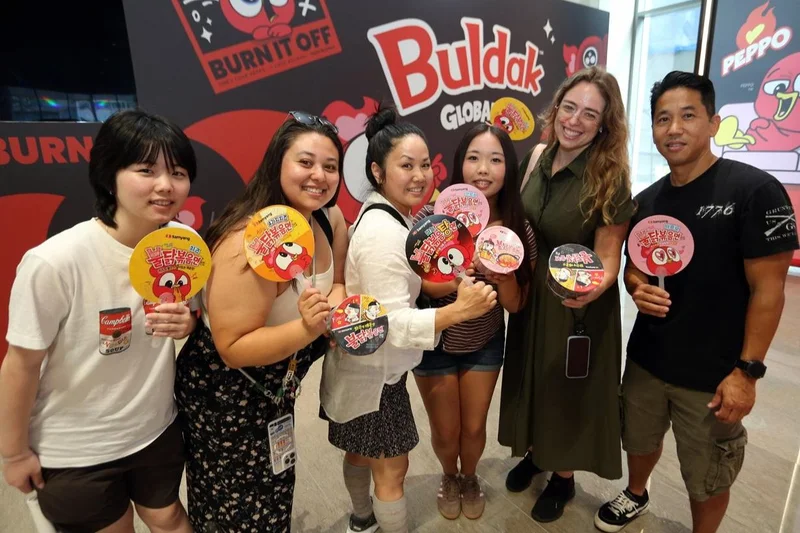
It begins with a single, tear-inducing bite of searing red sauce in kitchens from Bangkok to Brooklyn. Now, Korean government officials are betting that the global obsession with Buldak Spicy Ramen — the dangerously spicy instant noodle that conquered the internet — can lure those same adventurous eaters straight off their couches and onto flights to Seoul.
To turn that viral culinary obsession into real-world arrivals, the government is joining forces directly with the company behind the fiery noodles.
The Ministry of Culture, Sports and Tourism signed a partnership Friday with Samyang Foods — the manufacturer behind the viral Buldak Spicy Ramen phenomenon — to transform the product’s massive global footprint into a gateway for inbound tourism.
Under the agreement finalized at the National Museum of Modern and Contemporary Art in Seoul, the government will pair its promotional cultural assets with Samyang’s vast international retail distribution network.
The collaboration represents a novel push to use corporate K-food marketing for public diplomacy. Rather than relying solely on traditional tourism ads, officials plan to embed QR codes directly on Buldak packages and sauce bottles sold in supermarkets worldwide. A quick scan will direct consumers from local grocery aisles to interactive portals offering travel itineraries, festival schedules and flight deals to Korea.
The strategy reflects a shift in how travelers discover destinations in the digital age, where viral food challenges on platforms like TikTok and YouTube drive cultural fascination far faster than state-run campaigns.
"Buldak has instilled a passionate and adventurous image of Korea in global consumers," the ministry said in a statement, adding that the goal is to build a "solid bridge" that turns the routine habit of eating Korean noodles abroad into a physical journey to the peninsula.
The joint campaign will make its international debut next month in Southeast Asia at the "2026 Love Korea" Cultural Tourism Festival in Bangkok, featuring interactive tasting booths alongside traditional cultural exhibits. The ministry and Samyang also plan to cross-promote travel content across their official digital platforms.
"We aim to leverage the immense momentum of K-food in overseas markets as a new engine for attracting foreign visitors," said Culture Minister Chae Hwi-young. "By combining government cultural content with private-sector marketing prowess, we hope to establish Korea as an irreplaceable travel destination for people around the world."
This article was published with the assistance of generative AI and edited by The Korea Times.