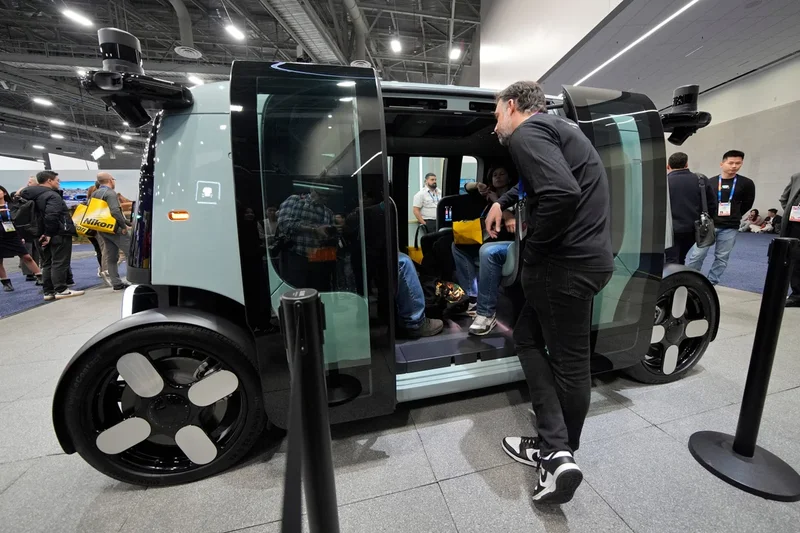
Federal regulators have cleared the way for a new generation of robotaxis that don't have steering wheels or traditional driver controls, marking a major step toward fully autonomous transportation in the United States.
The National Highway Traffic Safety Administration has granted Amazon-owned Zoox permission to begin charging passengers for rides in its purpose-built self-driving vehicles, which feature four inward-facing seats and no steering wheel.
The paid service will launch first in Las Vegas before expanding to other cities as state and local approvals are secured.
Zoox has been offering free rides in Las Vegas and San Francisco since last year.
The approval comes as federal regulators also consider eliminating requirements for brake pedals and other human controls in autonomous vehicles. The proposal, announced last month, is still under review.
NHTSA Administrator Jonathan Morrison said the agency is trying to encourage innovation while ensuring self-driving technology remains safe.
"By removing unnecessary barriers to innovation, developing industry guidance, and providing strong enforcement oversight while we create performance requirements, NHTSA is taking a balanced approach to AV regulation," Morrison said.
He added that the changes will help ensure the United States remains a global leader in autonomous vehicle technology.
Zoox is racing to compete with Alphabet-owned Waymo, which already operates commercial robotaxi services in several U.S. cities. Tesla is also developing its Cybercab, a self-driving vehicle that also lacks traditional driver controls, although its regulatory path remains uncertain.
Amazon acquired Zoox for about $1.2 billion and plans to manufacture up to 10,000 robotaxis a year at a California factory.
For now, NHTSA has authorized Zoox to deploy up to 2,500 vehicles annually over the next two years as it continues to demonstrate the safety of its technology. The company said more than 500,000 people have already ridden in its autonomous vehicles.
The exemption allows Zoox to bypass longstanding federal safety rules requiring steering wheels and other human controls. The electric robotaxis have a top speed of 75 mph but cannot be sold directly to consumers.
"We can say pretty clearly that the systems in place on the Zoox exceed the equivalent performance requirements of a compliant vehicle," Morrison said. "But we still want to make sure that the automated driving system will operate appropriately."
The approval comes with strict oversight. Zoox must report crashes, unexpected vehicle behavior and other safety incidents to regulators. Remote operators overseeing the fleet must be based in the United States, and the company must publicly identify where its vehicles operate.
NHTSA said it is working on the nation's first federal safety standards specifically for autonomous driving systems, replacing regulations originally written for vehicles operated by humans.
The agency has also warned the self-driving industry that it must address a growing number of safety concerns involving autonomous vehicles interfering with police officers and first responders, driving through construction zones, stopping in traffic, entering flooded roads and violating traffic laws.
"If we continue seeing issues, we will not hesitate to use the full extent of our enforcement authority," Morrison said.
Earlier this month, Zoox recalled 105 autonomous vehicles to install updated software after identifying a potential issue that could prevent the vehicles from detecting heavy smoke during emergencies.