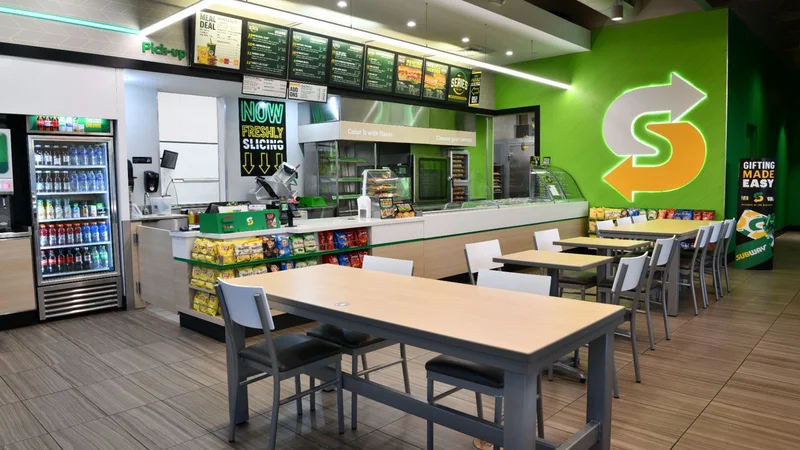
An intrepid TechTuber has tested a trio of passive mini PCs from the Subway sandwich chain to check if they can be repurposed for gaming fun. In a recent video, Garkus indicates that the three Intel Skylake-powered mini PCs that had been displaying sandwich menus above the serving counters for a decade but were saved from scrap/landfill, alongside a matching set of LG digital signage TVs. Spoiler: they are too puny for mainstream AAA gaming in 2026, even after doubling the RAM installed.
Before getting on with the digital signage-to-gaming conversion, Garkus investigated the hardware in hand. Labeling indicated that the three slim mini PCs were all Advantech DS-081 models (official PDF link). Pondering over that data sheet, we see that the variant with the Intel Core i3 6100U, as these were, carries the full designation of DS-081GB-U21A1E.
The processor is now both long in the tooth and low powered, so immediately we know this 2C/4T @ 2.3 GHz CPU, configured to suck between 7.5W and 15W, won’t be ideal for modern AAA titles. Moreover, the iGPU is the Intel HD Graphics 520 with 24 EUs and clocks up to just 1.00 GHz, sharing the DDR4 system RAM.
A DS-081GB-U2A1E is quite expandable for such a small, low-powered set-it-and-forget-it unit. It has twin HDMI 1.4, twin Ethernet, four USB 3, audio in/out, and an RS-232 serial port accessible from the outside. Inside, users can configure the machine via twin DDR4-2133 SODIMM slots (up to 32GB total), a SATA III HDD/SSD, and an mSATA port that looked like it was an M.2 2242 slot in the video. This passive machine is designed to run signage 24/7 in environments with 0 ~ 40° C (32 ~ 104 ° F) ambient temperatures.
Setup and gaming
These systems were found to actually come with just 4GB of RAM (one slot used) and with a 64GB SATA SSD installed. They booted to Windows and went straight to kiosk mode, displaying the Subway sandwich menu. We saw an extra 4GB DDR4 stick added to bring the test system(s) up to 8GB RAM in total.
After a bit of OS wrangling, Garkus decided to set up the salvaged trio of passive mini PCs as follows. One kept Windows 10, another got Bazzite Linux (because SteamOS balked at the SATA-only storage), then another went Hackintosh with macOS Monterey installed.
Gaming tests began with a very light test. The system ran Peggle, and this 2D puzzler posed no problems. After this modest victory, Garkus ambitiously leapt straight to GTA V. This legendary but now older title could only reach a frame rate of about 15 fps. But it was found to have defaulted to high settings, took ages to get ready to run on Bazzite, then crashed on exit.
Get Tom's Hardware's best news and in-depth reviews, straight to your inbox.
Probably not following best benchmarking practice, the tech tinkerer appears to have decided to test Mario Kart Wii emulation performance while GTA V was still compiling shaders… Later, a test run in Minecraft delivered a wildly inconsistent but roughly 25 fps performance. As is now established as the Garkus testing MO, resolution, quality settings, and so on weren’t shared.
To conclude the gaming part of the video, the TechTuber suggests that these ex-kiosk machines are probably best suited to emulating older consoles up to the PS2 and original Xbox era. We think that for PS2 emulation, you will still need to restrict yourself to lighter titles and reduced settings for smooth action.
Mark Tyson is a news editor at Tom's Hardware. He enjoys covering the full breadth of PC tech; from business and semiconductor design to products approaching the edge of reason.