The million (if not billion) dollar question right now is: has Donald Trump actually finally made “a monumental step towards lasting peace and security” for Gaza?
Will this agreement announced overnight, actually see Israel withdraw from the 40km-long territory they have utterly destroyed? Will Hamas militant group really surrender its weapons?
Will this begin much-needed reconstruction in the strip where 90 per cent of homes are severely damaged or flattened?
Will it finally secure a safe future for the millions of Palestinians in Gaza who survived a bombardment from Israel so heavy and unprecedented that, despite Israel protestations, a UN commission of inquiry has determined it constitutes genocide?
Will it help lay the groundwork for wider peace deals between the US, Israel and Iran?
The short answer is: this is a significant announcement. It is a step forward in a process that for 10 months has shuddered to halt, while civilians on the ground continue to be slaughtered and displaced despite a “ceasefire” in place.
But the jury is out on whether it will actually go anywhere. Existential sticking points remain.
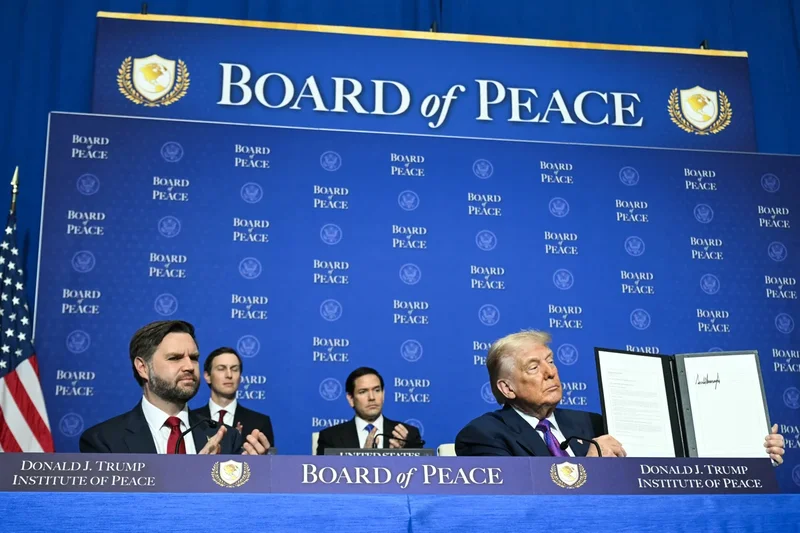
Firstly, this isn't the first time Donald Trump has announced a “historic” era of peace. Similar words were used in October when the Gaza plan - and the “Board of Peace” lead by Tony Blair that will over see it - was first announced.
Since then Israeli attacks have killed well over 1,100 Palestinians, according to the Palestinian health ministry.
Hamas has accused Israel of committing more than 3,500 violations of the agreement. Israel has fired back accusations of violations at the militants.
Friday morning, Hamas's lead negotiator Ghazi Hamad publicly confirmed that Hamas has, after “difficult and harsh” negotiations, agreed to this 15-point plan, to relinquish their weapons, under what he called a “complete and integrated” deal.
Speaking to Al-Jazeera, he said that included the entry of much-needed aid, an Israeli withdrawal from Gaza and a handover to a National Committee for the Administration of Gaza (NCAG) - that was established in January as a transitional, technocratic, and apolitical Palestinian committee to run Gaza.
He made it clear disarmament depended on Israel's withdrawal from Gaza, actual progress on reconstruction, and the entry of international forces.
Then - and only then - will only hand over weapons to the Palestinian committee alone.
Added to this, he continued is also the dismantling and confiscation of weapons of Palestinian militias Israel has been arming within the Strip, that I have reported on.
He made it made it clear that the deal would be off if Israeli forces failed to fulfil their obligations.
“The issue of weapons… is a conditional issue linked to an entire system,” he said. “If Israel does not implement, we will not implement.”
The second concern is silence from Israel, that clearly wants Hamas to surrender its weapons before any withdrawal... if indeed Israel’s extreme-right leadership really want a full withdrawal from Gaza at all.
A US official on Thursday admitted to reporters that Israel is “very skeptical that Hamas will disarm”.
Before Trump's overnight announcement an Israeli political source said in a statement shared with me that Israel had rejected the proposal and that the complete disarmament of Hamas was a pre-condition for any movement forward, reversing Hamad’s timeline.
The source emphasised that there will be no Israeli withdrawal from Gaza “before Hamas is disarmed and the Strip is demilitarised”.
The political source added that the 15-point plan did not provide a satisfactory response to these demands, and that their concerns had already been communicated to Blair’s envoy.
What comes first - disarmament or withdrawal - which has been the main sticking point in all negotiations so far - still doesn’t seem to have been resolved. Withdrawal to where - and how - is also still unclear.
Another concern is the timeline for all of this.
One Board of Peace official gave an estimated timeline of 200 to 320 days to Reuters - which is still nearly year. But that has been downplayed by other officials: it could be longer.
There is still little clarity over what a handover to this national committee looks like.
The ongoing war between US, Israel and Iran - that is a major ally of Hamas - could also pile pressure on delicate negotiations .
And on the ground in Gaza, this morning there were few celebrations of a breakthrough. Displaced families, living in tents in the blistering heat of the summer, mourning the loss of their beloved loved ones and homes, told me they were exhausted and distrustful of all sides.
They are still struggling to get basic supplies, they are still living this nightmare. They face continued Israeli bombardment.
Their only hope is that something, anything, will come of this.