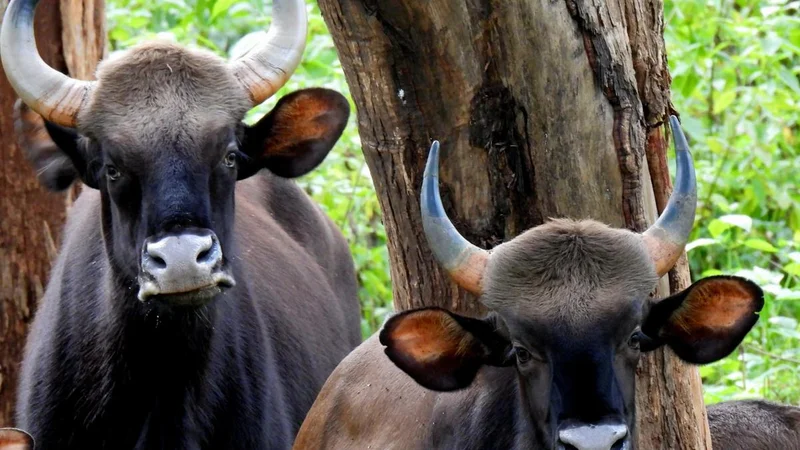
As part of its efforts to expand the prey base for tigers and leopards, the Andhra Pradesh government has begun steps to increase the population of gaurs (Indian bison) in the Nagarjunasagar-Srisailam Tiger Reserve (NSTR) and the Nallamala forests.
These wild bovines are sparsely found in the Papikonda National Park and parts of Alluri Sitharama Raju district, but they have all but disappeared from the NSTR and the Nallamala hills over the years because of hunting, loss of habitat and cattle disease transmission, which affected the availability of prey mainly for tigers.
The Forest Department has decided to reintroduce gaurs in the NSTR and the Nallamala forest range from September, by translocating them from central India with the help of the Wildlife Institute of India.
There are 300 to 350 gaurs in the Polavaram, Chinturu, Paderu and Chintapalli areas, Principal Chief Conservator of Forests P.V. Chalapathi Rao told The Hindu in an interview.
He said gaurs would be a major source of food for tigers, and that the larger effect would be the sustenance of the carnivore population in the Eastern Ghats. The translocation would also improve the genetic diversity of the NSTR and the Nallamala forest range.
Meanwhile, the stage has been set for the translocation of two female tigers each from Chandrapur in Maharashtra and from Madhya Pradesh. These big cats will be released in the NSTR, the largest tiger reserve in the country, spread over about 5,443 sq km.
By recent estimates, 68 tigers and 11 cubs were recorded in the NSTR-Seshachalam region. As apex predators, tigers are an indicator of the health of wildlife habitats, Mr. Chalapathi Rao said.
Published - July 31, 2026 04:23 pm IST