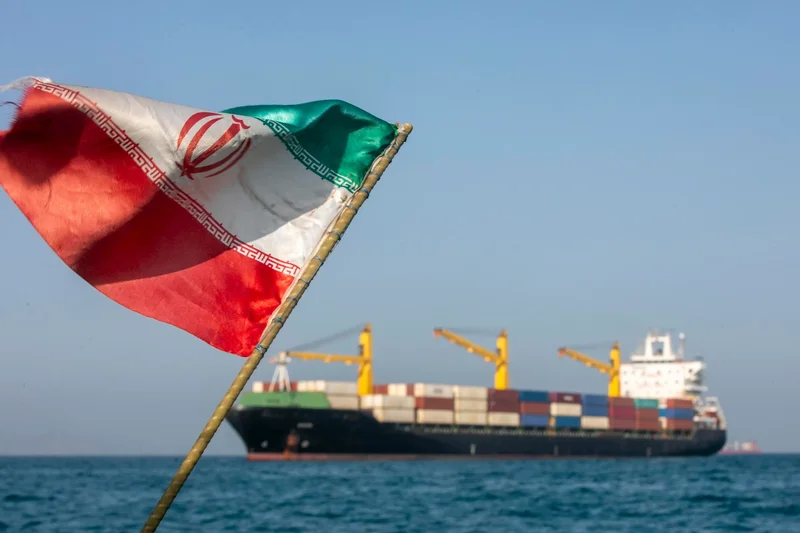
Like many oil market observers, I have been puzzled by the relatively low level of oil prices given what has been one of the largest supply disruptions in history. By the numbers, 20 million barrels a day (mb/d) transiting the Straits of Hormuz before the war has been reduced to a trickle, offset in part by: a) pipeline exports of 7-8 mb/d, b) releases of sanctioned Russian oil into the market, at times more than 2 mb/d; c) a reduction of 4 mb/d or so of Chinese purchases; d) reduced demand of maybe 3-4 mb/d; and finally, e) releases of about 3 mb/d from strategic stocks held by IEA countries.
So, the market was close to being in balance thanks to various offsets, but much of this is temporary, including the sanctioned Russian oil supplies and reduced Chinese purchases. Releases from strategic stocks might continue for some time but probably not for much more than a few months. Now that the Bab el Mandab is threatened without closure by the Houthis, another 5-6 m/bd of oil might be disrupted. Some will go through the Suez Canal and from the Mediterranean to Asia. Of course, some oil will be switched from the Atlantic Basin to Asia instead of Europe, replaced by Suez oil, but nonetheless, the Houthis will be bleeding the market.
Oh, for the halcyon days of yore the Seven Sisters could balance the global oil market single (or seven-) handedly. That fell apart in the 1979 Iranian Oil Crisis when companies that lost Iranian supplies cut off their customers, sending them into the market to buy up spot supplies, which soon dried up. Instead, some buyers offered premiums to countries like Libya who then reduced the production shares of existing operators, who in turn chased new supplies.
But one important lesson from that situation can be observed below: global production was largely restored by April 1979, after three months, at which point prices had only risen by 50%. But instead of moderating, prices continued a steady rise for 21 months, ultimately tripling as the figure below shows.
This was the result of the panic in the market due to fears that the Iranian Revolution would spread (it didn’t) and that Iran and Iraq would go to war (they did). Additionally, whereas pre-crisis most oil produced by OPEC countries was sold to the major oil companies who had previously been the operators, as the crisis developed, exporting nations decided to market their own oil, cutting off many of their previous buyers, who then had to scramble for new supplies. The resulting uncertainty led to hoarding and a huge inventory increase, as the figure below shows.
The price trajectory in the second case, early 2003, is similar. A strike in Venezuela in the previous December cut its production, but only by about 1 mb/d. But this was exacerbated by the second Gule War in late March which cut about 2 mb/d from the market. Global production recovered by October, at which point prices had only risen by about 25%. But with global production restored, as the Figure shows, prices continued to rise until mid-2006, when they had doubled. Arguably the subsequent doubling was due to a combination of surging Chinese demand and momentum trading, but even assuming that, the market tightness after the war ended kept prices on a long upward trajectory, not a rocket launch.
The perception that prices rise like a rocket comes more from small, short-term moves, where ‘small’ is relative. Recent daily spikes of $6 and $8 are certainly large on a daily basis. But it is the potential for persistent tightness and continuing increases that the real danger lies. The price might not go much above $100 in the next few months, but that doesn’t give much clue as to the ultimate peak.
Because there is a lot of inertia in prices, given the nature of oil trading. Any given price surge can be followed by a retreat due to profit-taking as well as market/political developments. And traders are understandably reluctant to assume a massive price swing: it puts a lot of money at risk in a time of uncertainty. An agreement between the U.S. and Iran might not be finalized for months—or could come tomorrow. Being long in the market in the latter case would be a disaster, the longer the more disastrous. So, even if the bull market persists, assume the price will rise gradually.
That doesn’t mean the potential for a massive run-up in prices is gone. If Chinese buyers return to the market and the U.S. and other countries stop releasing strategic stocks, while supply from the Gulf remains constrained, the possibility of panic buying could send prices soaring. Momentum trading could then rear its ugly head and triple digit prices would soon follow.
So, complacency about the oil market should not be based on the current, moderate level of prices, especially when there is no end in sight for the supply constraints. And while the geopolitical situation can ease quickly, market fundamentals—primarily low inventories—are much more difficult to resolve. Given that, the timing and level of the price peak is uncertain, but the possibility or returning to pre-war prices appears distant.