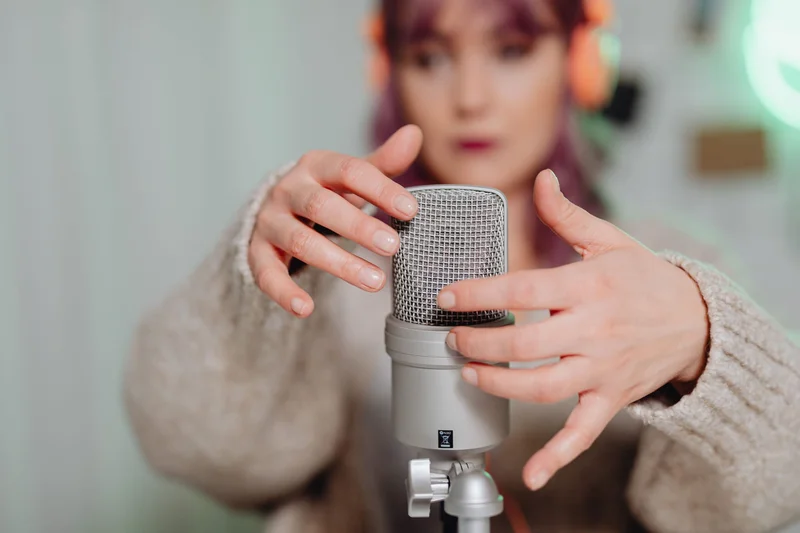
YouTube banned a wave of ASMR artists this week for violating the platforms’ rules against “sexually gratifying” content, leaving creators confused and angry.
Several creators received the same notice from YouTube about their channels being removed on Wednesday and Thursday. “We have reviewed your content and found severe or repeated violations of our sex and nudity policy. Because of this, we have removed your channel from YouTube,” the email said.
So far, YouTube creators affected by the wave of bans who’ve spoken publicly about YouTube removing their channels include ItsBunniiASMR, Slight Sounds, Nananightray, Roseasmr, Simoneasmr, and Janina Wilhelmsen, all of whom had significant followings on the platform. There are still many ASMR creators on YouTube, making the bans even more confusing.
ASMR, or Autonomous Sensory Meridian Response, describes the tingling feeling that some people get when hearing certain sounds; it’s become shorthand for a genre of content where ASMR artists whisper, brush, tap or make other sounds near a microphone. A lot of ASMR content is meant for relaxation, mindfulness, and sleep.
“YouTube deciding to ban my account and many others feels like they are siding with gross sexualization of ASMR from people outside the community."
YouTube did not respond to 404 Media’s request for comment.
Slight Sounds, who has been making ASMR content on YouTube since 2013, told me that this has been her full-time career since around 2018. “This has been my livelihood and my career for eight or nine years now, so getting it removed and taken away from me without warning obviously affects me financially,” she said. “It's a part of my income. It's a part of how I get new people to follow me on other platforms, Instagram, TikTok, etcetera. It's how I get sponsorships, ad money. So a big part of this is this fear that I just lost income that I don't know how I'm going to get back. But I think the mental stress of building my own community and not having the option to have access to that anymore is really disturbing... Being told not only that you’re not going to make money on this, but also your archive, your life's work, videos that mean so much to me and so many other people are just gone, and I can't access that. That's something that's really hard to grapple with.”
YouTube’s ban email to creators said: “We know this is probably very upsetting news, but it's our job to make sure that YouTube is a safe place for all. If we think a channel severely violates our policies, we take it down to protect other users on the platform - but if you believe we've made the wrong call, you can appeal this decision. You'll find more information about the policy in question and how to submit an appeal below.” Creators report that appealing didn't change the decision.
The email continued: “Explicit content that's meant to be sexually gratifying isn't allowed on YouTube.”
ASMR content creators have long asserted that their content is not sexual or pornographic. Erotic ASMR exists, but that’s not what these artists were doing on YouTube.
ASMR artist Bunnii’s channel was removed at around 227,000 subscribers and over 55 million views across hundreds of videos. She told me she started uploading content to YouTube because, unlike during her streams on Twitch, she didn’t have to rely on subscriptions and donations to earn money. The passive income she earned from YouTube meant she could offer that content without a paywall. “I've been so lucky to have such a supportive community but not everyone has money to spare to help make sure I continue creating content that they find comforting for anxiety and sleep. YouTube was a place I could direct people who wanted to offer support but couldn't directly,” she said. “I hate that the option is gone. There are people who really do depend on this kind of content to get a good night's sleep, deal with insomnia, or manage mental health issues like anxiety, PTSD, and depression (therapy and whatnot isn't exactly cheap or accessible to everyone). And in times like this when world issues feel so heavy and no one can afford anything, having a free, easily accessible option, where the creator can benefit from just views is so important.”
"I find it really disturbing to hear that, when I am making content that is looking into the camera and saying ‘you're okay, you're safe'"
Being sexualized not just by people outside of the community who misunderstand it, but the platform where she’d grown an audience and made a living, is “incredibly disheartening,” Bunnii said, and she finds YouTube’s guidelines and decisions too vague. People are speculating about what she did to deserve removal, she said, even though she considers everything she uploaded to YouTube family friendly.
“YouTube deciding to ban my account and many others feels like they are siding with gross sexualization of ASMR from people outside the community. Making it feel like something that is intended to be comforting, is taboo,” she said. “And while this is uncomfortable for the creators, I can't imagine it makes the people who enjoy this content or consume it for sleep and anxiety feel comfortable with these decisions either. We're all trying to navigate a form of content where the boundaries aren't concrete but deleting channels with no warning is scary. I'm sure any of us would complied given one, and kept it in mind moving forward. It feels like they don't care for their creators.”
In 2019, YouTube added language to its terms of use that forbids content that is “meant to be sexually gratifying in nature.” Other platforms, like Patreon, have similar terms. This standard is incredibly difficult to define. In 2022, YouTube updated its terms to specifically mention ASMR: “We’ve strengthened our policies to better identify and action ASMR content that is sexually gratifying. ASMR videos with audio sexual sounds may be age-restricted or removed from the platform,” YouTube said in a policy update announcement. Creators faced a similar wave of bans following that change.
When Slight Sounds started making ASMR content, she said, most people still didn’t understand what it was. “If you liked ASMR, you kept it to yourself because there was this judgment around it because people didn't understand,” she said. “One of the things that people would always say is like, ‘Oh, is that a sex thing? Is that a sexual thing?’” But for most people making it, there was no sexual connotation, she said.
“I think because ASMR is very female-dominated — because it is a very intimate video style, and there is this sweet woman taking care of you and whispering to you — I think people, especially men, confuse closeness and intimacy with sex,” she said. Some ASMR is sensual, but sensual does not equal sexual, she said. “There is this inherent thing that happens when men interact with women online in a specific way, and there is this sexual energy that they feel, even if it's just closeness that they're feeling. I think that ASMR has always had this undercurrent of: No matter what you do as a woman in ASMR, someone is going to find it sexual. Someone's going to call it weird. Someone's going to fetishize it.”
Some ASMR artists also upload content to adult sites like Onlyfans and Fansly, which are often kept separate from their other, more public platforms like YouTube. Slight Sounds started uploading content to these kinds of sites a few years ago. “I had thought about it for many years before, but didn't because of the judgment and the fear, and knowing that if I made that decision to make erotic content outside of YouTube, there would be so many people that would lose respect for me,” she said. “That would say all of the work that you've done, no matter how separate the two are, is going to undermine your life's work, you know, and that's really hard to to think about.”
She made “a very big point” to keep these sites and links separate from her YouTube channel, she said. “Women will make a choice, an autonomous choice, to do something that doesn't even affect the other content they're making. It is a wholly separate experience. And we're still being told that we're sexualizing ASMR on YouTube, and we're being sexual,” she said. “I find it really disturbing to hear that, when I am making content that is looking into the camera and saying ‘you're okay, you're safe,’ and giving people a place to escape the world and just be with themselves and me for a little bit. My content has stayed consistently the same. I have not pushed any boundaries, and I am still, it seems, being punished for something that has nothing to do with my YouTube. It is really hard to think about.”