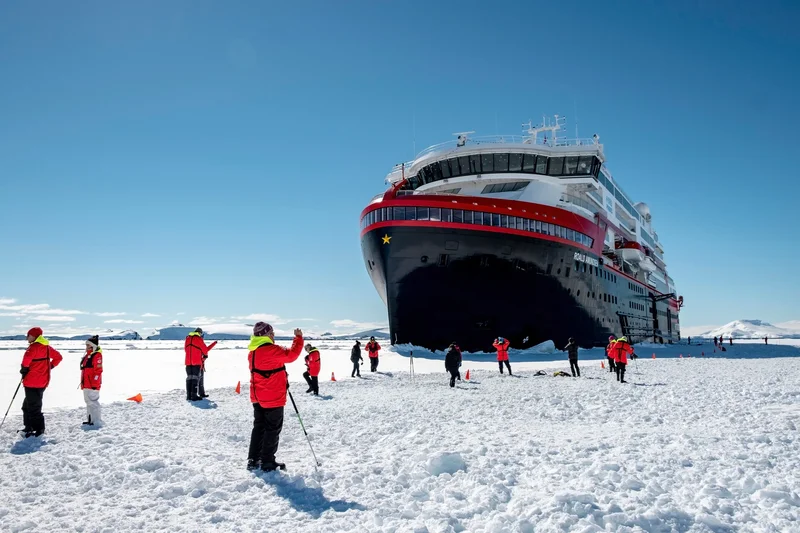
Antarctica Cruise Deal Brings Chinese Tourists Through Chile in 2026-27
Travel · Chile
Antarctica cruise operator Antarctica21 has signed a strategic cooperation agreement in Beijing with Chinese high-end polar-tourism firm Mulin Youhao, securing a charter program to bring Chinese luxury travelers to the white continent via Chile during the 2026-2027 austral summer season.
A Hybrid-Electric Gateway from Chile
The exclusive 11-day program will sail aboard the Magellan Discoverer, a vessel built by Chilean shipyard Asenav in Valdivia.
It is one of the world’s first polar expedition ships equipped with a hybrid diesel-electric propulsion system.
The itinerary combines air, land, and sea travel, crossing the notoriously rough Drake Passage to explore the Antarctic Peninsula.
The package also adds visits to iconic Chilean sites like Torres del Paine National Park in the Magallanes region.
This structure positions Punta Arenas, the regional capital, as the primary gateway for Chinese high-end polar tourism.
How the Antarctica Cruise Program Works
The deal was formalized during a ceremony in the Chinese capital, reflecting the growing commercial ties between Chile and China in niche tourism sectors.
Antarctica21, headquartered in the far-southern city of Punta Arenas, specializes in fly-cruise expeditions that avoid the long sea crossing by combining flights with ship-based exploration.
Mulin Youhao is a recognized player in China’s expanding polar-tourism market, catering to affluent travelers seeking curated, remote experiences.
The agreement is a charter contract, meaning Mulin Youhao will exclusively fill the ship with its own clients for the designated departure dates.
No financial terms or specific passenger capacity figures were disclosed by either party.
Chile’s Soft-Power Play
For Chile, the deal is more than a tourism transaction; it is a calculated soft-power maneuver to cement Magallanes as the premier continental gateway to Antarctica.
The country has long competed with Argentina’s Ushuaia port, which currently handles the vast majority of Antarctic cruise traffic.
By linking the Antarctic voyage with terrestrial attractions like Torres del Paine, Chilean operators offer a dual-destination product that Ushuaia cannot easily replicate.
The use of a Chilean-built, hybrid-electric vessel also showcases the country’s shipbuilding capabilities in the southern city of Valdivia.
Asenav, the Astilleros y Servicios Navales shipyard, has gained international recognition for constructing specialized expedition and research vessels for extreme environments.
Targeting the Chinese Luxury Traveler
China has emerged as one of the fastest-growing source markets for Antarctic tourism over the past decade.
Chinese visitors now rank among the top nationalities making landfall on the continent, according to data from the International Association of Antarctica Tour Operators (IAATO).
These travelers typically demand high-comfort, all-inclusive experiences with Mandarin-speaking guides and culturally adapted services.
The partnership with Mulin Youhao allows Antarctica21 to tap directly into this premium segment without building a consumer-facing brand in China from scratch.
The 11-day duration aligns with the preferences of wealthy Chinese tourists, who often favor shorter, intensive itineraries over month-long expeditions.
The Magellan Discoverer Vessel
The Magellan Discoverer represents a new generation of polar expedition ships designed with environmental sensitivity in mind.
Its hybrid diesel-electric system allows the vessel to operate on electric propulsion for short periods, reducing underwater noise and emissions near sensitive wildlife areas.
The ship was purpose-built for Antarctic operations, featuring ice-strengthened hull classification and advanced stabilization systems for the rough Southern Ocean.
While Antarctica21 did not release the exact passenger capacity for the Chinese charters, similar hybrid expedition vessels typically carry between 100 and 200 guests.
Smaller passenger counts allow for more frequent shore landings, a key selling point under IAATO regulations that limit the number of people allowed ashore at any one time.
Regional Economic Implications
Each international charter flight and cruise departure generates significant revenue for Punta Arenas, from hotel stays and restaurant visits to logistics and port services.
The Magallanes region has been investing in infrastructure to support a projected increase in Antarctic tourism traffic over the coming decade.
Chilean authorities have also been streamlining visa processes for Chinese nationals, a policy lever used to attract more long-haul visitors.
The deal comes as Latin American nations increasingly compete for a share of China’s outbound tourism market, which was worth over US$200 billion annually before the pandemic disruption.
For Chile, coupling its Antarctic gateway status with Patagonia’s iconic landscapes creates a compelling value proposition that few other nations can match.
Frequently Asked Questions
What is the Antarctica cruise deal signed between Chile and China?
Chilean operator Antarctica21 signed a charter agreement in Beijing with Chinese firm Mulin Youhao to bring Chinese luxury tourists on an 11-day Antarctic expedition during the 2026-2027 season aboard the hybrid-electric ship Magellan Discoverer.
Which ship will be used for the Chinese Antarctica cruise charters?
The charters will sail on the Magellan Discoverer, a hybrid diesel-electric polar expedition vessel built by Chilean shipyard Asenav in Valdivia, one of the world’s first ships of its kind.
How does the Chile-China deal differ from standard Antarctic cruises?
The program combines air, land, and sea travel, crossing the Drake Passage to the Antarctic Peninsula while also including visits to Chilean Patagonia sites like Torres del Paine National Park, positioning Punta Arenas as the gateway.