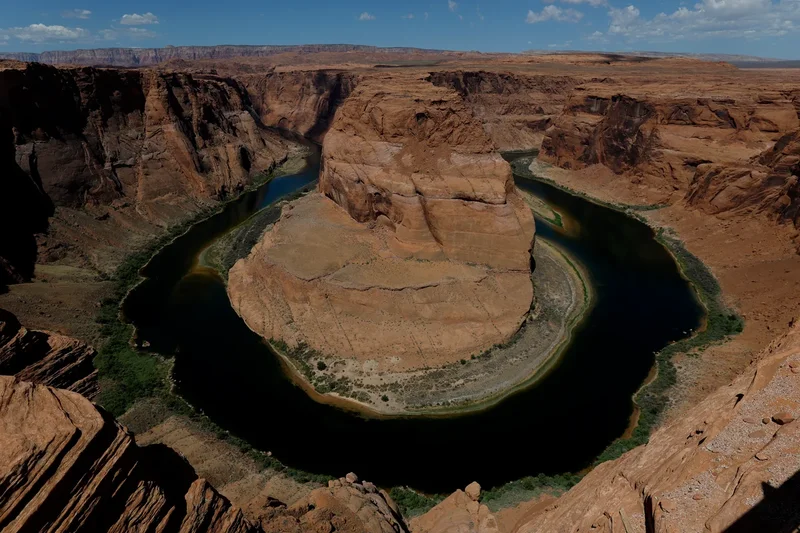
Three states are being told they'll have to cut back on the amount of water they pull from the Colorado River by approximately 20 percent over the next two years, according to a new environmental impact statement published by the U.S. Bureau of Reclamation.
The Colorado River provides water to seven states, 30 Native tribes, two of the nation’s largest reservoirs, and some parts of northwestern Mexico, but the river basin has been in a drought since 2000, according to the U.S. Geological Survey.
The plan allows for cuts of up to 3 million acre-feet a year for states in the river's Lower Basin, which includes Arizona, California, and Nevada. That is approximately twice what the states previously offered to conserve, according to The Arizona Republic.
Arizona officials said the Federal Environmental Impact Statement would "devastate" its water users.
“The FEIS contains a framework that includes sideboards that are unacceptable for the state of Arizona,” the Arizona Department of Water Resources said in a statement Friday. “Such reductions would devastate Arizona’s water users and its economy.”
They noted that the initial reduction is not likely to occur in the first two years of the 10-year framework discussed in the FEIS.
What is not included in the FEIS released on Friday are detailed descriptions of what reductions the three Lower Basin states will face in the first two years of the framework. That document is expected to come some time in the next few days or weeks, so the initial impact on residents in those states is currently unknown.
The new plan will replace a 2007 framework that expires in the fall, according to the paper.
“This framework provides the flexibility to respond to changing hydrologic conditions while preserving the opportunity for the Basin States to continue working toward durable, consensus-based solutions,” Secretary of the Interior Doug Burgum said in a press release on Friday.
Use of the Colorado River has been a contentious issue among the various communities that rely on its waters, according to The Washington Post. Its waters contribute to two major reservoirs, Lake Powell in Arizona and Utah and Lake Mead in Nevada, both of which recently have hit record lows. The new framework seeks to create a baseline for how water allocation will proceed over the next 10 years.
But that does not mean that negotiations between the various stakeholders along the river will not continue, according to Boise State Public Radio.
“This is an important milestone, but it is not the finish line," JB Hamby, chairman of the Colorado River Board of California and Colorado River commissioner for California, said in a statement on Friday, noting that California plans on continuing negotiations with other Colorado River communities.
Even though the plan does not call for mandatory reductions among the states in the Upper Basin—which includes Colorado, Wyoming, Utah, and New Mexico—Hamby called for all of the states to contribute to the necessary cuts.
“The proposal responds to a fundamental reality: the Colorado River no longer reliably produces enough water to support all the uses and expectations built around it," he said. "That challenge is shared across the Basin, and addressing it requires specific, measurable reductions in water use by every state."
Arizona Governor Katie Hobbs said the FEIS contains “unacceptable options that include the federal government forcing Arizona to take the majority of draconian water cutbacks.”
The Independent has requested comment from Nevada Governor Joe Lombardo and the Southern Nevada Water Authority.