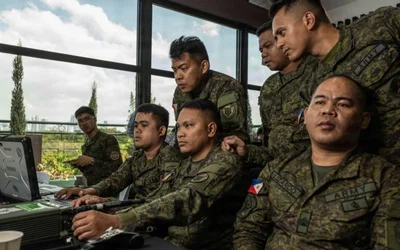
MANILA, Philippines — The Philippines and the United States on Monday, April 20, launched this year’s Balikatan war games, involving 17,000 troops in one of the region’s largest joint military exercises.
The drills, which will run for 19 days, include forces from Australia, Japan, New Zealand, France and Canada, with Japan deploying 1,400 personnel in a more prominent role this year.
The exercises will feature live-fire operations in northern Luzon facing the Taiwan Strait, as well as activities near waters linked to the South China Sea, areas that have seen heightened military activity in recent months.
While declining to provide specific numbers, U.S. exercise spokesman Col. Robert Bunn said troop deployments would not be affected by ongoing military operations in the Middle East.
"Balikatan represents an opportunity to showcase our ironclad alliance with the Philippines and demonstrate our commitment to a free and open Indo-Pacific," Bunn said ahead of Monday's opening ceremony.
This year’s drills come as tensions persist in both the Middle East and the Indo-Pacific region.
Japan's expanded role
Japanese forces are also expected to take part in high-profile components of the exercise, including the planned sinking of a target ship using a Type 88 cruise missile, according to Philippine military officials.
The growing role of Japan reflects expanded defense ties with the Philippines, supported by new agreements that allow visiting forces to participate more fully in joint exercises.
Balikatan, which means "shoulder to shoulder," has evolved from a bilateral drill into a broader multinational exercise, with around 20 countries now involved either as participants or observers, according to exercise materials.
Japan Self-Defense Forces personnel were previously part of Balikatan as observers and took on noncombat roles in humanitarian assistance and disaster response.
Aside from Balikatan, about 420 Japanese troops are participating in the annual Salaknib exercise between Philippine and U.S. forces.
Neighbors
Ahead of the exercises, the Armed Forces of the Philippines (AFP) said other friendly nations may take part in Balikatan provided they meet the necessary legal and operational requirements.
"Participation of other countries in Exercise 'Balikatan' and other Philippines-U.S. military exercises are anchored on established agreements such as a Status of Visiting Forces Agreement, which provide the necessary legal and operational foundations for the entry of foreign militaries to the Philippines," the Philippine military said in a statement on Friday, April 17.
The AFP also noted limitations in participation by Southeast Asian neighbors due to the absence of similar agreements.
"At present, no ASEAN member state maintains a SOVFA or a defense treaty with the Philippines similar to that of the United States. As such, participation in 'Balikatan' — especially in complex or live-fire components — requires specific legal and operational frameworks that are not yet in place with our Southeast Asian neighbors," it said.
Despite this, the AFP said many Southeast Asian countries continue to engage through observer roles under the International Observers Program.
Over the past two years, Manila has signed visiting forces or equivalent agreements with Japan, New Zealand, Canada and France, deals aimed at facilitating their participation in joint military exercises in the Philippines. — with reports from Agence France Presse