Holding the steering wheel in the ‘9-3’ or ‘8-4’ position, instead of the more conventional ‘10-2’, now considered safer in cars equipped with airbags, avoiding road rage, and methods of defensive driving, are among the mandatory online modules new drivers in Telangana will soon have to complete before obtaining a learners’ driving licence.
The Telangana Online Safety Course, which is being run on a pilot basis at the Kukatpally RTO, includes an explanation of why it is good practice to hold the steering wheel lower. The reason: relatively newer cars have airbags as a standard feature, and in the event of a road accident, when they deploy, drivers holding the steering wheel lower can greatly reduce the risk of fracturing arms.
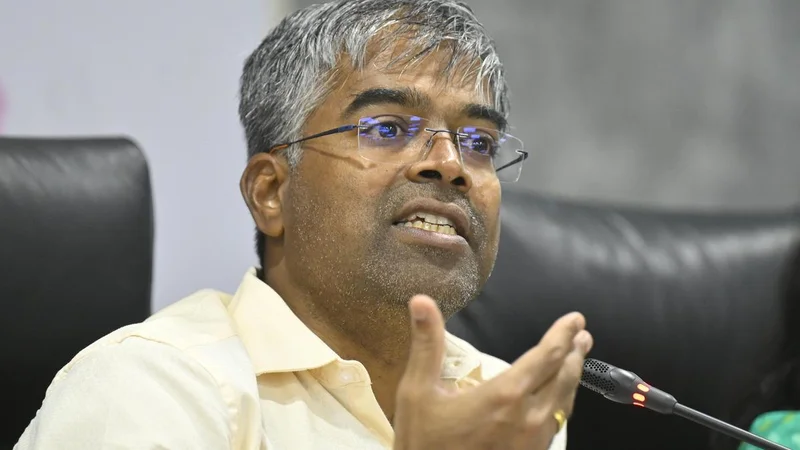
Speaking to The Hindu, Transport Commissioner K Ilambarithi said: “The course is mandatory. It comprises instructional and educational videos. So far, 1,159 people have registered [for the course], and 973 have taken it.”
Around 120 videos sourced from CCTV cameras and dashcams have been used to illustrate examples of good and poor driving, though none are graphic or distressing.
The department has taken a leaf out of similar initiatives in cities such as New York. While the duration of comparable online courses in other countries ranges between five and seven hours, Mr. Ilambarithi said the Telangana course has been designed so that applicants can complete it in a reasonable two-and-a-half hours.
The course comprises six modules, each followed by a quiz. They cover knowledge of vehicle controls, driving theory, including the duties of a driver under the Motor Vehicles (Driving) Regulations, 2017, maintaining an escape path for safer driving, the concepts of “position, speed, look” and “mirror, signal, movement”, and the electronic enforcement of traffic violations. Applicants can proceed to the next module only after passing the quiz.
“The course is free to the applicant. You can take it anywhere and on any device with a camera. UNICEF funded about 60% of the content cost, and the website has been developed and is maintained by TG Online,” Mr. Ilambarithi said.
Facial recognition forms a crucial aspect of the course. The device that the applicants use to take the course should have a camera. Once a user begins, they are required to keep the camera switched on. If the camera does not detect a face, the module automatically pauses and the user must reposition themselves within the camera frame. Periodic facial recognition checks have also been built into video lessons so as to verify that the applicant remains present throughout the duration. Periodic prompts appear that instruct the user to get ready for a facial scan before proceeding. Users can pause, take breaks and resume the course later.
Feedback from users reflected optimism that taking the course would lead to drivers following traffic rules because of improved awareness, Mr. Ilambarithi said.
“The course is expected to be rolled out across the State within a month and will be formally launched by Minister for Transport Ponnam Prabhakar. It will be available in Telugu, English, Hindi and Urdu,” he added.
Published - August 01, 2026 09:06 pm IST